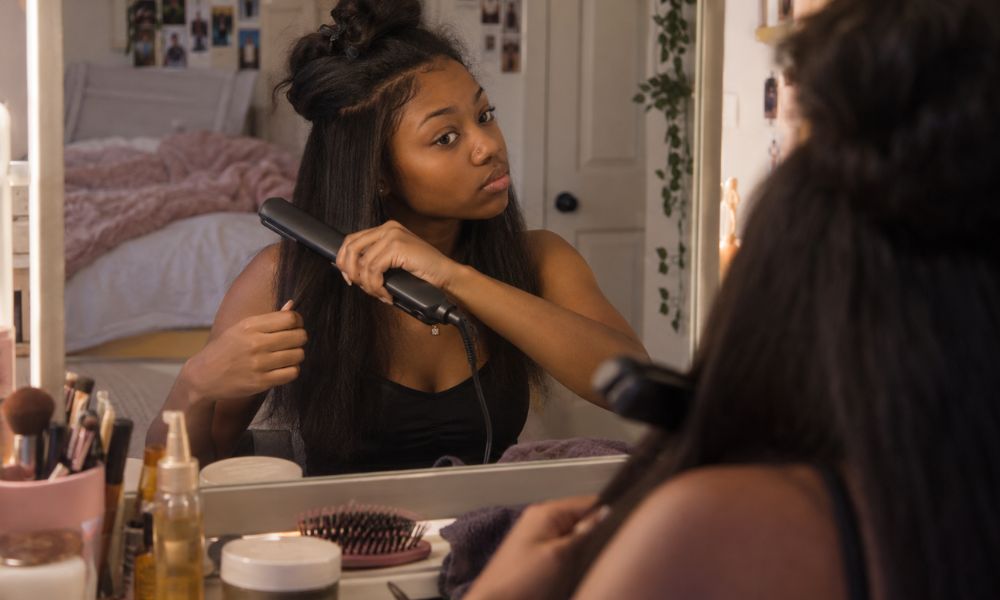

There’s a version of this conversation where I tell you that Eurocentric Beauty Standards are unfair, you nod, and we both move on with our day.
That’s not the conversation I want to have.
I want to talk about the fact that Eurocentric Beauty Standards were not created by accident.
Prefer to listen? Hit play below.
They were not simply the beauty ideals that happened to rise to the top while nobody was paying attention. Eurocentric Beauty Standards were built over time. Certain features — such as pale skin, straight hair, and narrow noses — were positioned as the benchmark against which everyone else was measured.
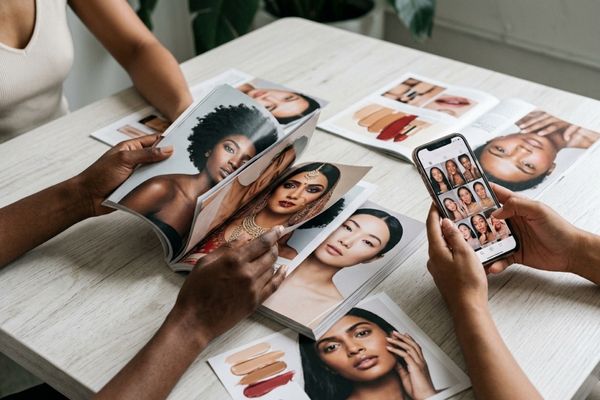
That definition of beauty was then embedded into everyday systems: magazines, dolls, films, advertising, and even areas of medicine.
Over time, these Eurocentric Beauty Standards became so normalised that many people no longer experience them as a constructed idea. Instead, they experience them as reality.
That’s the part that matters most.
Not only the standard itself, but the way Eurocentric Beauty Standards have been presented as neutral, universal, and simply “the way beauty is.”
A friend of mine used to work at Disney. She was involved with a show featuring a Black cartoon character, and part of her role involved sending character images to another department for touch-ups.
She told me that more than once, the character came back lighter than she had sent it.
Not redesigned.
Not stylised differently.
Just lighter.
Nobody in a meeting announced a plan to change a Black child’s cartoon skin tone. It happened quietly, through ordinary workplace decisions. Each individual action was small enough that no single person had to take responsibility for the outcome.
That’s how systems often operate.
White supremacy does not always appear as an obvious act of hatred.
Most of the time, it appears as:
It moves through systems, not confessions.
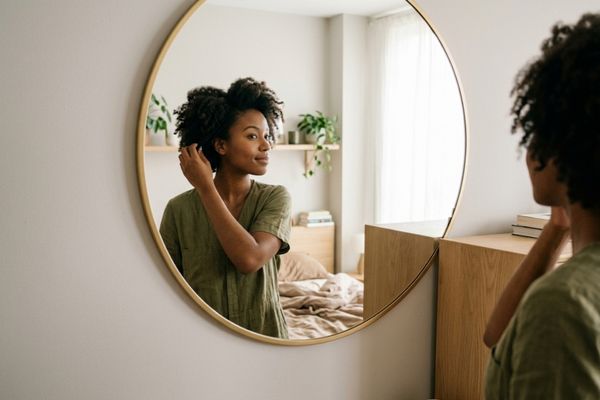
You don’t recognise this as conditioning when you’re nine years old.
At nine, you’re simply putting your polo neck jumper on your head, letting the sleeves hang down your back, pretending it’s long hair.
Hair that moves when you toss your head.
Hair that looks like the beauty you’ve seen reflected around you.
You’re not thinking about media, cultural standards, or hidden messages.
You’re just playing.
It’s only later that you understand what was happening.
A child was quietly rehearsing a version of beauty they had never consciously chosen, simply because it was the version they had repeatedly been shown.
Nobody sat you down and told you that long, straight hair was the standard.
You absorbed it the same way you absorb a language — by hearing it everywhere until it stops sounding like an accent and starts sounding like truth.
I think about how much energy goes into unlearning something you never agreed to learn.
The skin bleaching.
The relaxers pushed beyond comfort.
The quiet calculation before a job interview about which version of your hair will be seen as “professional.”
None of this started with us.
We simply inherited the consequences.
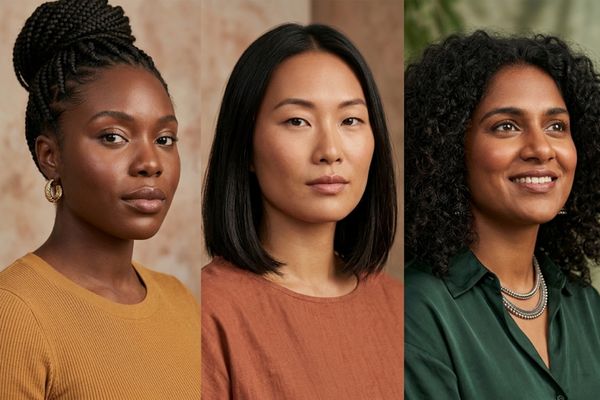
This isn’t only a Black women’s story, though it is the one I know from the inside.
Ask a Filipina friend about skin-whitening products marketed as “brightening.”
Ask an Indian friend about matrimonial advertisements that list “fair” as a preference.
Ask a Vietnamese friend about eyelid surgery promoted as making someone look “more awake.”
Different countries.
Different histories of colonisation.
The same hierarchy underneath.
The same idea that whiteness — or proximity to it — sits at the top, while everyone else is measured by their distance from it.
So what, should we simply accept it?
No.
That’s not where I’m landing either.
The useful move isn’t only outrage, though outrage has its place.
It’s refusal.
A quiet, unspectacular refusal to keep judging yourself using a scale that was never designed to include you fairly.
You don’t have to win a game that was created to exclude you.
You can stop playing it.
And when you do, you may notice how much space becomes available.
I’m not going to give you five steps to loving your reflection, because that isn’t how this works.
Some days, the conditioning wins.
You might catch yourself avoiding a photo, wishing a feature looked different, or comparing yourself to an image you’ve been taught to admire.
That isn’t failure.
That’s what it looks like to grow up inside a system and still be affected by it.
The goal isn’t becoming completely immune.
The goal is recognising when that voice appears and understanding that it isn’t truly your own.
The thing I keep coming back to is this:
The standard was built.
Which means it can be examined.
It can be challenged.
It can be changed.
It is a construction, not a fact of nature.
And once you see the scaffolding behind it, it’s very difficult to unsee.

If any of this is sitting with you, it might be worth writing it down rather than simply carrying it around in your thoughts.
Not to solve everything.
Just to release it from the loop it is currently running in.
Consider these questions: