
How Eurocentric Beauty Standards Could Be Hurting Black Love

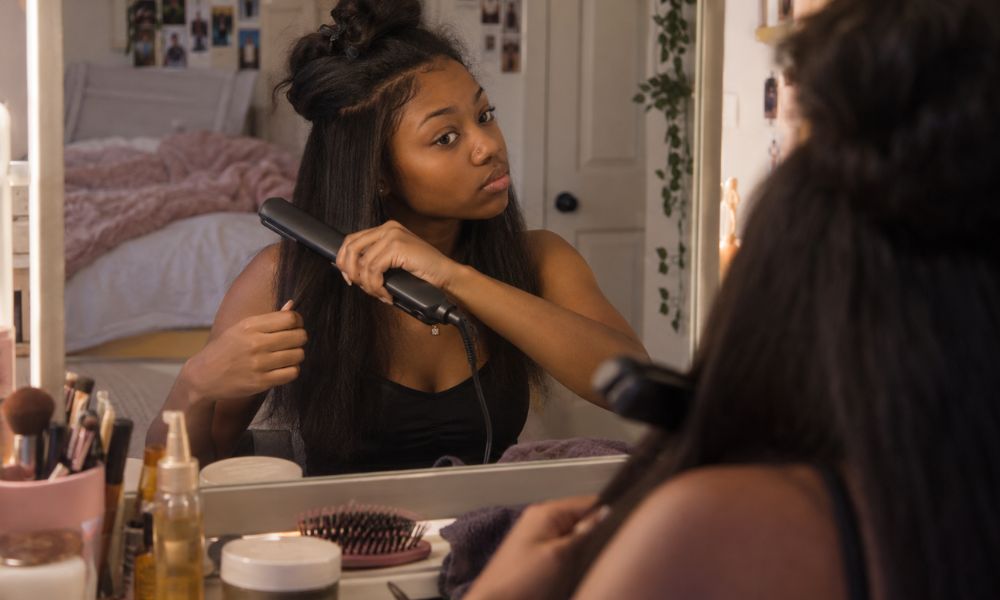
Confident Black woman with natural hair looking at herself in the mirror, reflecting self-love and natural beauty

There’s an ongoing conversation in the Black community about beauty that often goes unnamed. You hear it in comments about hair, in women featured in music videos, and in who gets called beautiful without conditions. The reality is that sometimes — not always, but sometimes — Eurocentric beauty standards shape the idea of beauty in Black relationships, and those standards aren’t actually Black at all.

It’s borrowed. And it’s worth asking where it came from, and what it’s costing.

What Are Eurocentric Beauty Standards?

Eurocentric beauty standards didn’t happen by accident. They were built and enforced over centuries through colonialism, slavery, and media that elevated one particular look while sidelining others:

  • Lighter skin
  • Straighter hair
  • Narrower facial features
  • Bodies shaped more by European genetics than African ones

These standards are deeply ingrained because they often slip in quietly — through what gets called pretty, professional, or desirable. When these images are absorbed from childhood, it subtly trains our eyes without conscious awareness.

Examples include:

  • “She’s got good hair.”
  • “He only goes for light-skinned girls.”
  • “You’d be prettier if your nose was a little smaller.”

These comments are not rare—they live inside Black homes, relationships, and communities. The conditioning is long-standing, not because Black people are uniquely prone to internalizing harm, but because it has persisted for generations.

The Impact on Black Love and Relationships

Black couple in a quiet, intimate moment together, celebrating natural features and authentic connection

How Eurocentric Standards Affect Attraction

When beauty standards inside a community are shaped by external forces that do not affirm Blackness, it creates a quiet but real split. Some Black men may grow up with an idea of attractiveness that favors European features over natural African ones.

Features like dark skin, natural hair, broader noses, and fuller lips—distinctly African—can, in this distorted frame, be seen as things to tolerate rather than desire.

How Black Women Feel It

Even when nothing is said out loud, Black women often notice:

  • Who gets approached and who doesn’t
  • Comments about hair, relaxed vs. natural
  • A tiredness from being part of a community yet not fully feeling seen

Questions that may arise internally:

  • “Do I need to change something to be chosen?”
  • “Would he love me more if I looked different?”
  • “Am I enough as I am?”

These questions shape self-perception, self-love, and comfort in one’s own body.
Eurocentric Beauty Standards Are Not a Gender Issue

Close-up of Black woman’s textured hair and natural features, celebrating authentic beauty and self-care

This isn’t an attack on Black men. Both men and women are subject to the same conditioning — the same images, the same long-term social project of making Blackness feel like it needs adjusting to be desirable.

Colorism shows up in female friendships, and light-skin privilege exists across the community. Taking on Eurocentric beauty standards is a community issue, not a gender one. It affects relationships in multiple directions.

Why Naming the Problem Matters

Naming these standards allows individuals to recognize preferences for what they are:

  • Not a neutral or natural attraction
  • Something formed by external influence
  • A choice to accept or reconsider

This awareness gives a new choice—not to change attraction overnight, but to reflect honestly on beauty, love, and relationships:
  • “Where was my eye trained?”
  • “Do I want it to stay trained that way?”
  • “What does it mean to be in a community where beauty standards point elsewhere?”

Reclaiming Beauty and African Heritage

Close-up of a Black woman with natural features, minimal styling, showcasing dignity, warmth, and confident Black beauty

Consider what’s lost when beauty ideals are always somewhere else. Features that carry African heritage—textures, tones, shapes—are ancestral and beautiful.

Choosing to see these features as genuinely beautiful is more than aesthetics:

  • It’s an act of repair
  • For yourself
  • For your partners
  • For your community

How to Center Black Womanhood in Daily Life

The Afro Woman Collection at samanthiaclarke.com/shop is designed to affirm Black womanhood through hoodies, jumpers, t-shirts, and mugs. These items are daily reminders of what’s worth affirming, not as statements, but as quiet, consistent reinforcement.

Reflective Journal Prompts

Writing can surface thoughts you didn’t know you carried. Consider these prompts:

  1. My earliest ideas about beauty came from…
  2. When I’m honest about what I find attractive, and where that actually came from…
  3. Something about my own appearance (or a partner’s) that I’ve quietly been taught to see as a flaw rather than just a feature is…
  4. If I genuinely chose to see Blackness as beautiful—not as a statement, but as a daily practice—that would look like…
  5. When I think about how beauty standards in my community affect the way people love each other, I notice…

Latest posts

Leave a Reply

Your email address will not be published. Required fields are marked *

Tags

Let's connect

Leave a Reply

Your email address will not be published. Required fields are marked *

Read More Blog Posts

Something real has been happening in the beauty industry. Over the last decade or so, Black women-owned beauty brands and Black-owned beauty brands have been building products that actually understand our skin, our hair, and our long history of being

Some people spend years, even decades, trying to fix themselves. They work on their anxiety, their relationships, their self-esteem. They try therapy, journaling, meditation. They make progress, lose ground, make progress again. And underneath all of it, there’s a quiet

It has a plan for you. A carefully managed, smallish life. Not unhappy necessarily. Just contained. Safe. Familiar. A life where you don’t reach too far, ask for too much, or put yourself anywhere you might be judged, rejected, or