You know the feeling.
Your child comes home and says something small. A comment from a teacher. A rule that seems to only catch them. A hairstyle being questioned or sent to the office. On its own, none of it sounds like much.
Reading not your thing today? Press play below.
But when these moments happen repeatedly over years, they can begin to feel like a pattern — one that is difficult to prove but impossible to ignore.
For many Black parents, these experiences raise difficult questions about racism in UK schools and how everyday interactions can affect a child’s sense of belonging, confidence, and identity.
You’re not imagining it.
Many parents grow up expecting racism to look obvious: name-calling, slurs, or openly discriminatory behaviour. Those things are easier to identify and challenge.
But when children describe quieter experiences — moments that do not have an obvious label — parents often begin to question themselves:
Maybe I’m reading too much into it.
Maybe it really was about the noise level, the hair, or the tone of voice.
The difficulty is that racism in UK schools does not always appear as a single dramatic event. Sometimes it appears through repeated small interactions, assumptions, and patterns that shape how a child is treated, understood, and valued.
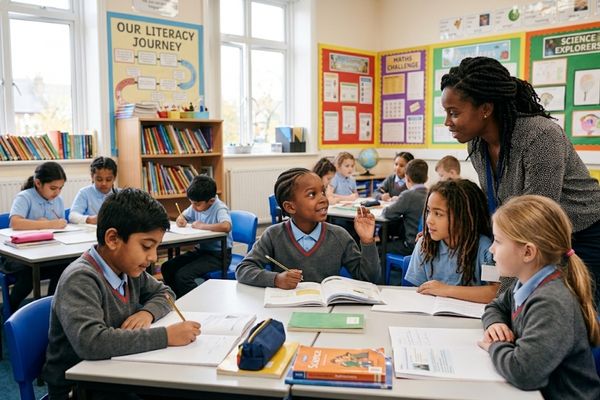
The experiences many parents describe are supported by research examining racism in UK schools, racial bias in education, and the unequal treatment of Black pupils.
Black Caribbean pupils in England are around three to four times more likely to be permanently excluded from school compared with the overall pupil population.
This disparity has been documented for many years and has not significantly closed.
Government reviews examining the exclusion of Black pupils have repeatedly highlighted concerns that Black children are:
The important point is this:
The issue is not always different behaviour. It is often the way the same behaviour is interpreted differently.
A child’s actions may be viewed through assumptions and expectations that affect how teachers respond.
One important concept emerging from safeguarding research and psychology is adultification bias.
Adultification bias describes the way Black children — particularly Black girls — may be perceived as older, less innocent, and more responsible than they actually are.
A child who is experiencing normal childhood emotions may instead be viewed as:
For example:
A ten-year-old expressing frustration may be interpreted as aggression rather than distress.
A child who needs support may instead be seen as deliberately difficult.
The child has not changed.
The lens through which adults view the child has changed.
Not every example of racism in UK schools involves explicit racist language or intentional discrimination.
Sometimes it appears through everyday school rules, expectations, and assumptions.
Certain behaviours may receive stronger responses depending on who is displaying them.
For example, expressions of frustration such as “kissing teeth” may be considered disrespectful in many contexts. However, concerns arise when schools treat certain behaviours from Black pupils as significantly more serious than they would from other children.
The behaviour may be real.
But the scale of the response can reveal deeper patterns.
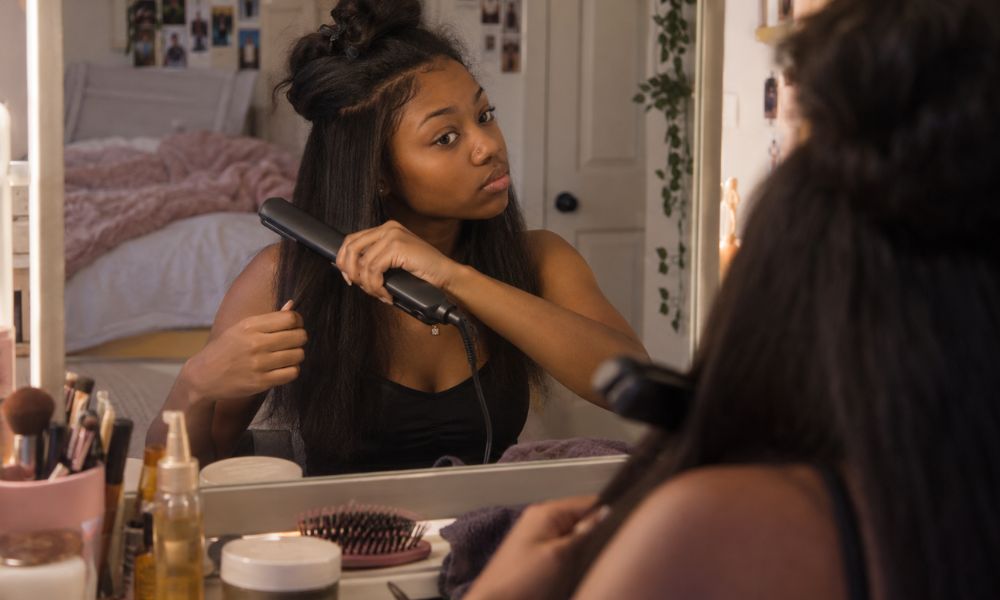
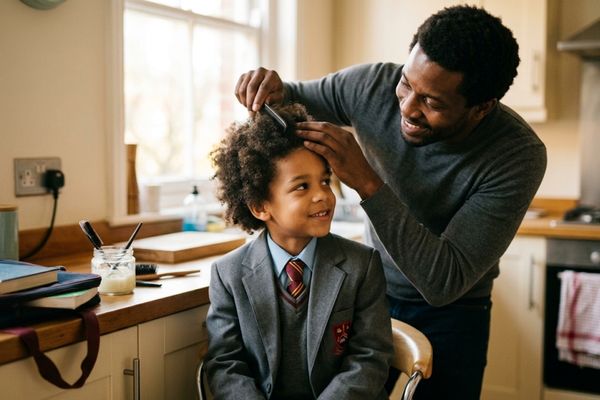
Afro hair has also been a significant area of concern for many Black families.
Some Black children have experienced restrictions, criticism, or disciplinary action related to hairstyles connected to their natural hair texture.
This is particularly important because hair texture is recognised as a protected characteristic under UK equality law.
Research has found that many Black parents believe school uniform policies have negatively affected their children’s ability to wear Afro-textured hairstyles comfortably and confidently.
The issue is not simply about hair.
It is about the assumptions behind ideas of what looks:
The question is whose appearance is naturally included within those definitions — and whose is treated as different.
I think about this alongside a memory I still carry from my own childhood.
I was around ten years old, in primary school, and I was not placed on the top table — the group usually associated with higher ability.
I remember feeling confused.
Not exactly hurt, but confused.
I knew I was capable of being there alongside the other children.
Two weeks later, I was moved.
Nobody explained why.
But even at that age, I noticed something: I was the only Black child in the class, and it had taken my teacher two weeks to recognise where I should have been placed.
Sometimes children notice patterns before adults are willing to acknowledge them.
None of this means every teacher, every school, or every interaction is working against your child.
Most school days are ordinary.
Many teachers genuinely care about their pupils and want them to succeed.
However, recognising that positive intent exists does not mean ignoring harmful patterns when they appear.
When a parent feels that something is unfair, too harsh, or too quick to assume the worst of their child, that feeling deserves attention.
The research exists because many parents noticed these patterns long before they were formally measured.
There is no simple five-step solution that makes an unequal system immediately become fair.
Change is complicated.
But one important reminder remains:
The discomfort you feel when something seems slightly unfair, slightly too harsh, or slightly too quick to judge your child is not something you have to dismiss.
It may simply be your awareness telling you to pay attention.
That awareness matters.
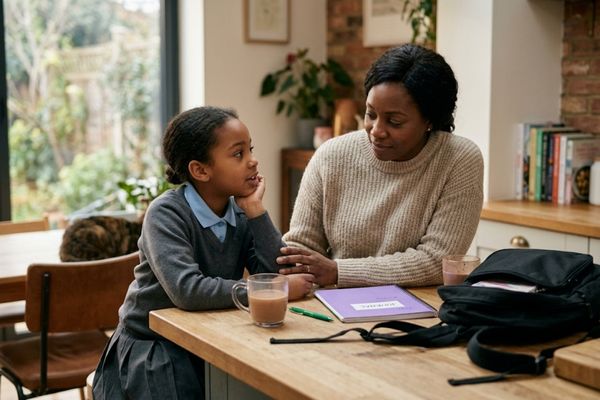
If these experiences bring up difficult memories or emotions, having a private space to reflect can be valuable.
The Self-Reflection Journal for Black Parents was created as a place to explore:
Sometimes the first important conversation is not with the school.
Sometimes it is the conversation you have with yourself.
Writing things down does not solve every problem, but it can help transform overwhelming thoughts into something clearer and easier to understand.
If you want somewhere to begin, consider these questions:
The moment from my child’s schooling that I brushed off at the time, but still think about now, is…
The reason I learned to doubt my own understanding of situations like this goes back to…
School, for me, at the age my child is now, felt like…
What trusting my instincts would look like — without needing to prove everything immediately — is…
What I want my child to know about how I will respond if something like this happens again, is…
Supporting Black Children Through Awareness, Identity and Advocacy
Children need more than protection from negative experiences.
They also need confidence in who they are, trust in their own voices, and parents who are willing to listen carefully.
Understanding the hidden curriculum behind racism in UK schools — including the unwritten messages children receive about identity, behaviour, and belonging — is an important part of creating fairer and more supportive experiences for future generations.