
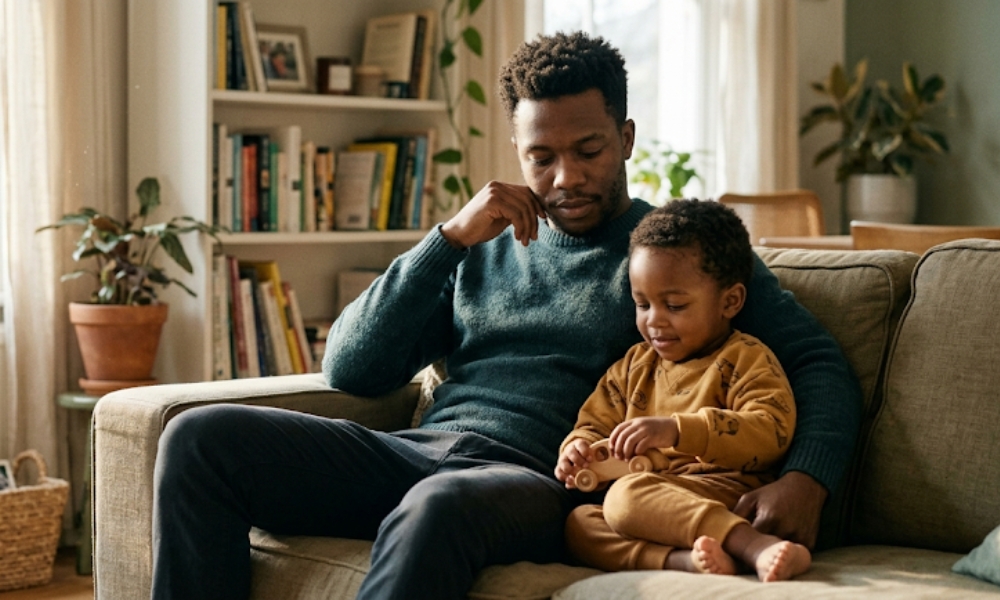
There’s a conversation that happens in a lot of households — often quietly, sometimes loudly — that goes something like this. It sits at the heart of what many experts now call generational parenting: the way beliefs, habits and experiences are passed from one generation to the next.
I would never do to my children what was done to me.
Or its opposite.
My parents raised me that way and I turned out fine.
Both statements carry weight. Both carry feeling. And both, if you look closely enough, are trying to make sense of the same thing: the gap between how we were raised and how the next generation is being raised.
That gap didn’t appear by accident. It has a history. And understanding that history doesn’t mean excusing everything that came before. It means understanding how we all got here.
Prefer to listen?
Listen to the full article below.
If you were raised in the 1970s, or by parents who were, the dominant model of parenting was built around authority, obedience and discipline. Children were expected to be seen and not heard. Physical punishment was common in many households and was considered not just acceptable but responsible. Good parenting, by this model, meant producing children who did as they were told.
The thinking underpinning this was largely behaviourist, though most parents wouldn’t have used that word. Reward compliance, punish transgression. Shape the child through consequences. Emotion didn’t feature much in the equation, and emotional expression from children was often read as defiance or weakness.
This was also the era before parenting had become a subject of public conversation the way it is now. You parented the way your parents parented you. You didn’t read books about it. You didn’t question it. The idea that there might be a different way simply wasn’t in wide circulation.

By the 1980s, something was beginning to change. Research into child development was starting to reach a wider audience. Much of this built on the work of psychologists like John Bowlby, whose attachment theory had been developing since the 1950s, and Diana Baumrind, who identified the distinction between authoritarian and authoritative parenting.
The difference between the two is subtle but significant. Authoritarian parenting says: because I said so. Authoritative parenting says: here’s why, and your feelings about it matter. Both involve boundaries and expectations. But one acknowledges the child as a person with an inner life; the other doesn’t.
Through the 80s and 90s, this research moved from academic journals into parenting books, health visitor appointments and school curriculums. The idea that how you spoke to a child, not just what you did, had lasting psychological consequences was gaining ground.
I just want them to know I love them.
That sentence, which might have seemed unnecessary or even soft to an earlier generation, was becoming central to what good parenting looked like.
By the early 2000s, the conversation had shifted considerably. Books like How to Talk So Kids Will Listen had sold millions of copies. The concept of emotional intelligence had entered everyday life. Parenting classes were being offered by local authorities. The language of attachment, emotional regulation and trauma was becoming familiar to parents who had no formal training in any of it.
This was also the decade when the smacking debate reached new intensity in the UK. In 2004, legislation was tightened to remove the legal defence of “reasonable chastisement” in cases of actual bodily harm. It was a significant legal shift that reflected how far the cultural conversation had moved.
The idea that physical punishment caused harm, not just physical harm but psychological and relational harm, was no longer a fringe position. It was becoming the consensus.
The most recent decade and a half has brought two significant developments that are still reshaping parenting culture.
The first is the mainstreaming of trauma-informed thinking. The ACE study (Adverse Childhood Experiences), published in the late 1990s but gaining much wider attention through the 2010s, showed striking and consistent links between childhood trauma and adult health outcomes. The idea that what happens to a child doesn’t stay in childhood, that it echoes through the body and nervous system into adulthood, gave scientific weight to what many people had understood intuitively for years.
The second is social media. For the first time, parents had access to an endless stream of parenting content at all hours: advice, models, philosophies, judgement. Gentle parenting, attachment parenting, conscious parenting, free-range parenting. The paradox of choice arrived in the nursery. More information than ever before, and more anxiety about whether you were getting it right.
Am I damaging them?
Should I have handled that differently?
Why does it feel so hard?

To talk about the evolution of parenting without acknowledging the Black experience is to tell an incomplete story.
For many Black families in Britain, particularly those from Caribbean and West African backgrounds, the authoritarian parenting model of the 1970s was not simply a cultural default. It was also a survival strategy. Parents who had navigated hostile environments, who had built lives in a country that did not always welcome them, who understood that the consequences of their children stepping out of line in the wrong place could be severe: these parents parented with urgency. With strictness. With a kind of love that didn’t always look soft but was fierce in its protectiveness.
I’m hard on you because the world will be harder.
That sentence carries its own kind of tenderness, if you understand its context.
The tension many Black parents navigate today is real. The research says: connection, emotional attunement, less physical discipline. The lived experience says: my parents raised me this way and kept me safe. The community says: children need to know their place. The school says: your child needs to be able to express their feelings.
These are not easy things to hold at the same time. The shift toward more emotionally expressive parenting models has not always landed in Black communities without friction, partly because it has often been presented without cultural context, and partly because the urgency that shaped earlier approaches hasn’t entirely disappeared. The world has changed. In some ways, for some families, it hasn’t changed enough.
Having spent over two decades working in children’s social care, what becomes clear is that the parents who cause harm are rarely doing so out of malice. They are usually doing what was done to them, in conditions that make reflection difficult, without access to the language or the support that might have shown them a different way.
Understanding that doesn’t mean accepting harm. It means knowing where to begin.
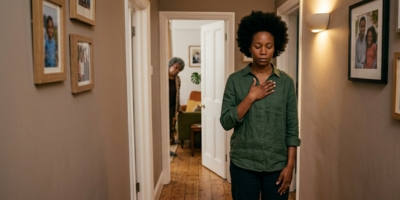
You are parenting, or were parented, in a specific moment in history, with specific resources, specific pressures and a specific inheritance from the generation before you.
The shift from the 1970s to now is not simply a story of progress, with each decade getting it a little more right. It’s a story of accumulating knowledge meeting persistent human complexity. Of research reaching people unevenly. Of new models arriving without always acknowledging what the old ones were trying to do.
Your parents parented the way they did for a reason. It may not have been the right reason. It may have left marks that you’re still working through. But it came from somewhere. And understanding where it came from is not the same as accepting it.
So do you. Parent for a reason. From your history, your knowledge, your fears, your hopes. The fact that you’re thinking about it at all, that you’re asking whether there’s a better way, is itself a generational shift.
If you’re a Black parent sitting with some of what this piece has stirred, the Self-Reflection Journal for Black Parents was made for exactly this kind of thinking. You can find it at Samantha Clarke’s shop.
* * *
The space between how you were parented and how you parent now is worth exploring. Not to reach a verdict. Just to understand it more clearly, in your own words.
To close with
The way my parents disciplined me made me feel…
When I think about what I’ve carried forward from how I was raised, into my own parenting or my own life, I notice…
The thing I’ve chosen to do differently is… and what sits behind that choice is…
When I think about the pressures my parents were under, the world they were navigating and the resources they had, I start to understand…
The kind of parent I want to be, or the relationship I want to have with the children in my life, looks like…