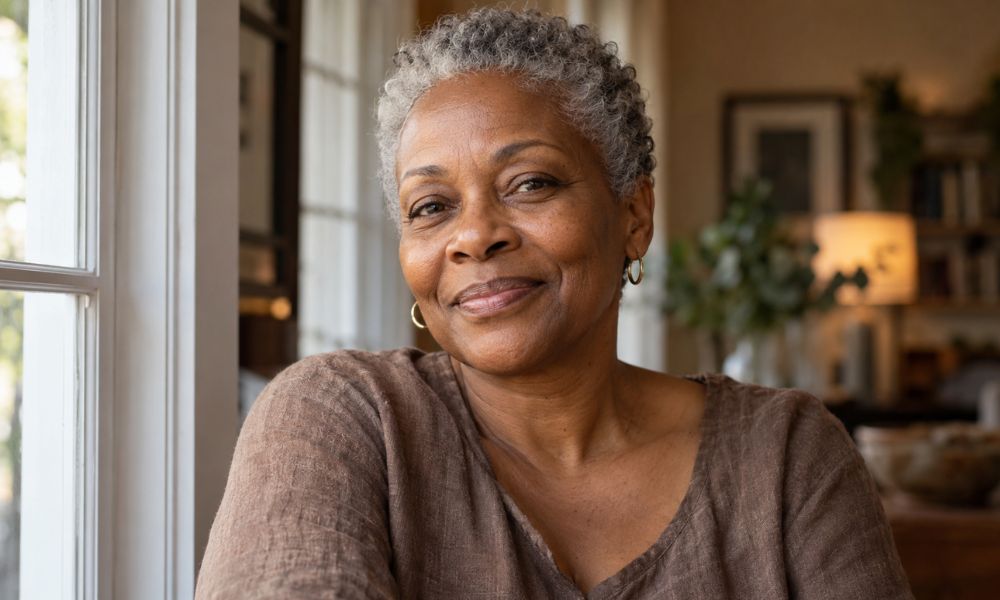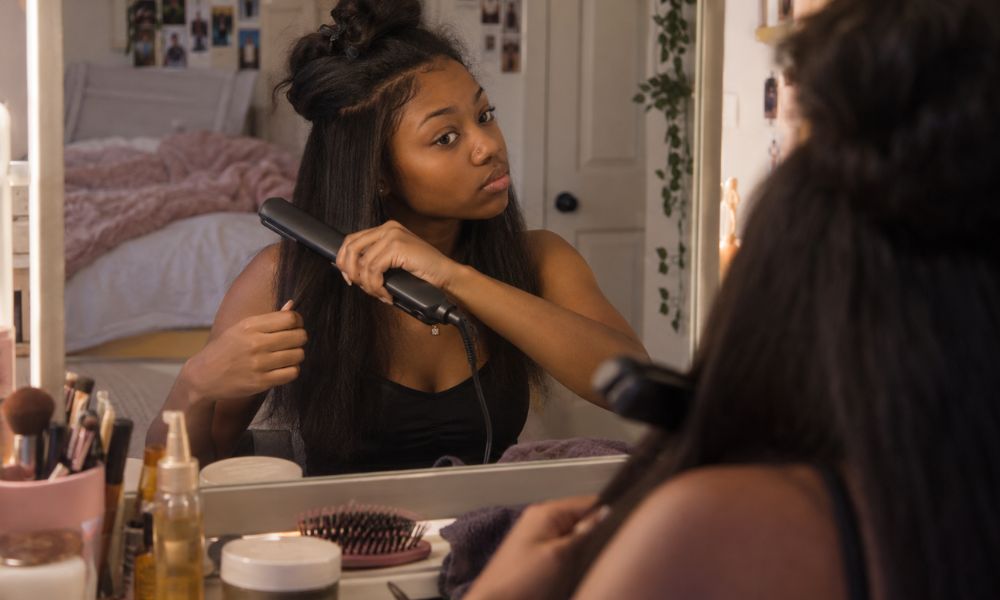
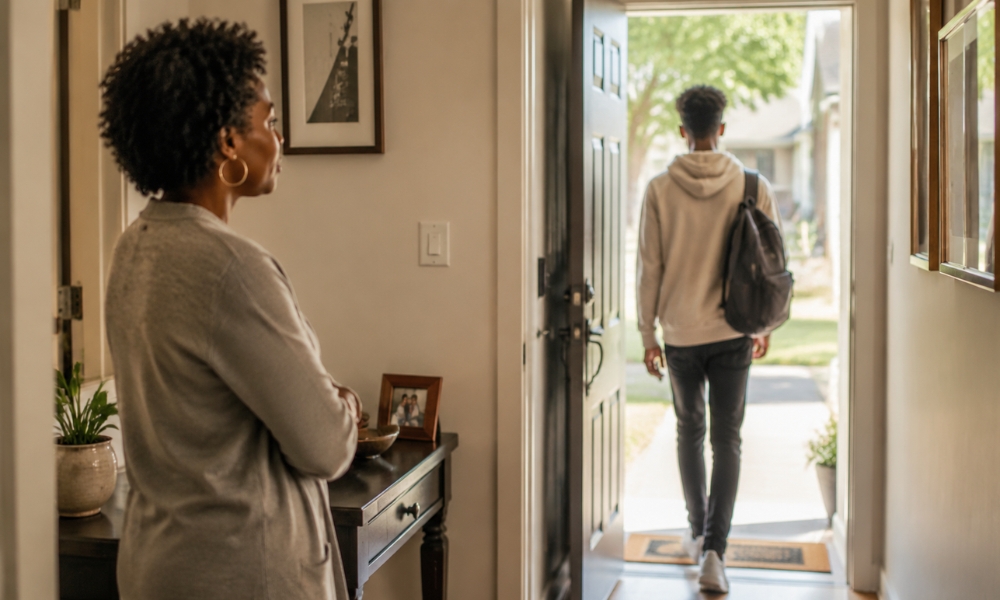
Black Teen Safety often begins with a quiet calculation that happens in the mind of almost every Black parent, guardian, aunt, uncle or big cousin who’s raising a teenager.
It’s small. It passes in a second.
Your child says they’re going out, and something in you does a calculation you never asked to be good at.
What are they wearing?
Who are they going with?
What time will they be back?
Do they have their key?
Their ID?
Is their phone charged?
You don’t call it fear. You call it being sensible. Being prepared.
And most days, you’re right not to make a big thing of it, because most days nothing happens.
But you’re still doing the calculation.
Reading not your thing today? Press play below

I think about that calculation a lot because it isn’t really about your teenager at all.
It’s about what you know.
What you’ve read, seen, heard or lived.
And once you know something, you can’t put it back.
Here’s some of what is known.
According to Home Office data, Black people in England and Wales are stopped and searched at almost four times the rate of White people (Home Office, 2025).
The Children’s Commissioner for England has found that Black children are strip searched by police at rates several times higher than White children, with the youngest recorded case involving a child just eight years old.
Her research also found that many of these searches happened without an appropriate adult present and that close to half resulted in no further action at all (Children’s Commissioner for England, 2026).
That raises an obvious question nobody in charge seems keen to answer:
What were they searching for, really?
Researchers and the Children’s Commissioner both use a particular word for part of what’s happening here:
Adultification.
Adultification is the process by which Black children stop being read as children.
Somewhere around ten, eleven or twelve, they start being perceived as older, more threatening and less innocent than they really are.
A twelve-year-old boy running for a bus becomes a suspect.
A fourteen-year-old girl’s ordinary teenage moodiness becomes aggression.
It’s not that anyone necessarily sits down and consciously decides this. It’s quieter than that.
It’s baked into how a child gets looked at.
This isn’t only a British issue.
The EU Agency for Fundamental Rights has found that ethnic minorities are stopped by police at disproportionate rates across member countries.
Italy, the Netherlands, Portugal and Sweden were among the countries showing the widest gaps between how minorities and the general population experience police stops (European Union Agency for Fundamental Rights, 2021).
Wherever Black communities live in the Western world, in whatever language and under whatever flag, this pattern turns up.
That’s worth sitting with.
Because it means this is not simply a British policing problem.
It’s something closer to the surface than that.
I’m not telling you any of this to alarm you.
You likely already know some version of it, in your body if not in numbers.
What I want to do instead is take the thing you already feel and show you that it has a shape.
It has a name.
It has statistics behind it, published by official bodies, not simply campaigners with an agenda.
Your instinct was never dramatic.
It was accurate.
There’s a particular kind of tiredness in holding this knowledge and still having to send your child out into the world.
You can’t keep them inside forever, and you shouldn’t want to.
Childhood and adolescence are supposed to include some freedom, some mess and some innocent, nothing-much afternoons that aren’t monitored by anyone.
Your teenager deserves those too.
So, you hold both things at once:
The desire for them to be free, and the knowledge of what that freedom can sometimes cost.

You may find yourself wondering:
Am I overreacting?
Am I being paranoid?
Am I passing my fear onto them?
Am I making them scared of a world that hasn’t hurt them yet?
I don’t think you are.
I think you’re doing something much harder than overreacting.
You’re staying alert without letting that alertness curdle into fear that lives in your child’s body instead of yours.
That’s a fine line, and nobody teaches it to you.
You simply have to keep walking it, day after day, adjusting as you go.
I won’t pretend there’s a clean way through this.
I don’t think there is.
There’s no script that guarantees your child’s safety.
There’s no set of rules that will protect them from being misread by someone who has already decided what they are before they’ve said a word.
What there is, instead, is the fact that you know.
You see it.
You’re not making it up.
And you’re not the only one carrying it.
Sometimes the only thing that helps is writing it out.
Not to solve it.
Just to see it more clearly, in your own handwriting and in your own words, without an audience.
There’s no pressure to finish a thought.
Just space to start one.
Consider reflecting on the following prompts:
My earliest sense of what safety meant for my child was…
The calculations I make without even noticing are trying to protect…
The kind of freedom I want my child to have looks like…
My own experiences with authority as a teenager taught me…
The person I wish I could talk to about all this is…

If prompts like these help you think things through, the Self-Reflection Journal for Black Parents contains a full collection of them.
The prompts are organised into sections that carry you through this kind of thinking properly, rather than leaving you with one page and nowhere to go next.
It was created for exactly this kind of holding.
You can find it at the Samanthia Clarke Shop.