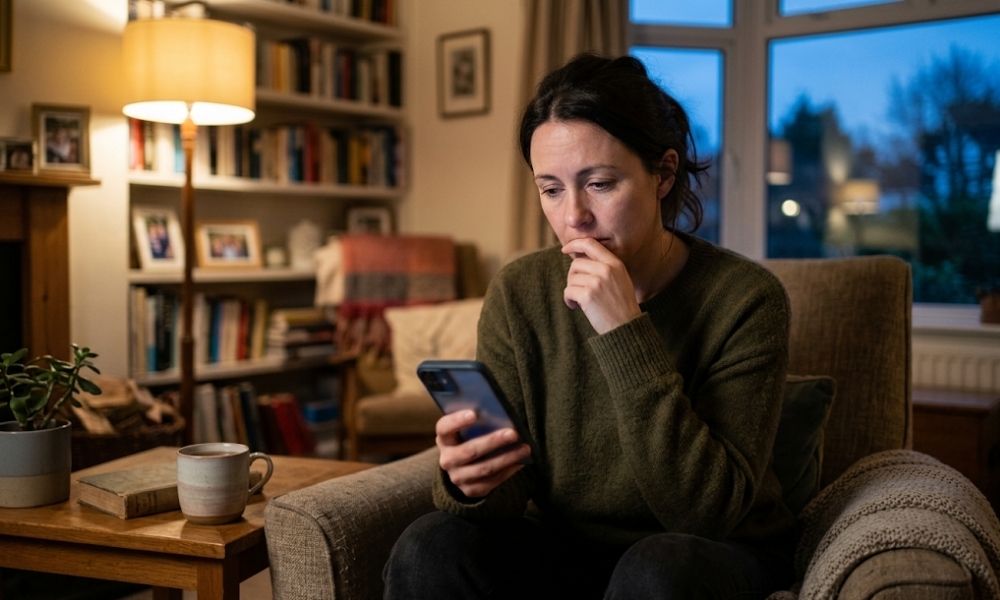
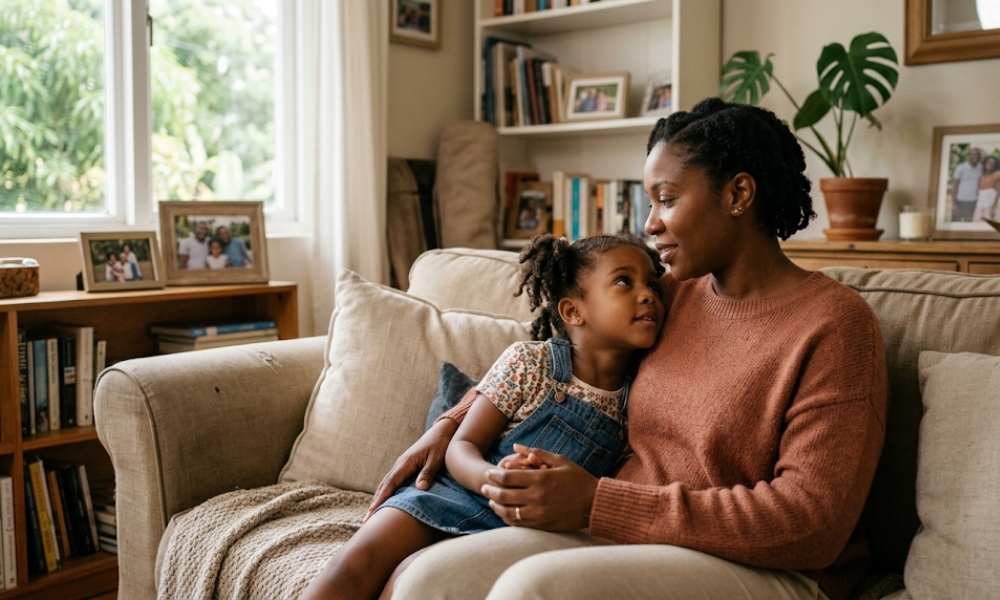
There’s a particular silence that falls when a parent tells someone from an older Caribbean generation that you don’t smack your children. It isn’t always hostile. Sometimes it’s just weighted. A whole worldview compressed into a pause. In many ways, breaking old parenting habits begins in that silence.
It never did me any harm.
You’ve heard it. You may have said it yourself once, before you started thinking harder about what it actually means.
Prefer to listen?
Listen to the full article below.
Caribbean parenting, at its best, is full of love. Warmth, food, sacrifice, showing up. Generations of people who worked themselves to the bone so their children could have more. That part is real and it deserves to be said first.
But there is another part. One that doesn’t get examined as often as it should. A harshness that ran alongside the love. A discipline that didn’t always know the difference between correction and punishment. Between guiding a child and breaking them a little, in the hope that a quieter spirit would keep them safe in a world that was already hostile enough.
That harshness didn’t come from nowhere. It has a history. A long, brutal one.
Slavery didn’t just damage bodies. It damaged the way families were built. It severed bonds, disrupted attachment, created conditions where tenderness felt like a liability. Where softness was something you couldn’t afford. Where teaching a child to comply, immediately and without question, wasn’t cruelty. It was survival. That thought alone makes me very sad.
Those patterns didn’t end when slavery ended. They passed down. Through generations of colonial rule, through the Windrush era, through front rooms in Brixton and Birmingham and Brooklyn. They arrived in households where the original context had long since faded, but the methods remained. The belt. The wooden spoon. The voice that didn’t invite questions. The love shown through provision and sacrifice and silence, but rarely through words.
We didn’t say I love you in my house. You just knew.
Except sometimes you didn’t. And sometimes you spent years trying to work out what you’d done wrong.
This isn’t about blame. It genuinely isn’t. The parents and grandparents who parented this way were themselves parented this way. Most of them were doing the best they could with what they’d been given. And what they’d been given was a system designed to produce compliance, not connection.
But here’s what’s quietly remarkable about this moment in 2026. There is a generation of people, many of them the children and grandchildren of Caribbean households, who are choosing to do it differently. Not loudly. Not with a manifesto. Just in the daily, ordinary, unglamorous work of raising children with more gentleness than they themselves received.
That is not a small thing. That is an act of extraordinary quiet courage.
Because it isn’t easy to parent against your instincts, to go against family scripts. And when your instincts were formed in a particular kind of household, breaking with them can feel like a betrayal. Of your parents. Of where you came from. Like you’re saying they were wrong, when the truth is more complicated than that.
Am I going to raise a child who doesn’t respect me?
Everyone I know was raised this way and they’re fine.
I’m doing too much. Children need boundaries, not therapy.
These thoughts are real. They visit. And they don’t always come from a bad place. Sometimes they come from genuine uncertainty about whether a different way will actually work.

But there is a growing body of evidence, and more importantly a growing number of lived experiences, that says it does. Children who are spoken to rather than shouted at, who are given reasons rather than ultimatums, who are allowed to feel their feelings without being shamed for having them, those children develop something that compliance alone cannot produce. A secure sense of who they are.
The shift doesn’t require perfection. That’s worth saying clearly. Gentle parenting isn’t the absence of boundaries. It isn’t giving children everything they want or never raising your voice. It’s a direction of travel, not a fixed destination.
Most people doing this work are doing it imperfectly, inside their own unhealed places, trying to respond differently in moments that used to trigger a very old, very automatic reaction.
And sometimes they get it wrong. And they repair. And they keep going.
That, too, is something worth passing down.
The fact that this conversation is happening at all, in Caribbean households, in Black British families, across the diaspora, is significant. It means something is shifting. Not erasing the past. Not pretending the love wasn’t there. Just being honest about the parts that left marks. And deciding, quietly, that those particular marks stop here.

If you’re sitting with any of this, the parenting you received, the parent you’re trying to be, the gap between the two, the Self-Reflection Journal for Black Parents at samanthiaclarke shop was made for exactly this kind of thinking.
It’s not a guide. It’s a space. Somewhere to be honest with yourself, away from the noise.
Writing has a way of helping you see what you’re actually carrying. Not to judge it. Just to know it’s there. If this article stirred something, that’s worth sitting with. You don’t have to have answers. Just start writing.
A few prompts to begin with: