There’s a version of your body that some part of the world, at some point in history, would have called perfect. You’ve probably never met her. She keeps changing shape.
That’s the quiet tension underneath most of what women are told about their bodies and the beauty standards they are expected to follow. Not that the ideal is wrong, but that it was never fixed to begin with.
This one’s available as audio too. Press play below.
Beauty standards shift by decade, by continent, and by whoever happens to be holding power at the time. Yet each generation is often presented with its current ideal as though it is permanent — as though this year’s shape is the one that finally got everything right.
“If I could just get my body to look like that, I’d finally relax.”
It’s a thought many women have had in one form or another.
What rarely gets said is that “that” was a different shape twenty years ago and will likely be a different shape again before you’ve finished trying to reach it.
The body ideal you are chasing may not even be the same ideal that existed before you were born — and it probably won’t be the same one celebrated in the future.
The story of beauty standards is not only a Western story with other cultures added as decoration. Across the world, different societies have valued different body types at different times.
Beauty ideals have always reflected the values, resources, traditions, and social structures of the communities that created them.
In Mauritania, for generations, fuller bodies were associated with prosperity, family wealth, and readiness for marriage. In some communities, gaining weight before marriage was encouraged because a larger body symbolised that a family could provide.
In parts of West Africa, including regions of Nigeria and Ghana, fuller figures have historically been associated with health, abundance, and womanhood — the opposite of the physical signs linked to hardship or poverty.
Over a thousand years ago during China’s Tang Dynasty, fuller bodies were often associated with wealth, leisure, and aristocratic status.
This contrasts sharply with the slim beauty standards often associated with modern East Asian cultures today.
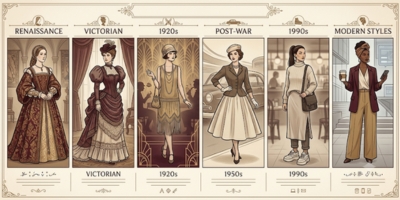
During the Renaissance period, European paintings frequently celebrated soft, rounded, and fuller female forms.
Artists such as Rubens portrayed women with curves because that body type represented beauty and abundance in that era.
Beauty ideals do not move in a simple direction from “wrong” to “right.” They constantly change.
Victorian England promoted corseted bodies with dramatically narrow waists, creating an ideal that required women to physically reshape themselves.
The 1920s moved in the opposite direction, celebrating a flatter-chested, slimmer, more youthful silhouette.
After the Second World War, fuller curves became fashionable again, with Hollywood influencing ideas of feminine beauty.
The 1990s introduced the “heroin chic” era, where extreme thinness became heavily promoted in fashion and media.
Today, different regions promote different versions of beauty. Some cultures continue to value extreme slimness, while others are experiencing movements that challenge narrow definitions of attractiveness.
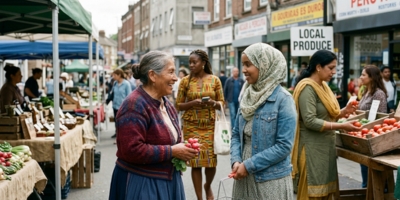
Beauty ideals are rarely random. They often serve cultural, economic, and social purposes.
At different times, body ideals have reflected access to resources.
In some periods, being fuller represented wealth because only those with enough food could achieve that appearance.
In other periods, being slim became associated with privilege because maintaining a certain body shape required time, money, fitness access, or specialised diets.
Beauty standards have also been influenced by expectations placed on women.
Societies have often connected women’s bodies with ideas of fertility, modesty, status, purity, or social value.
Communities attach meaning to appearance based on their own histories and beliefs. These meanings can change as societies change.
So, none of this was ever really about me.
That’s the sentence worth sitting with.
Not as a way of dismissing how your body feels day to day — because those feelings are real and they matter — but as a way of loosening the power of whichever beauty ideal happens to dominate your time and place.
The standard you are surrounded by is not an eternal truth. It is simply one moment in a long history of changing opinions.
I’m not going to tell you what to do with your body.
That’s not mine to decide, and anyone claiming to have the one definitive answer is likely selling something.
What matters is finding what genuinely supports your health, your energy, and your actual life.
You do not have to reject beauty standards loudly, and you do not have to chase them loudly either.
There is another option:
Continue making choices that feel right for you while allowing the surrounding noise to remain just noise.
Small, ordinary reminders can help you remember that you get to decide what you represent.
The Afro Woman Collection, the mug you drink your tea from, or the hoodie you actually live in are not there to fix anything.
They are simply markers of identity — reminders that this is your body, your history, and your choice.
You can find it at Samanthia Clarke Shop.
Sometimes writing helps separate what you truly believe about your body from what you have absorbed from the world around you.
You do not need to have the perfect answer. You only need to begin.
Consider these questions:
Beauty standards have always changed. Cultures have always created new ideals.
Your worth does not depend on keeping up with a version of beauty that was never permanent in the first place.