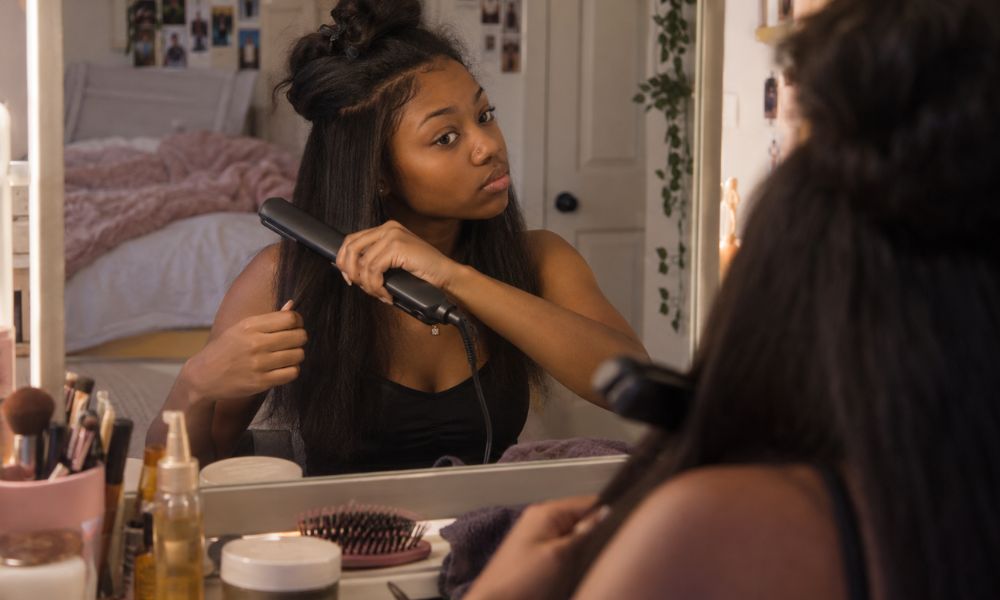
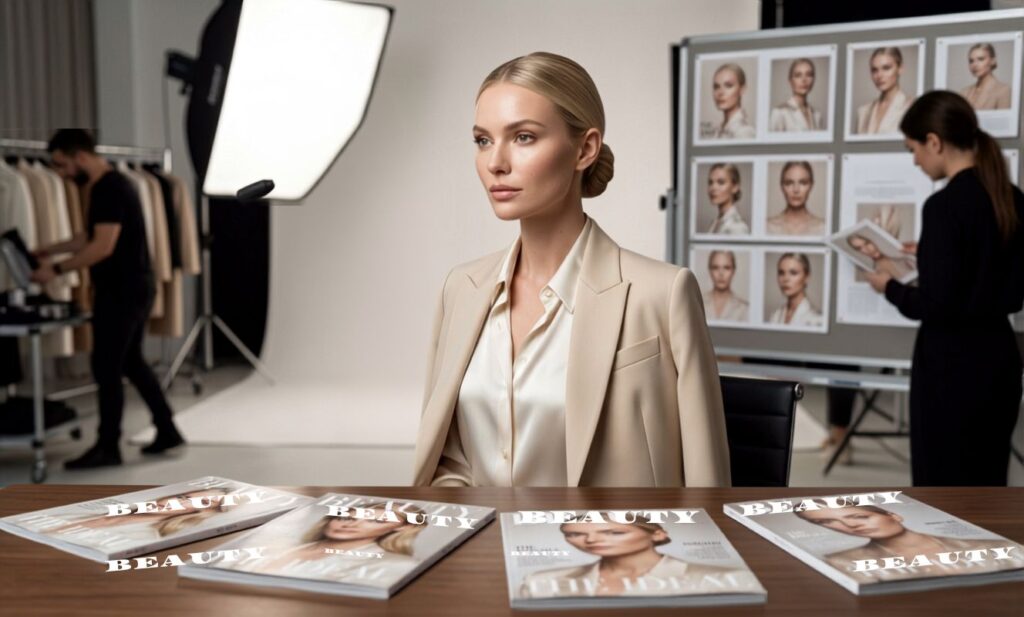
The influence of media beauty standards often begins quietly. There’s a moment most of us have had, standing in front of a mirror, doing the maths. Comparing. Measuring something against a version of ourselves that doesn’t actually exist anywhere, except in adverts and edited photographs. Is my nose too wide. Is my skin too dark, too light, too something. Would I look better if.
You can also listen to this one. Press play below.
We don’t often stop to ask where that voice came from. We just assume it’s ours. It isn’t. Not originally.
I want to talk about something we rarely name out loud, which is how much of what we believe about beauty was never decided by us. It was decided in boardrooms, in casting calls, in the choices magazine editors made about whose face sold more copies. And somewhere along the way, those decisions became our private, personal opinions about our own faces and bodies. That’s the sleight of hand. It doesn’t feel like an opinion that was handed to you. It feels like the truth.
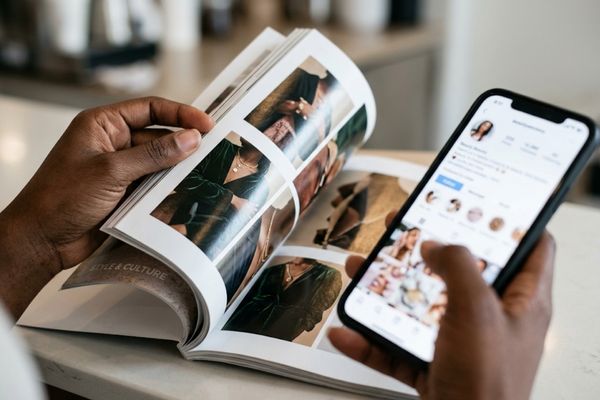
Think about how narrow the range has been. For decades, beauty in Western media meant one body type, one skin tone, one bone structure, endlessly repeated until it stopped looking like a choice and started looking like a fact. Everyone outside that narrow band, men included, children included, people from entirely different parts of the world included, learned to measure themselves against it anyway.
This isn’t only about women and it isn’t only about race, though race sits inside it plainly. A Black woman straightening her hair for a job interview she’s never met the panel for. A boy in India using skin lightening cream because lighter skin is what gets praised in the films he grew up watching. A teenager in Seoul saving for surgery to look more like an idol whose face was, itself, shaped by a very specific industry standard. Different countries, different histories, the same underlying machinery. Someone, somewhere, decided what beautiful looks like and packaged it well enough that we stopped questioning the packaging.
But surely I’d know if I was being sold something. Surely I’m smarter than an advert.
Maybe. But adverts were never really the problem. The problem is repetition. You don’t need one image to convince you of anything. You need the same narrow image, ten thousand times, across every screen you own, until your brain quietly files it under normal.
There’s a particular kind of exhaustion in having grown up as someone the media wasn’t built to reflect back kindly. You learn to translate. You learn which parts of yourself to lead with and which to soften. You learn, without ever being taught explicitly, that beauty has a hierarchy and that you’ve been placed somewhere on it by people who’ve never met you.
I think of my own childhood, flicking through magazines that never once showed a face like mine on the cover unless there was a specific, singular “issue” being made of it. Representation as event, not as normal. You absorb that. You don’t decide to; it just happens, the way water finds the lowest point.
And here’s the part that’s harder to admit even once you understand the mechanics, even once you can name exactly what’s happening, the feeling doesn’t always leave straight away. Knowing a thing is manufactured doesn’t automatically undo how deeply it’s settled into you. That’s not a failure of intelligence. It’s just how conditioning works. It gets in before you’re old enough to check its credentials.
I’m not going to tell you the answer is to simply “reject” media beauty standards, or to love yourself into some finish line, because that’s its own kind of pressure dressed up as liberation. Rejecting something you’ve been taught to want your whole life isn’t a single decision. It’s a practice and most days it’s an imperfect one.
What I do think is worth sitting with is the difference between a preference and a program. Some of what you find beautiful is genuinely, uncomplicatedly yours. Some of it was installed. Telling the two apart takes time and honestly, you might not ever fully finish the job. I haven’t.
What changes, once you start looking, is that you stop mistaking the voice in the mirror for neutral fact. You start hearing it as a message with a sender. And a message with a sender can be questioned. It can be put down, even briefly. That’s not nothing.

If you want somewhere to start, try this: next time you catch yourself making that comparison, the automatic one, ask where the image you’re comparing yourself to actually came from. Who benefited from you believing it was the standard. You don’t need an answer straight away. The question alone does something.
A few things worth sitting with, whenever you’re ready:
If it helps, write your way through some of this rather than just thinking it. Thinking tends to circle. Writing tends to land. You don’t need the right words, or a tidy conclusion. Just the honest ones.