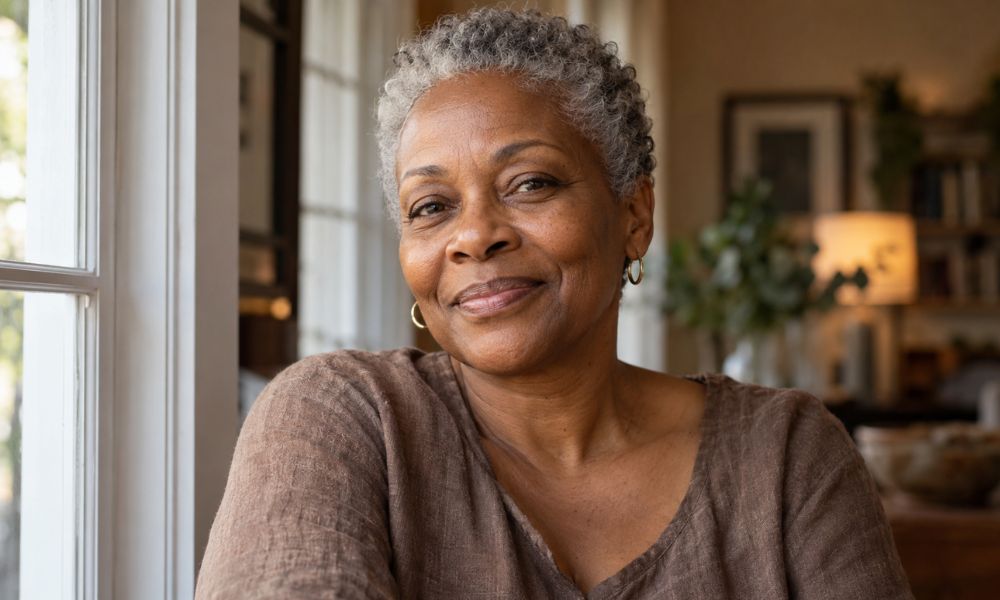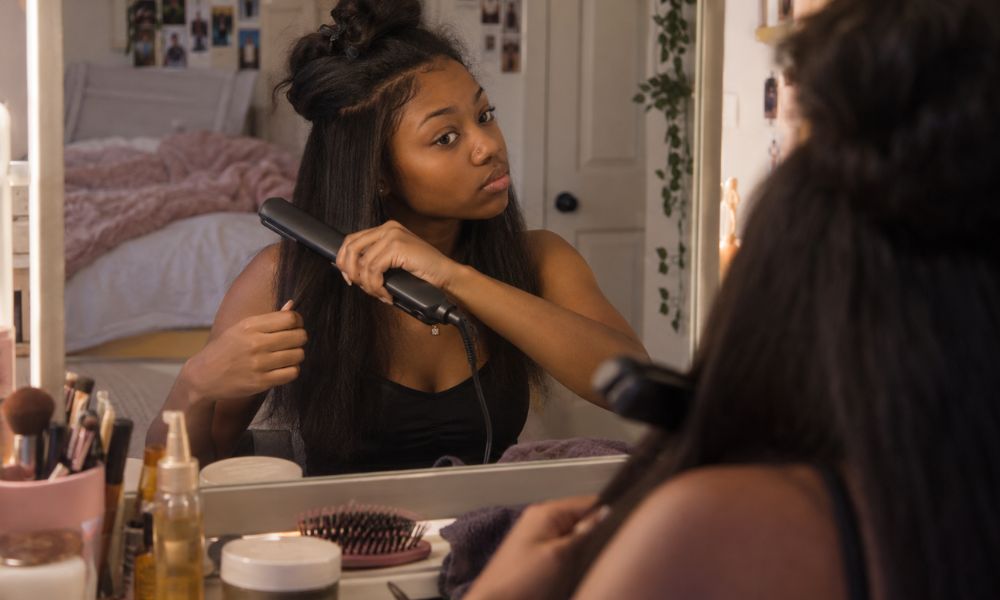
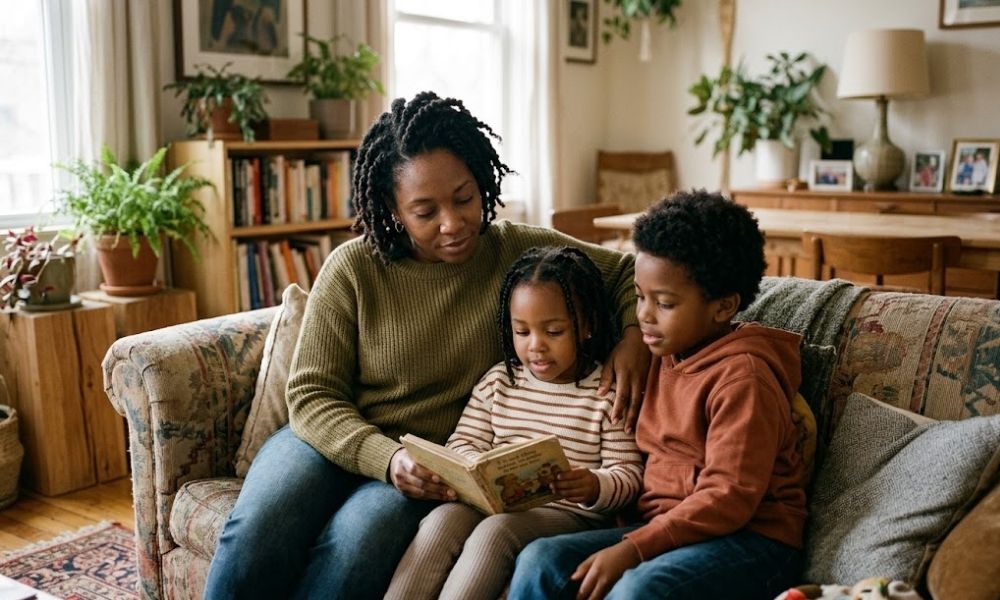
These gendered parenting fears often remain unspoken, but they shape the way parents understand safety, risk, and protection differently for sons and daughters. Sit in enough case reviews, enough strategy meetings, enough kitchens where a parent is trying to explain what they’re afraid of and a pattern shows itself. It’s not subtle once you’ve seen it. The fear a parent carries for a son is rarely the fear they carry for a daughter. And most parents have never said this out loud, even to themselves.
Reading not your thing today? Press play below.
Ask a parent what keeps them up at night and they’ll usually give you the same answer, whatever the sex of their child. I just want them to be safe. It sounds neutral. It sounds like the same fear, worn by every parent equally.
It isn’t.
For boys, the fear tends to move outward. Will he fall in with the wrong crowd. Will a teacher decide he’s a problem before he’s said a word. Will violence find him, or will he go looking for it, or will the two become impossible to tell apart by the time he’s fifteen. The fear is about the world closing in, about how quickly “boisterous” becomes “aggressive” the moment he stops being small enough to seem harmless.
For girls, the fear tends to move inward, or at least it aims somewhere different. Will someone touch her without permission. Will she mistake attention for love before she’s old enough to know the difference. Will she disappear into people-pleasing, into being agreeable, into a kind of quiet that looks like good behaviour but is really just fear wearing a school uniform. Will her mental health slip sideways while everyone’s too busy praising how “mature” she is for her age.
He needs to survive the world. She needs to survive herself in it. That’s not something a parent would ever say in a review meeting. But it’s what sits underneath a hundred conversations I’ve had, across most family’s I’ve sat with, whatever their background.

Here’s the part that surprised me, twenty years in. Parents rarely choose these fears. They inherit them. A mother who grew up watching her brothers get blamed first, believed last, will carry that into every school gate pickup, whether or not her own son has ever been near trouble. A father who watched his sister go quiet at fourteen, watched her stop eating properly, watched something in her dim, will see the same flicker in his daughter and panic before there’s even anything to panic about.
None of this makes the fear wrong. It makes it inherited. Passed down like a family recipe nobody remembers writing down, adjusted slightly each generation, still recognisably the same dish.
What I noticed, sitting across from families at their most frightened, is how rarely anyone had asked why the fear took this particular shape. Not whether the fear was valid. It usually was. But whether it was the right size, pointed at the right thing, for this particular child, in this particular year and not the one their parent had been carrying around since their own childhood.
That’s the pattern in general. But sit with Black families specifically, as I have for most of my career and the same pattern doesn’t just repeat. It compounds.
I’ve sat with Black mothers who could tell you the exact moment they started fearing for their son differently than they feared for their daughter and it was often years before he’d done anything to warrant fear at all. I’ve sat with Black fathers describing a kind of vigilance for their daughters that goes beyond the usual parental worry, something closer to bracing. As a Black practitioner myself, I wasn’t just hearing these fears from a professional distance. I recognised them. I’d heard versions of them my whole life, at kitchen tables that weren’t case reviews at all, just family.
The statistics on stop and search, on school exclusions, on how quickly a Black boy’s behaviour gets read as older and more dangerous than it is, these aren’t feelings. They’re documented, repeated, generational. So, the fear parents and carer have for their sons has a foundation under it that’s hard to just talk yourself out of.
And the fear for daughters carries its own particular inheritance. The adultification that means Black girls are seen as older, tougher, less in need of protection than they actually are. The way “strong Black woman” gets handed to a child before she’s finished being a child, as though resilience is something you’re born wearing rather than something forced onto you early.

It would be easy to assume this fear comes purely from what a parent has witnessed. A story on the news. Something that happened to a cousin. A video shared and reshared until it feels like it happened to everyone. And yes, that’s part of it.
But there’s something underneath that, something I only came to understand properly through years of sitting with families rather than reading about them. Some of what a Black parent feels for their child isn’t drawn from memory or headlines at all. It’s older than that. It’s the kind of fear that gets carried in a body before it’s ever explained in words, passed down through generations who survived things the current generation was never told the details of, only left with the feeling. Intergenerational trauma doesn’t always announce itself. Sometimes it just shows up as a mother who can’t relax until her son is home and can’t quite say why the feeling is so physical.
I don’t say this to explain the fear away, or to suggest it’s somehow less real for being inherited rather than witnessed firsthand. I say it because it’s another layer worth knowing is there. The fear a parent carries might be built from all three at once: what they’ve seen, what they’ve heard and what was handed to them by people who never got the chance to put it into words.

My sister has a daughter first, then a son. She once told me something that’s stayed with me since. The fear she carries for her son, she said, is heavier than the fear she carries for her daughter and it started earlier than she expected. Not when he became a teenager. Not even when he started school. It started while he was still a toddler, still soft-cheeked, still the kind of small that should make anyone feel protective rather than wary.
She told me she already found herself wondering when the world would stop looking at him and seeing a child and start looking at him and seeing something to fear. Something to be handled. Something that might, eventually, be hurt, or abused, or treated as a threat rather than a little boy who liked dinosaurs and hated going to bed.
That’s the fear in its rawest form. Not a worry about behaviour, or choices, or the years ahead. A worry about perception itself and how early it starts working against a child who hasn’t done anything yet except exist.
I don’t have a tidy answer for what to do with this. I’m not sure there is one. What I’d offer instead is smaller than a solution. It’s a noticing.
Next time you catch yourself afraid for your child, see if you can name what shape the fear has taken. See if it belongs to them, or if it’s something you’ve been carrying since before they were born, or something carried further back than that, into you by people you never met but who shaped you anyway. Neither answer needs fixing straight away. Sometimes just seeing the shape of a thing changes how heavy it feels in your hands.
If it helps to write your way into that noticing rather than just think your way into it, the prompts below are built for exactly that. Not to answer in one sitting. Just to start where you are.

A few sentences to sit with, if you want to write them out. Finish them honestly, and see what comes: