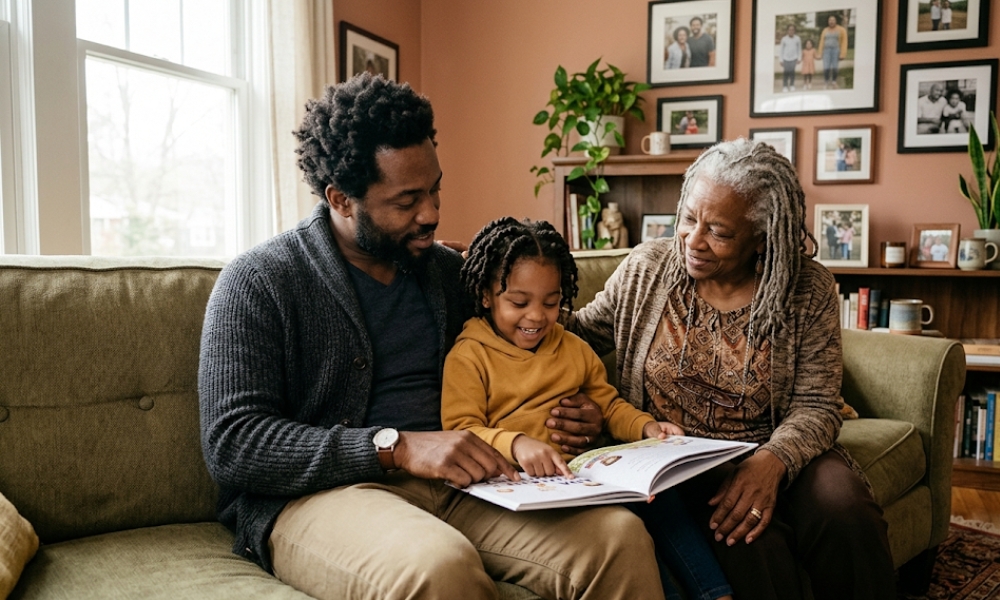
At some point in your parenting journey, you might start to notice something. The questions you’re turning over — how do I raise a child who knows their own worth? How do I help them bounce back when things get hard? — aren’t new questions. They’ve been asked before. Answered before. With real care and real depth, long before any of us got here. This is where ancestral wisdom in parenting begins to matter. The people who did that work were your ancestors. Prefer to listen?Listen to the full article below. Ubuntu: I Am Because We Are African philosophy has always understood something that the Western world tends to forget: a person doesn’t exist on their own. The individual and the community are bound together. That idea — simple as it sounds — holds an entire approach to parenting within it. Ubuntu. I am because we are. This isn’t a quote for a mood board. It’s a framework for living. It says that a child doesn’t grow in isolation. That who they become is shaped by who surrounds them. That the village — the extended family, the neighbours, the elders, the wider community — isn’t a bonus. It’s a necessity. And the responsibility of raising that child belongs to all of them. Why the Village Still Matters In practice, this meant children who could be guided by any trusted adult who saw them — not just their parents. Who learned respect not because it was demanded, but because it was demonstrated, everywhere, all the time. Who grew up understanding, from early, that they were part of something bigger than themselves. That’s not a small thing to give a child. There’s a Ghanaian proverb that says: A child who is not embraced by the village will burn it down to feel its warmth. Read that once. Then read it again. Because what it describes — a child left without belonging, without being seen and held by their community — isn’t a problem from the past. It’s one that shows up now, in different forms, in different places. The wisdom isn’t old. It’s just been set aside. Discipline as a Return to Dignity Ancestral Wisdom in Parenting Much of what African ancestral culture understood about children started from one core belief: a child arrives with spirit, with purpose, and with dignity that exists before any mistake they might ever make. Discipline, from this view, was never about crushing a child’s will. It was about bringing them back to themselves. Back to the values of the community. Back to who they already were. The Power of Stories, Proverbs, and Songs There’s something else worth holding onto. African cultures were — and in many places still are — rooted in oral tradition. Stories, proverbs, songs. These were how wisdom travelled. Not through textbooks. Through people. Elders sat with children and talked. They told the stories that carried the community’s values inside them. They made wisdom something that could be heard, felt, and remembered. There’s a proverb from across West Africa: Knowledge is like a garden: if it is not cultivated, it cannot be harvested. It speaks to how deliberate the passing down of wisdom was. It didn’t just happen. It was tended. Given time, attention, and repetition — because the elders understood that what a child learns, and how they learn it, shapes not just that child but the generation that follows them. Reclaiming Intentional Teaching at Home In a time when so much of children’s education is handed over to screens and institutions, there’s something worth reclaiming in the act of sitting with a child and telling them who they come from. What your people believed. What mattered to them. What they thought was worth protecting. That conversation doesn’t need a curriculum. It just needs intention. Caribbean Parenting and the Wisdom That Survived Caribbean parents — many of them descendants of Africans forcibly cut off from their cultures — carried pieces of this wisdom across the Atlantic, often without realising that’s what they were doing. The deep respect for elders. The expectation that children would play their part in the home. The understanding that a child’s behaviour reflected on the whole family. The proverbs that survived the crossing, adapted and translated, still passing through front rooms and around dinner tables. Manners carry you through the world. Honour your mother and your father. What you do in the dark will come to light. These weren’t just rules. They were the remnants of something older and more considered — a whole understanding of what it means to raise a person with integrity, inside a community that depends on that integrity to work. Reclamation Is Not Romanticising the Past The invitation here isn’t to romanticise the past, or to pretend that ancestral cultures were without their complications. They weren’t. But there’s a difference between blind reverence and genuine reclamation. Genuine reclamation means looking honestly at what your ancestors understood — about children, about community, about the long arc of who a person becomes — and asking what still holds. Most of it still holds. Raising Rooted Children A child who knows they come from a people of wisdom carries themselves differently. Not with arrogance. With rootedness. And a rooted child is much harder to shake than one who has been cut off from their own story. That’s the gift. It was always there. It’s worth picking back up. A Space for Reflection If this has stirred something in you — if you find yourself wanting to sit with where you came from and what you want to carry forward — the Self-Reflection Journal for Black Parents at samanthiaclarke shop was made for exactly this kind of thinking. A space to reflect, not just on the parent you’re becoming, but on the lineage you’re part of. Writing is one of the ways we start to understand what we actually believe, as opposed to what we’ve simply absorbed. If any part of this resonated, it might be

There’s a conversation that happens in a lot of households — often quietly, sometimes loudly — that goes something like this. It sits at the heart of what many experts now call generational parenting: the way beliefs, habits and experiences are passed from one generation to the next. I would never do to my children what was done to me. Or its opposite. My parents raised me that way and I turned out fine. Both statements carry weight. Both carry feeling. And both, if you look closely enough, are trying to make sense of the same thing: the gap between how we were raised and how the next generation is being raised. That gap didn’t appear by accident. It has a history. And understanding that history doesn’t mean excusing everything that came before. It means understanding how we all got here. Prefer to listen?Listen to the full article below. The 1970s If you were raised in the 1970s, or by parents who were, the dominant model of parenting was built around authority, obedience and discipline. Children were expected to be seen and not heard. Physical punishment was common in many households and was considered not just acceptable but responsible. Good parenting, by this model, meant producing children who did as they were told. The thinking underpinning this was largely behaviourist, though most parents wouldn’t have used that word. Reward compliance, punish transgression. Shape the child through consequences. Emotion didn’t feature much in the equation, and emotional expression from children was often read as defiance or weakness. This was also the era before parenting had become a subject of public conversation the way it is now. You parented the way your parents parented you. You didn’t read books about it. You didn’t question it. The idea that there might be a different way simply wasn’t in wide circulation. The 1980s and 90s: the first shift By the 1980s, something was beginning to change. Research into child development was starting to reach a wider audience. Much of this built on the work of psychologists like John Bowlby, whose attachment theory had been developing since the 1950s, and Diana Baumrind, who identified the distinction between authoritarian and authoritative parenting. The difference between the two is subtle but significant. Authoritarian parenting says: because I said so. Authoritative parenting says: here’s why, and your feelings about it matter. Both involve boundaries and expectations. But one acknowledges the child as a person with an inner life; the other doesn’t. Through the 80s and 90s, this research moved from academic journals into parenting books, health visitor appointments and school curriculums. The idea that how you spoke to a child, not just what you did, had lasting psychological consequences was gaining ground. I just want them to know I love them. That sentence, which might have seemed unnecessary or even soft to an earlier generation, was becoming central to what good parenting looked like. The 2000s: when psychology went mainstream By the early 2000s, the conversation had shifted considerably. Books like How to Talk So Kids Will Listen had sold millions of copies. The concept of emotional intelligence had entered everyday life. Parenting classes were being offered by local authorities. The language of attachment, emotional regulation and trauma was becoming familiar to parents who had no formal training in any of it. This was also the decade when the smacking debate reached new intensity in the UK. In 2004, legislation was tightened to remove the legal defence of “reasonable chastisement” in cases of actual bodily harm. It was a significant legal shift that reflected how far the cultural conversation had moved. The idea that physical punishment caused harm, not just physical harm but psychological and relational harm, was no longer a fringe position. It was becoming the consensus. The 2010s and 2020s: connection, trauma and the algorithm The most recent decade and a half has brought two significant developments that are still reshaping parenting culture. The first is the mainstreaming of trauma-informed thinking. The ACE study (Adverse Childhood Experiences), published in the late 1990s but gaining much wider attention through the 2010s, showed striking and consistent links between childhood trauma and adult health outcomes. The idea that what happens to a child doesn’t stay in childhood, that it echoes through the body and nervous system into adulthood, gave scientific weight to what many people had understood intuitively for years. The second is social media. For the first time, parents had access to an endless stream of parenting content at all hours: advice, models, philosophies, judgement. Gentle parenting, attachment parenting, conscious parenting, free-range parenting. The paradox of choice arrived in the nursery. More information than ever before, and more anxiety about whether you were getting it right. Am I damaging them? Should I have handled that differently? Why does it feel so hard? The Black experience: a specific and necessary conversation To talk about the evolution of parenting without acknowledging the Black experience is to tell an incomplete story. For many Black families in Britain, particularly those from Caribbean and West African backgrounds, the authoritarian parenting model of the 1970s was not simply a cultural default. It was also a survival strategy. Parents who had navigated hostile environments, who had built lives in a country that did not always welcome them, who understood that the consequences of their children stepping out of line in the wrong place could be severe: these parents parented with urgency. With strictness. With a kind of love that didn’t always look soft but was fierce in its protectiveness. I’m hard on you because the world will be harder. That sentence carries its own kind of tenderness, if you understand its context. The tension many Black parents navigate today is real. The research says: connection, emotional attunement, less physical discipline. The lived experience says: my parents raised me this way and kept me safe. The community says: children need to know their place. The school says: your child needs to be able to express
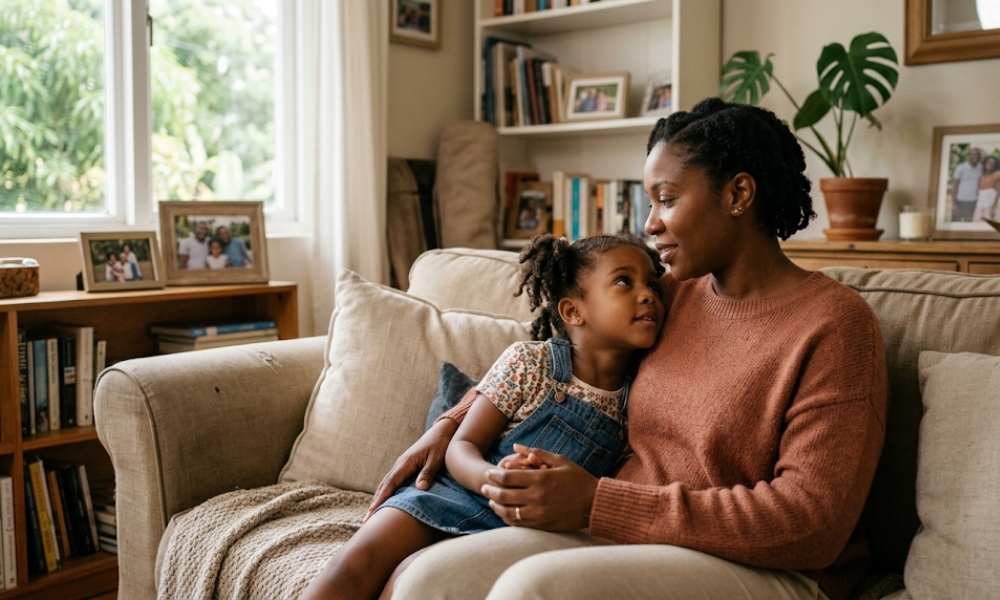
There’s a particular silence that falls when a parent tells someone from an older Caribbean generation that you don’t smack your children. It isn’t always hostile. Sometimes it’s just weighted. A whole worldview compressed into a pause. In many ways, breaking old parenting habits begins in that silence. It never did me any harm. You’ve heard it. You may have said it yourself once, before you started thinking harder about what it actually means. Prefer to listen?Listen to the full article below. The Love Inside Caribbean Parenting Caribbean parenting, at its best, is full of love. Warmth, food, sacrifice, showing up. Generations of people who worked themselves to the bone so their children could have more. That part is real and it deserves to be said first. But there is another part. One that doesn’t get examined as often as it should. A harshness that ran alongside the love. A discipline that didn’t always know the difference between correction and punishment. Between guiding a child and breaking them a little, in the hope that a quieter spirit would keep them safe in a world that was already hostile enough. Where the Harshness Came From That harshness didn’t come from nowhere. It has a history. A long, brutal one. Slavery didn’t just damage bodies. It damaged the way families were built. It severed bonds, disrupted attachment, created conditions where tenderness felt like a liability. Where softness was something you couldn’t afford. Where teaching a child to comply, immediately and without question, wasn’t cruelty. It was survival. That thought alone makes me very sad. Those patterns didn’t end when slavery ended. They passed down. Through generations of colonial rule, through the Windrush era, through front rooms in Brixton and Birmingham and Brooklyn. They arrived in households where the original context had long since faded, but the methods remained. The belt. The wooden spoon. The voice that didn’t invite questions. The love shown through provision and sacrifice and silence, but rarely through words. When Love Was Felt, But Not Always Spoken We didn’t say I love you in my house. You just knew. Except sometimes you didn’t. And sometimes you spent years trying to work out what you’d done wrong. This isn’t about blame. It genuinely isn’t. The parents and grandparents who parented this way were themselves parented this way. Most of them were doing the best they could with what they’d been given. And what they’d been given was a system designed to produce compliance, not connection. Parenting Differently in 2026 But here’s what’s quietly remarkable about this moment in 2026. There is a generation of people, many of them the children and grandchildren of Caribbean households, who are choosing to do it differently. Not loudly. Not with a manifesto. Just in the daily, ordinary, unglamorous work of raising children with more gentleness than they themselves received. That is not a small thing. That is an act of extraordinary quiet courage. Because it isn’t easy to parent against your instincts, to go against family scripts. And when your instincts were formed in a particular kind of household, breaking with them can feel like a betrayal. Of your parents. Of where you came from. Like you’re saying they were wrong, when the truth is more complicated than that. The Questions That Come With Breaking Old Parenting Habits Am I going to raise a child who doesn’t respect me? Everyone I know was raised this way and they’re fine. I’m doing too much. Children need boundaries, not therapy. These thoughts are real. They visit. And they don’t always come from a bad place. Sometimes they come from genuine uncertainty about whether a different way will actually work. What Children Need Beyond Compliance But there is a growing body of evidence, and more importantly a growing number of lived experiences, that says it does. Children who are spoken to rather than shouted at, who are given reasons rather than ultimatums, who are allowed to feel their feelings without being shamed for having them, those children develop something that compliance alone cannot produce. A secure sense of who they are. Gentle Parenting Is Not Perfect Parenting The shift doesn’t require perfection. That’s worth saying clearly. Gentle parenting isn’t the absence of boundaries. It isn’t giving children everything they want or never raising your voice. It’s a direction of travel, not a fixed destination. Most people doing this work are doing it imperfectly, inside their own unhealed places, trying to respond differently in moments that used to trigger a very old, very automatic reaction. And sometimes they get it wrong. And they repair. And they keep going. That, too, is something worth passing down. Deciding That the Marks Stop Here The fact that this conversation is happening at all, in Caribbean households, in Black British families, across the diaspora, is significant. It means something is shifting. Not erasing the past. Not pretending the love wasn’t there. Just being honest about the parts that left marks. And deciding, quietly, that those particular marks stop here. A Space for Black Parents to Reflect If you’re sitting with any of this, the parenting you received, the parent you’re trying to be, the gap between the two, the Self-Reflection Journal for Black Parents at samanthiaclarke shop was made for exactly this kind of thinking. It’s not a guide. It’s a space. Somewhere to be honest with yourself, away from the noise. Writing has a way of helping you see what you’re actually carrying. Not to judge it. Just to know it’s there. If this article stirred something, that’s worth sitting with. You don’t have to have answers. Just start writing. Journal Prompts to Begin With A few prompts to begin with:

There might come a moment, as a mother, where you catch a glimpse of yourself in the mirror and don’t quite recognise the woman looking back in this struggle of motherhood vs sexual identity. Not because you look terrible. But because somewhere between the school runs and the packed lunches and the endless negotiations about bedtime, you went missing. Not your body. You. The woman who used to get dressed with intention. Who wore something because it made her feel like herself, not because it was easy to move in. Who existed, fully, in her own skin — not just as someone’s mum. It’s a quiet disappearance. That’s what makes it so easy to miss. Prefer to listen?Listen to the full article below. The Weight of Motherhood (and Especially Black Motherhood) Motherhood asks a lot. And for Black mothers, it asks even more. There’s the weight of raising children in a world that won’t always see them clearly. There’s the emotional labour that rarely gets named out loud. And there’s the expectation — soft but firm, the way most expectations are — that a good mother gives everything. That her needs come last. That desire, sensuality, the simple wish to feel wanted, belongs to a version of herself she’s agreed to leave behind. You’re a mum now. That’s enough. Except it isn’t. And you know it isn’t. Even when you feel guilty for knowing. The Pressure of the “Strong Black Woman” Narrative There’s something particular about the way Black womanhood and motherhood get pressed together. The Strong Black Woman. The nurturer. The one who holds it all together without complaint. These aren’t just ideas that live in other people’s heads — they get inside your own. You start performing them without realising. You start believing that wanting to feel desired is somehow at odds with being a devoted mother. That keeping yourself feeling alive is a luxury. An indulgence. It isn’t. Feeling like a woman — a full woman, not just a functional one — isn’t something you earn back once you’ve done enough mothering. It’s not a reward waiting for you on the other side of the children leaving home. It’s yours now. It always was. The Inner Conflict: Guilt, Selfishness, and Exhaustion And yet. But who has the time? I can’t think about myself like that right now. It feels selfish. That last one does the most damage. Selfish. As if wanting to feel attractive, or sensual, or simply seen as a woman, makes you a worse mother. As if your children need you hollowed out rather than whole. What Children Actually Need Here’s what doesn’t get said enough: children don’t need a martyr. They need a mother who knows who she is. Who shows them, just by living, that women are allowed to take up space. That desire isn’t shameful. That a woman can love her children fiercely and still belong, without apology, to herself. Reclaiming Identity in Small, Everyday Ways The balance people talk about — motherhood and identity, giving and keeping — it’s rarely about grand gestures. It’s not about booking a spa weekend or carving out two hours every morning. It’s smaller than that. More honest. It’s getting dressed and asking yourself: do I feel like me in this? It’s keeping alive the parts of yourself that existed before the children came. Your sense of humour. Your curiosity. The way you carry yourself when you feel good in your skin. It’s remembering that feeling desired — by a partner, or simply by yourself when you look in the mirror — isn’t a distraction from motherhood. It’s part of being whole. And your wholeness isn’t separate from your mothering. It feeds it. Naming the Struggle None of this is easy to hold onto. The guilt has its own logic. The exhaustion is real. The weight of what a Black mother is supposed to look like — selfless, steady, inexhaustible — doesn’t dissolve just because you can name it. But naming it is somewhere to start. I am allowed to want to feel like a woman. That doesn’t make me less of a mother. Both things are true. Reflection Space Motherhood vs. Sexual Identity If any of this landed somewhere tender, the Self-Reflection Journal for Black Parents at samanthiaclarke was written for exactly this kind of reckoning. Not to give you answers — just to give you space to hear yourself think. Writing has a way of returning you to yourself. Not by solving anything, but by letting you say the things you haven’t quite found words for yet. If something here stirred something in you, that’s worth sitting with. You don’t need a breakthrough. Just write. A few prompts to start with: – The last time I felt fully like myself — not as a mother, but as a woman — was…– Since becoming a mother, the parts of me I’ve quietly set aside include…– When it comes to what I’m allowed to want, the story I keep telling myself is…– When I imagine feeling truly desired and seen, what comes up for me is…– The one small thing that makes me feel alive is… and the last time I did it was…

4-minute read Have you ever found yourself lying awake at night, heart heavy with worry about your teenager’s safety during interactions with the police? It’s a question that lingers for many parents and caregivers, especially when history and statistics both suggest that Black children, particularly boys, will one day be seen not as kids, but as threats. Ensuring teens safe during police encounters is something every parent should consider. The idea of giving a child “The Talk” isn’t about discussing birds and bees, but about survival. How to keep your hands visible. How to stay calm even when you’re being treated unfairly, and how to make it home. But what does it mean when parents have to prepare their children for an encounter that shouldn’t even be dangerous in the first place? The Reality of Disparities The statistics paint a grim picture. Black people in the UK are three times more likely to be arrested than their White counterparts. Black children are disproportionately subjected to strip searches, being up to six times more likely to be searched compared to national population figures. These numbers aren’t just statistics; they reflect the everyday realities of a system that has long viewed Black bodies as something to be monitored, controlled, and contained. For some parents, the first wave of fear doesn’t hit when their child turns 16 or even 13—it starts much earlier. I remember a conversation with my sister as she watched her toddler son play. He was still chubby-cheeked and innocent, but she was already thinking ahead to the day when someone would see him as a problem instead of a child. “How long before they stop seeing him as cute and start seeing him as a threat?” she asked. This thought is rooted in the challenge of keeping teens safe during police encounters. A Historical Legacy The relationship between Black communities and the police in the UK has been fraught for decades. The 1981 Brixton riots were triggered by aggressive stop-and-search tactics that disproportionately targeted Black people. The Macpherson Report, published in 1999 following the murder of Stephen Lawrence, officially declared the Metropolitan Police to be “institutionally racist.” Over 20 years later, a 2023 report found that institutional racism still exists within policing today. These are not just isolated incidents or relics of the past—they form a continuous thread that weaves through every generation. And for Black parents, they create an unavoidable reality: preparing children for encounters with police is not optional, it’s necessary. Preparing Teens for Police Encounters The question many parents ask themselves is, “How do I prepare my child for something that shouldn’t even be happening?” There’s no easy answer. But for those raising Black children, these are some of the conversations that take place: Understanding Their Rights: Teaching young people what the police can and cannot do can help them feel more in control. For example, they have the right to know why they’re being stopped. They can also ask for an appropriate adult if they’re being searched. Keeping Their Composure: Many parents advise their children to stay calm, even when they feel they’re being treated unfairly. But the reality is, no matter how calm they are, they still might be seen as “aggressive.” Knowing Who to Call: Ensuring young people know who to contact in the event of an incident can make all the difference. Parents may advise their children to memorise a trusted number or make sure their phone is charged before leaving home. For some, these conversations start as early as primary school. Because waiting too long? That’s not a luxury every Black parent feels they have. Navigating the Emotional Toll It’s impossible to have these conversations without acknowledging how deeply unfair they are. Parents are not the ones who should be responsible for making sure their children are treated with dignity and respect by law enforcement. That is the job of the police. But because history has shown that Black lives are too often devalued, parents feel they have little choice. They teach their children how to move through the world as safely as possible. They focus on ensuring teens are safe during police encounters. Some parents also choose to engage in advocacy work. This may involve attending community meetings, challenging police misconduct, or supporting organisations that fight for fair policing. But this is not an obligation. The burden of dismantling systemic racism should not rest on the shoulders of those who experience it. The police and White society, as the architects and beneficiaries of this system, should be doing the heavy lifting. A Thought to Ponder For parents navigating these difficult realities, here’s something to reflect on: “The ways I try to help my children stay safe when interacting with the police are…” How do you have these conversations without making your child live in fear? How do you balance preparing them for reality while still allowing them to experience childhood? And beyond these one-on-one discussions, what should we demand from the system that continues to fail Black communities? There are no easy answers. But the fact that we still need to ask these questions speaks volumes about the work that still lies ahead.

4-minute read Have you ever found yourself stressing over every single pound while worrying about how to teach your kids the value of money? It’s a reality for many families, and let’s be honest—it’s not always easy. Despite the struggle, there’s that burning desire to pass on lessons in resourcefulness, responsibility, and resilience that go far beyond the mechanics of a budget. This isn’t about having all the answers; it’s about pondering together how to raising money-smart kids when funds are tight—so they don’t have to grow up feeling the constant strain of scrimping that you once endured. Lessons in Resourcefulness Think back to your own childhood. Remember the days when a special treat was a rare, almost mythical event? When making a meal out of whatever you had wasn’t just a necessity but a lesson in creativity? Those were the moments that taught you how to stretch every pound and make something wonderful out of very little. Now, you might find yourself comparing prices in local shops, hunting for bargains, or planning meals with military precision—all in an effort to make every single pound count. And while these practises are undeniably smart, you can’t help but wonder: Is there a way to pass on that wisdom without letting your kids feel the constant pinch? A Balancing Act: Then vs. Now Let’s get real. Resourcefulness in the face of financial hardship was both a blessing and a burden. On the one hand, learning to manage money on a tight budget taught you discipline and ingenuity. On the other, it sometimes meant missing out on opportunities that others took for granted—a missed holiday here, a postponed treat there. You know all too well the sting of scrimping, sacrificing little luxuries, and feeling that nagging financial pressure every day. Now, as you look at your children, you hope for a different outcome. You want them to inherit the wisdom of budgeting and saving without having to worry about every small expense. You want them to understand that raising money isn’t just about survival—it’s about creating choices and opportunities for the future. It means to create opportunities, not a constant source of anxiety that shadows every decision. Turning Challenges into Teaching Moments Everyday tasks can become brilliant lessons in financial literacy. Imagine grocery shopping transforming from a mundane errand into a lively lesson on comparing prices, reading labels, and planning meals ahead of time. Maybe you set up a weekly family challenge where everyone pitches in with creative ideas on how to save money. Suddenly, budgeting isn’t just a chore—it’s a fun, collaborative activity that teaches practical skills and teamwork. And through these small but meaningful experiences, you’re not just saving; you’re also raising money-wise children who understand the value behind every pound. I remember a friend who made it a tradition to involve his kids in meal planning every Sunday. They’d gather ‘round the table, brainstorm recipes that were both nutritious and affordable, and then set off to the market with a clear plan in mind. That simple routine not only stretched their tight budget but also instilled in his children an early sense of financial savvy. It’s moments like these that remind you that smart money management can be both creative and enjoyable. The Cost of Scarcity vs. the Value of Opportunity Let’s be honest—the constant pressure to save every pound can feel limiting. You might recall how certain experiences felt perpetually out of reach, or how every little expense was a battle. The hope now is to equip your children with the tools they need to manage money wisely while ensuring they don’t miss out on life’s spontaneous joys. Imagine a future where your children aren’t defined by financial scarcity but by the opportunities smart money management creates. Picture them having the freedom to pursue further education, travel, or even start a venture without the weight of scrimping for every pound. It’s not about shielding them from financial realities—it’s about helping them navigate these challenges more gracefully than you once had to. A Thought to Ponder As you navigate the challenges of a tight budget while teaching your children to be money-smart, here’s a little journal prompt to reflect on: “Despite struggling with money, I try to teach my children to be responsible with money by…” Let that prompt simmer in your mind as you consider your own financial journey. How do you balance the lessons of resourcefulness with the desire to offer a bit more? Is it possible to pass on the wisdom of budgeting without letting your kids feel the full weight of financial hardship? There are no one-size-fits-all answers here—every family’s relationship with money is uniquely shaped by its own struggles and triumphs. But perhaps the goal is to strike a balance: to instil practical skills and resilience, while paving the way for a future where financial worries don’t overshadow the sheer joy of living. At the end of the day, raising money-smart kids when you’re on a tight budget is about more than just stretching pounds. It’s about creating a legacy of thoughtful financial habits so that your children can build lives filled with opportunity, security, and the freedom to dream big. So, reflect on your own experiences, share your insights with your family, and maybe even answer that journal prompt for yourself. After all, pondering these questions is the first step toward a future where financial struggle is a thing of the past.

4-minute read Have you ever stopped to think about the things your parents did to make you feel safe? Not just the obvious stuff, like locking the doors at night or reminding you to look both ways before crossing the street, but the deeper things—the way they created a world where you could feel secure even when the world outside didn’t always seem welcoming. If you grew up in a Black family, safety wasn’t just about physical protection. It was layered, thoughtful, and often unspoken. It was about shielding you from the world’s harshest realities while helping you navigate them. Sometimes, your parents did it in ways you didn’t fully understand until years later. The Quiet Shields They Built Think back to how your parents always seemed to have rules that were stricter than your friends’ parents. Maybe they wouldn’t let you spend the night at other people’s homes, even when you begged. “I don’t know their people like that,” your mom might’ve said, leaving you fuming because everyone else was allowed. At the time, it might have felt unfair, but now? Now, you see it differently. It wasn’t just about trust; it was about safety. Your parents knew the risks that came with letting their child out of their sight in a world that didn’t always value your innocence or well-being. That rule was their way of creating a protective barrier around you, even if it made them the “strict” ones. And then there were the ways they tried to teach you street smarts without scaring you too much. Maybe they told you not to talk to strangers or warned you to stay away from certain parts of the neighbourhood. Maybe it was a quiet look they gave you when you were out in public—a subtle signal to stay close and stay alert to feel safe. These weren’t just rules; they were acts of love, quiet shields meant to keep you safe. Safety in Discipline Discipline, too, often carried a deeper meaning. If you grew up in a household with rules about respect, punctuality, and “staying in your place,” it wasn’t just about control. It was about teaching you how to navigate a world that wouldn’t give you many chances. You might remember being told not to run in stores or to speak up only when spoken to. It might have felt stifling at the time, but your parents used it to prepare you for spaces where people would judge you unfairly. They were trying to protect you from consequences that felt disproportionately harsh—consequences that too often followed Black children who were simply being kids. The Way They Let You Breathe But it wasn’t all about rules and preparation. Your parents also found ways to create pockets of joy, moments where you could just be. They understood that safety wasn’t only about protection; it was about letting you feel free, even if only for a little while. Think about the way your parents socialised, how they turned gatherings into celebrations of life. Whether it was a christening, a birthday, or a backyard BBQ, music, food, and laughter filled those moments. You might have watched your dad crack jokes with his friends or seen your mum dancing to her favourite song; her face lit up with joy. In those moments, you learned how to enjoy life and how to find safety and comfort in the community. Even as they worked to protect you from the world’s harshness, your parents showed you how to revel in its beauty. What Can Be Done with That Legacy? Now, as you reflect on these memories, you might wonder how you can carry that legacy forward. How can the way your parents made you feel safe guide you in your own life? Maybe it’s about finding the balance between shielding and preparing, between protecting innocence and teaching resilience. It’s about knowing when to set boundaries and when to let joy take over, when to be firm, and when to be soft. Think about how you create safety for yourself and those you care about. Do you set boundaries that protect your peace? Are you finding ways to create joy, even in difficult times? Do you build a sense of community, like the one your parents built around you? A Legacy of Care What your parents did to make you feel safe wasn’t perfect. No parent gets it right all the time. But their efforts—their rules, their discipline, their laughter, their love—left you with something powerful. As you carry that forward, ask yourself: How can you use those lessons to create spaces of safety, joy, and resilience for yourself and others? Because if there’s one thing the Black experience has always taught us, it’s this: even in the hardest times, we find ways to protect, nurture, and uplift. Your parents passed down that legacy to you, and now, you have the power to carry it forward.

Let’s talk about something heavy today, something that lives in the back of your mind as you try to raise your kids in a world that doesn’t always feel safe. If you have both a son and a daughter, have you ever stopped to think about who you worry about more? It’s not an easy question to answer.

Have you ever wondered if you should discuss “selling out” with your kids? It’s a loaded conversation in our communities—a phrase tossed around to describe when someone seems to abandon their roots or compromise their values for mainstream success. If you heard it growing up, you know it carries a weight of judgment and history. But is it a conversation worth having with your children? Let’s explore that question together and ponder its complexities. When you think about it, “selling out” is a concept that often feels impossible to pin down. It can refer to a musician switching genres, a friend adopting different slang, or even a family member making choices that seem to stray from what you believe is authentically Black. The term has been used both as a critique and as a warning—a way to signal that there are lines not to cross. But in today’s ever-changing world, are these boundaries still clear? And more importantly, should you be talking about them with your kids? The Weight of the Label Imagine your child comes home excitedly sharing their new interests after a school event. Perhaps they’re experimenting with different music genres—listening to rock and pop music, for instance—or expressing themselves in ways that feel different from what you’re used to. Then, a comment like “You’re selling out” might surface from a well-meaning friend or relative. Suddenly, expectations trap your child in the crossfire—pulling them between exploring new horizons and clinging to traditions. One parent I recall spoke about her struggle when her son, an avid fan of rock and pop music, was teased by his peers for “listening to White people’s music.” That moment became a turning point. She had to decide whether to confront the issue head-on with him or let it slide. She struggled to decide, questioning how much of our identity we ought to negotiate with the world around us. The Conversation: To Talk or Not to Talk? You might ask yourself, “Should I even bring up the term ‘selling out’?” Some argue that discussing it can help your kids understand the complexities of cultural identity, while others worry that it might burden them with an outdated expectation of what it means to be Black. The truth is, there’s no one-size-fits-all answer. Reflect on how your parents handled similar topics. Perhaps you remember warnings like “Don’t forget where you come from” or “Be careful how you act in public.” These weren’t mere rules but lessons woven into everyday life—a way of ensuring safety, respect, and pride in your heritage. For some, these conversations built a resilient identity; for others, they sowed seeds of confusion about what it truly means to be Black. A Pivotal Moment Picture this: Your daughter excitedly tells you about a new friend she made, someone who loves different music and culture than what she’s been exposed to at home. Later, you overhear a relative remark, “I can see her being a sell-out when she gets older.” That moment might sting, not because your daughter is changing, but because it highlights the tension between tradition and evolution. At that moment, you have a choice. You could dismiss the comment and let your daughter continue being herself, or you could use it as a teaching moment to discuss the fluidity of identity. Imagine responding with something like, “There’s no one way to be Black, love. Our culture is rich and varied, and it can mean different things to different people.” Framing the conversation around choice and individuality rather than strict adherence to tradition might encourage her to embrace her identity without fear of judgment. Pondering the Pros and Cons As you mull over whether to talk about “selling out” with your kids, consider what the conversation might achieve. On one hand, it could open their eyes to the nuances of cultural identity—teaching them that embracing different interests doesn’t mean they’re losing their roots. On the other hand, it might burden them with the pressure of having to constantly prove their loyalty to a certain version of Blackness. Reflect on your own experiences. Did anyone ever make you feel like you had to choose between being yourself and being “Black enough”? How did that make you feel? Sharing such reflections—even if only internally—can foster an open dialogue, allowing your children to form their own identities without feeling boxed in by expectations. A Question Worth Pondering Ultimately, the decision to discuss “selling out” with your kids is deeply personal. There are no clear-cut answers—only a series of questions worth pondering. How do you define authenticity? Can identity be fluid, or must it remain fixed? And most importantly, how can you empower your children to navigate these labels without feeling confined by them? Perhaps the real goal isn’t to police your child’s interests or choices but to provide them with the tools to critically assess the world around them and forge an identity that is both strong and flexible—a balance between honoring tradition and embracing change. In the end, whether you bring up the conversation or let it arise naturally through your child’s experiences, consider how these discussions might guide them to think for themselves about what it means to be Black. After all, the journey of self-discovery is one they must walk on their own, with your gentle support serving as a backdrop for their exploration of identity.

If you grew up in a Black family, you’ve likely felt the impact of “tough love.” Maybe it was the way your mother’s sharp words corrected you before you could embarrass yourself—or her. Or the way your father’s firm discipline taught you that some mistakes come with consequences. Tough love is woven into the fabric of our culture, a legacy handed down through generations as a way of preparing us for a world that’s often unkind. But as parenting styles shift and the conversation leans toward gentler methods, it’s time to pause and ask: Are we better off now? Or are we losing something valuable in the process? This isn’t an easy question, and this isn’t a post to provide neat answers. This is a space to reflect, to ask yourself what’s working, what’s not, and whether we might be throwing out the baby with the bathwater as the Black community embraces new approaches to raising children. Drawing from almost two decades of experience in children’s services, where countless interactions with families, young people, and caregivers reveal how decisions shape lives, the intent here is to ask questions that provoke reflection, not to dictate how things should be. __________________________________ ______ Tough Love: A Legacy of Survival To understand tough love, you have to consider where it came from. For generations, some Black parents have used discipline not as cruelty but as a means of survival. When children were warned to stay in line or to act “right” in public, it wasn’t just about behaviour—it was about safety. Think about the stories passed down: warnings to “keep your head down” in certain spaces or to “always act twice as good” just to be seen as competent. These weren’t random instructions; they were tools for survival in societies where being Black meant walking a fine line between existing and being punished for it. This approach to parenting was a way of building resilience. It was about teaching children to be strong, disciplined, and prepared for a world that often required more from us than it gave. But here’s the rub: While tough love created strength, it sometimes left scars too. It could be harsh. It could feel unyielding. And for some, it created a distance between parent and child that wasn’t easy to bridge. ________________________________________ Today’s Parenting Styles: A Necessary Shift? Fast forward to now, and the parenting landscape looks different. There’s a growing focus on emotional intelligence, mental health, and nurturing children in ways that prioritise their well-being over strict discipline. Parents are being encouraged to explain instead of scold, to listen instead of dictate, to let children explore and grow without fear of punishment. These shifts have brought positive change. Children feel heard. They’re more in touch with their emotions. They’re learning that their voices matter. But at the same time, you can’t help but notice some troubling trends in society. Violence among youth. The rise of online bullying. A culture of instant gratification that sometimes erodes respect for authority, teachers, or even parents. Let’s be clear: These issues aren’t unique to Black families. They’re widespread, crossing racial and cultural lines. But as Black people, we know that the challenges we face can hit differently. Our kids grow up in a world where racism, inequality, and systemic barriers are ever-present. And while new parenting methods focus on empowerment, it’s worth asking: Are we still giving our children the tools they need to navigate this tough reality? ________________________________________ Are We Losing the Lessons of Tough Love? When you think back to your own upbringing, you might remember moments that stung at the time but made sense later. Maybe it was the strict curfew that kept you out of trouble. The lecture about respect that taught you to navigate authority figures with care. Or the insistence on excellence because mediocrity simply wasn’t an option for you. These lessons shaped you. They gave you the resilience to push through adversity, the discipline to succeed where others doubted you, and the understanding that life wouldn’t always give you what you deserved. Now think about the children growing up today. Without those same boundaries, are they as prepared to handle rejection, criticism, or the realities of a world that doesn’t always cater to their feelings? Are we focusing so much on making them feel seen and heard that we’re not teaching them how to face challenges and grow from them? Of course, tough love wasn’t perfect. Some of its methods left wounds that take years—or lifetimes—to heal. But what if, in moving away from it entirely, we’re losing the resilience it instilled? What if we’re raising children who are unprepared for a world that, frankly, isn’t always kind? ________________________________________ No Easy Answers The truth is, there are no easy answers here. Parenting isn’t one-size-fits-all, and every generation adapts to the world it finds itself in. Our parents raised us with tough love because they had to. Many of today’s parents are trying gentler approaches because they believe it’s what children need now. But as you reflect, it’s worth asking yourself some hard questions. Are we balancing care and discipline? Are we raising children who understand boundaries, responsibility, and accountability while still feeling supported and loved? Or are we leaning too far in one direction, leaving them unprepared for a world that won’t always bend to their needs?