The school calls it behaviour. You call it your child.
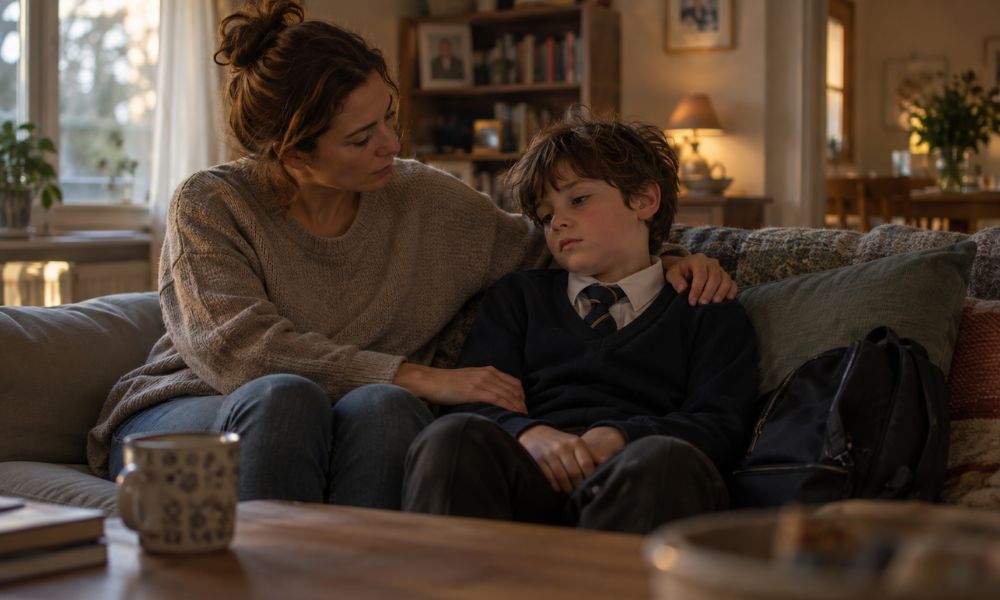
Two different words for the same eight-year-old. One of them comes with a file. A record of incidents. Language like disruptive, defiant, struggles to regulate. The other is the unsupported child at school, the one who cried in the car on the way home because school is where he goes to feel wrong.
Both of those things can be true at once, and that’s the part nobody prepares you for.

I’ve spent years working in safeguarding, sitting in rooms where a child’s whole future gets decided by which story wins. The naughty story or the unsupported story. They rarely fight fair. The naughty story is quicker to write, easier to action, and it doesn’t ask anything of the system. The unsupported story means someone has to change what they’re doing. Adjust a lesson plan. Rethink a seating chart. Admit that the thing that works for twenty-nine children in the class doesn’t work for this one, and that isn’t his fault.
I’ve also sat in rooms where the priority, unspoken but obvious, was protecting the institution’s image rather than protecting the child in front of them a pattern that shows up even more sharply when you look at racism in UK schools.
So the naughty story often wins. Not because anyone in the room is cruel. Because it’s cheaper.
You’ve probably had that thought more times than you can count. You go in prepared. You’ve got the reports, the diagnosis if you’ve managed to get one, the calm voice you practised in the car park. And still you leave the meeting with the sense that you were heard the way people are heard when someone is waiting for you to stop talking.
Here’s what’s underneath a lot of that resistance, even when nobody says it out loud: a school’s reputation is built on outcomes that are easy to measure. Attendance. Attainment. The kind of numbers that go into a report to a governing body, that feed into a rating. A child who needs more time, more patience, a different way in that child doesn’t move the numbers in the right direction quickly. So sometimes the culture of a place quietly decides, without ever putting it in writing, that managing him out is simpler than building him in.
I want to be careful here, because this isn’t every school. I’ve sat across from teachers who fought harder for a child’s needs than some parents had the energy left to fight. But I’ve also sat in rooms where the priority, unspoken but obvious, was protecting the institution’s image rather than protecting the child in front of them.
What gets lost in that trade is something we actually know how to fix.
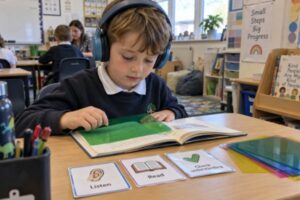
Take dyslexia. A child who can’t decode text at the expected pace isn’t lacking intelligence. Give that same child coloured overlays, extra processing time, materials read aloud, and something interesting happens. The gap between her and her peers doesn’t just narrow. In a lot of cases, it closes. The information was always getting in. It just needed a different door. The British Dyslexia Association has documented many of these classroom adjustments and what they achieve in practice.
Same with a child with DLD (developmental language disorder) who looks like he isn’t listening. He’s listening. He’s translating slower than the room is speaking, and by the time he’s caught up, the class has moved three topics ahead. Slow the input down, give him visual supports alongside the spoken word, and the child who ‘doesn’t pay attention’ starts answering questions nobody thought he’d absorbed. RADLD is a good starting point if DLD is something you’re trying to understand or explain to a school.
Autistic children labelled disruptive for needing to leave a loud room, given a quiet space and a warning before transitions instead of a sudden bell, often become the calmest child in the class, not the most volatile.
None of this is a secret. It’s documented, researched, taught in courses that some schools send their staff to and others don’t have the budget or the will to fund. The support exists. What’s inconsistent is whether a child gets access to it before or after they’ve been labelled something harder to undo.
That thought will sit with you at 2 am some nights, and I won’t rush you out of it because there’s something true buried in it. You probably are one of the only people holding the full picture: the diagnosis, the history, the version of him that exists before the school day starts wearing him down. That’s not paranoia. That’s you doing the job nobody assigned you but that fell to you anyway — and it sits alongside a whole set of gendered parenting fears that rarely get named out loud.
What I won’t tell you is that it’s simple from here. It isn’t. Getting a school to see possibility instead of a problem can take assessments, appeals, more meetings than feel survivable, and sometimes a fight you didn’t sign up for when you just wanted your child to be able to go to school and come home in one piece.
But it isn’t your child who’s the obstacle. It never was.

If you’re in the middle of this right now the meetings, the reports, the quiet grief of watching someone misjudge your unsupported child at school you don’t need me to tell you what to do next. You’re probably already doing more than most people would manage. What might help more is somewhere to put down what you’re carrying that isn’t a meeting room. A page. A few honest lines at the end of the day, written for no one but you.
Not to fix anything. to keep hold of what you know to be true about him or her and sometimes, that clarity is where breaking old parenting habits actually starts.
Not to fix anything. Just to keep hold of what you know to be true about him or her, on the days someone else is trying to convince you otherwise.
A few sentences, if you want somewhere to start:
The thing my child does well that this school has never once asked about is…
The point where I started trusting their judgement more than my own was…
If support meant something real, not a word in an email, it would look like…
The voice that gets loudest in my head after a hard meeting belongs to…