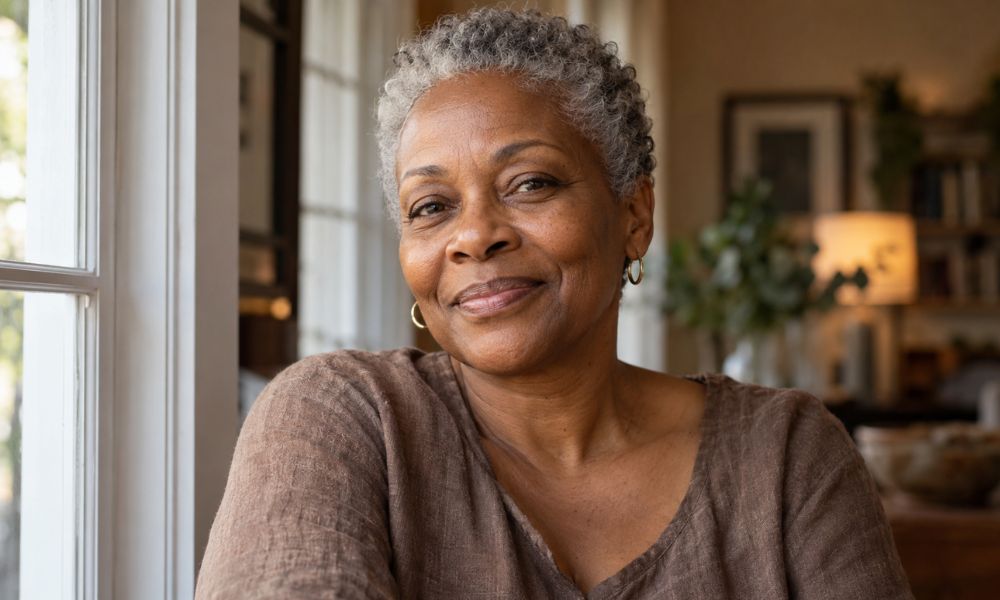
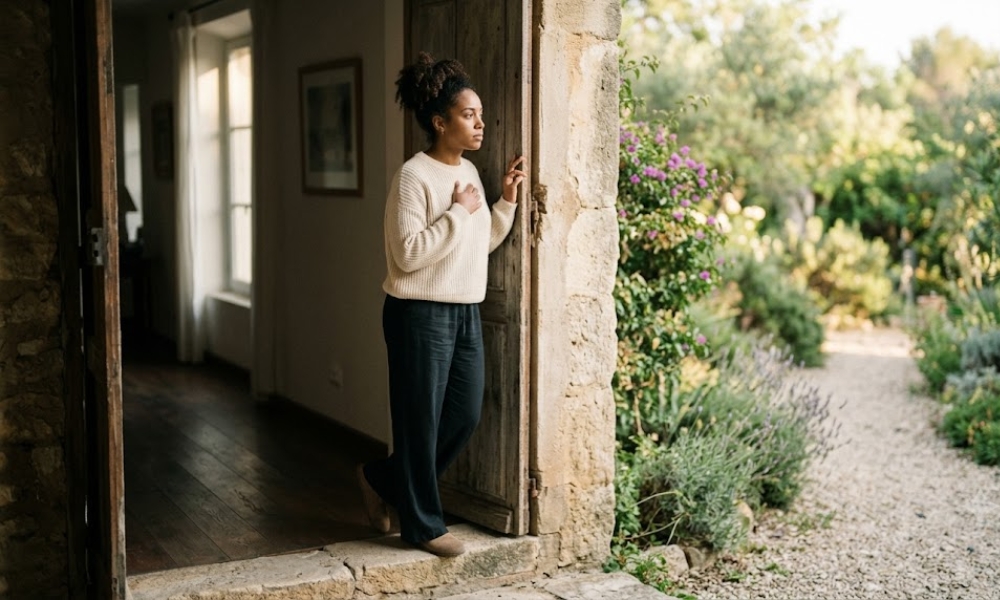
It has a plan for you. A carefully managed, smallish life. Not unhappy necessarily. Just contained. Safe. Familiar. A life where you don’t reach too far, ask for too much, or put yourself anywhere you might be judged, rejected, or found out. This is often how anxiety holding you back begins: quietly, reasonably, and in ways that can feel like protection.
Anxiety is very committed to this plan.
And the insidious thing is that it doesn’t announce itself as a limitation. It announces itself as logic. As caution. As the reasonable voice in the room.
I’m just being realistic.
Now isn’t the right time.
What if it goes wrong?
That’s not wisdom. That’s anxiety in a sensible coat.
Prefer to listen?
Listen to the full article below.

When most people think about anxiety holding them back, they picture the dramatic version. Panic attacks. Inability to leave the house. The kind of anxiety that is clearly, visibly a problem.
But the more common version is quieter. It’s the email you drafted and never sent. The conversation you rehearsed but didn’t have. The opportunity you talked yourself out of before anyone else had the chance to say no.
It’s the persistent sense that you need to feel ready before you begin. And the readiness never quite arrives.
When things calm down, I’ll focus on that.
Once the children are older.
When I’m more confident.
The goalposts move. They always move. Because anxiety isn’t waiting for conditions to improve. It’s generating the conditions that keep you waiting.
For women specifically, this pattern tends to run deep. Research consistently shows that women experience anxiety at higher rates than men, and that the way it shows up in women often looks like over-responsibility, perfectionism, and people-pleasing rather than the more visible presentations that tend to get taken seriously. We internalise it. We manage it quietly. We become expert at functioning while simultaneously holding ourselves back.
And we often don’t recognise it as anxiety at all. We call it being sensible. Knowing our limits. Being realistic about what’s possible.
If you’re a mother, anxiety has additional material to work with.
There’s the anxiety about your children, which is so normalised it barely registers as anxiety anymore. The constant low-level monitoring. The vigilance. The mental load that never fully switches off.
But underneath that, there’s often something else. A woman who existed before the children. Who had ambitions, desires, a sense of her own direction. And anxiety, which was perhaps already present before becoming a mother, has quietly used the demands of parenting as a very reasonable-sounding reason to keep her in place.
I can’t think about that now. The children need me.
It feels selfish to want something just for myself.
What kind of mother puts herself first?
The guilt and the anxiety become so intertwined that it’s difficult to tell where one ends and the other begins. What’s clear is that both have the same effect: keeping you small. Keeping you waiting. Keeping you available to everyone except yourself.
This isn’t about choosing between being a good mother and living fully. It’s about recognising that anxiety will use whatever story is available, including the ones about being devoted and selfless, to keep its grip.
There’s a particular kind of grief that doesn’t get talked about much. The grief for the things you didn’t do. The version of yourself you never quite got to be.
It’s not dramatic grief. It doesn’t arrive all at once. It shows up in small moments: watching someone else do the thing you always wanted to do, or finding an old notebook full of plans you quietly abandoned, or lying awake at 3am with a thought you don’t examine too closely.
Is this it? Is this who I am now?
That question isn’t despair. It’s important information. It’s the part of you that hasn’t agreed to the contained life. The part that is still, quietly, paying attention to what you gave up.
Anxiety wants you to dismiss it. To tell yourself you’re being ungrateful, or unrealistic, or that it’s too late. But the fact that the question keeps arriving is worth paying attention to.

There’s no version of this where anxiety disappears before you begin. One of the more unhelpful myths about overcoming it is that you wait until you feel brave, and then you act.
It’s usually the other way around. You act, imperfectly, uncertainly, with the anxiety still present. The bravery is something you discover you had afterwards.
What tends to help isn’t eliminating anxiety but changing your relationship with it. Learning to recognise it for what it is: a very loud, very insistent voice that is not the same as the truth. Learning to act in spite of it. Learning, over time, that the catastrophe it was predicting didn’t arrive.
This takes practice. It takes support. Sometimes it takes professional help from someone who understands how anxiety works, not just the surface symptoms but the deeper patterns beneath them. Trauma-informed therapists, CBT practitioners, somatic workers. There are different routes. What matters is finding one that takes your particular experience seriously.
It also takes honesty. With yourself, about the life you actually want. Not the life that feels manageable. Not the life that anxiety has decided is appropriate for someone like you.
The life that, if you’re very quiet and very honest, you already know you want.
If you’re somewhere in the middle of this, trying to understand the shape of your own anxiety and where it came from, the
If you’re somewhere in the middle of this, trying to understand the shape of your own anxiety and where it came from, the How Did I Get Here? journal was made for exactly that process. It’s for anyone sitting with anxiety that has roots and a history, and who wants to start understanding it more clearly. You can find it at Samantha Clarke’s shop.

Writing can be a surprisingly direct route to the things you’ve been circling. Not to solve them. Just to see them more clearly, in your own words, on your own terms.
If something in this piece landed somewhere, you might try putting it down. Without pressure, without needing it to go anywhere.
When I think about where anxiety shows up as logic or practicality in my life, what comes up is…
The thing I’ve been waiting to feel ready for is… and I’ve been waiting since…
If the anxiety weren’t there, the first thing I would do is…
Before I became a mother, I wanted… and when I check in on that now…
The 3am thought I keep not looking at directly is…