Hello Lovely!
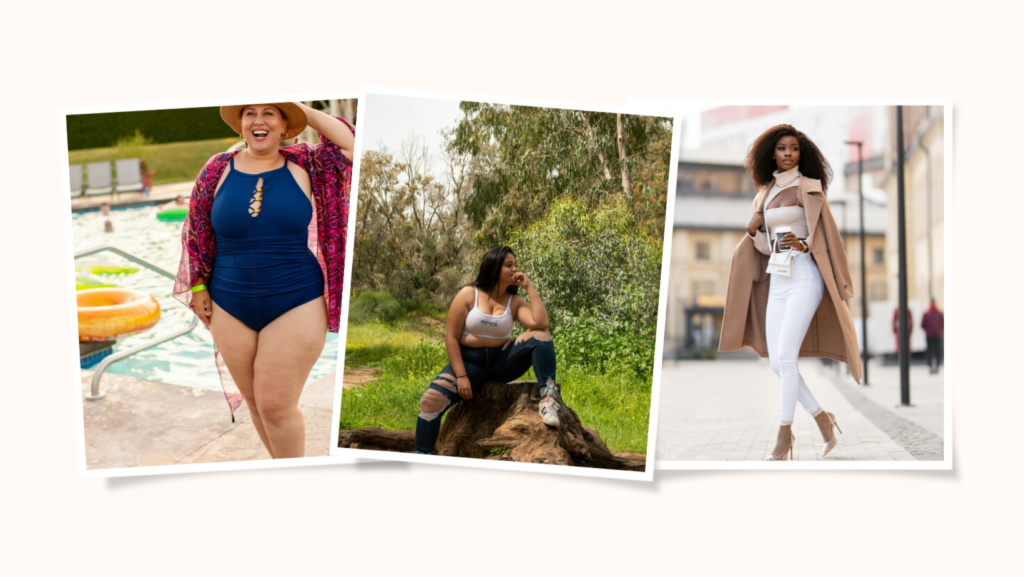
Let’s delve into a topic that’s been on my mind lately: the diverse ways in which women navigate beauty standards across different cultures, particularly focusing on the contrast between being slim versus being curvy. It’s a journey filled with complexities, contradictions, and a myriad of societal pressures.
Conforming to Ideals: In Western cultures, the prevailing beauty standard leans heavily towards slimness. From fashion runways to magazine covers, thinness is glorified and admired. Women often feel compelled to adhere to this ideal, resorting to extreme measures like strict dieting and excessive exercise. Conversely, in many non-Western cultures, curviness is celebrated as a sign of fertility and abundance. Women may face pressure to gain weight in order to conform to this curvy ideal, sometimes resorting to unhealthy practises like force-feeding.

Impact on Self-Esteem: The pressure to conform to societal beauty standards can take a toll on women’s self-esteem. In Western cultures, women who don’t fit the thin ideal may struggle with feelings of inadequacy and low self-worth, internalising societal messages about beauty. Similarly, in non-Western cultures, women who don’t conform to the curvy ideal may also grapple with self-esteem issues, feeling like they don’t measure up to societal expectations.
Representation in Media: The portrayal of diverse body types in media plays a significant role in shaping beauty standards. In Western media, thinness is often glorified, with very little representation of diverse body types. This lack of representation can leave many women feeling invisible or marginalised. Conversely, in non-Western media, curvier bodies are often celebrated and admired, with little representation of slender or thin bodies. This lack of representation can also contribute to feelings of inadequacy and invisibility among women who don’t conform to the prevailing beauty ideal.
Cultural Norms and Expectations: Cultural norms and expectations regarding beauty vary widely across different societies. In Western cultures, beauty is often equated with youthfulness and slimness, while in many non-Western cultures, curvier bodies are prized as a symbol of health and fertility. These differing beauty standards can create conflicting messages for women, leading to feelings of confusion and insecurity about their bodies.

Embracing Self-Acceptance: Despite the myriad of societal pressures, the most important aspect of navigating beauty standards across cultures is self-acceptance. Regardless of what society dictates as beautiful, it’s essential for women to learn to love and accept themselves just as they are. Whether slim or curvy, tall or short, light-skinned or dark-skinned – every woman’s beauty is valid and worthy of celebration.
So, here’s to embracing our differences, celebrating our uniqueness, and challenging societal norms that seek to dictate our worth based on our appearance. Because at the end of the day, beauty comes in all shapes and sizes – and it’s up to each and every one of us to define what it means to be beautiful.
Wishing you peace of mind,
Samanthia