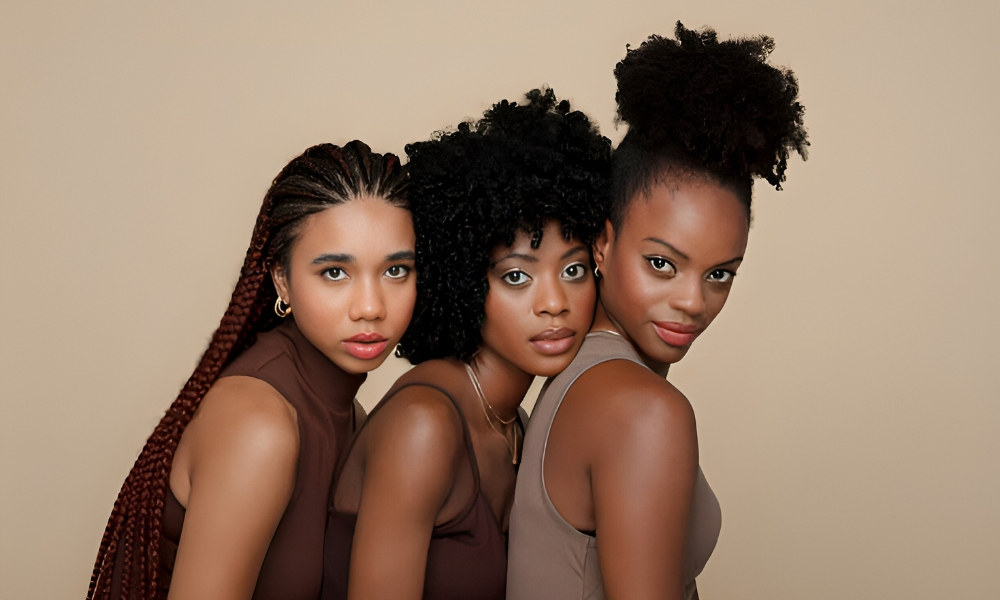
Over the years, I’ve seen and read a lot about how Eurocentric beauty standards hurt Black women—not just on the surface but by draining our energy and undermining our confidence. Social media posts, opinion pieces, and various storeys from everyday life all point to one painful truth: the dominant beauty ideals force us to expend emotional labour just to be accepted. In this post, I want to share some observations and insights on how these eurocentric beauty standards hurts Black women—even in communities that should, by every measure, be celebrating our natural beauty. My perspective stems from what I’ve seen and read, reflecting a broader cultural phenomenon rather than just a personal journey. The Energy Drain of Conforming One recurring theme I’ve noticed across social media and discussion forums is the enormous amount of energy Black women must use simply to conform to a beauty standard that was never made for us. Whether it’s adjusting our hairstyles to meet “professional” expectations at work, the pressure is undeniable. We also feel compelled to alter our appearance to fit school or social norms. The mental and emotional toll of these expectations is significant. Countless posts from Black professionals describe the extra time and stress involved in styling their hair to align with Eurocentric ideals—often sacrificing self-expression and comfort. Instead of channelling their energy into creative or professional pursuits, many find themselves locked in a daily battle to maintain a look that society deems acceptable. This constant self-surveillance and modification drains our energy and reinforces the message that our natural state is somehow not enough. The Battle Over Natural Hair Although I haven’t had issues with my skin tone or body shape, I have struggled with the constant battle over my hair. I grew up in a household with Rastafarian parents who celebrated natural hair as a proud symbol of our heritage. It’s baffling to see how, even when raised to love our natural beauty, we can still feel pressured to change. External influences often force us to stray from those values. Social media is rife with discussions and memes about the “natural hair tax”—the extra time, effort, and expense required to maintain hair in its natural state. Influential voices in our community share experiences of being told that their natural hair is “unprofessional” or “inappropriate,” even in environments where Black culture should be the norm. For example, I’ve seen heartbreaking posts about Black children in schools fighting to wear their natural hair, facing scrutiny and pressure from both peers and teachers to conform to a different standard. This isn’t just about personal preference. It clearly shows that even among our own people, we have deeply internalised Eurocentric beauty ideals. Internalised Racism and the Cost of Acceptance One of the most insidious effects of these beauty standards is the internalised racism they foster. When media constantly portrays a narrow standard of beauty—featuring lighter skin, straight hair, and specific facial features—it’s hard not to start questioning one’s own worth. Online, many Black women have shared feelings of being “less than” simply because they don’t fit into this unrealistic mould. This internalized bias isn’t only about personal self-esteem; it creates a collective energy drain that affects entire communities. For instance, in parts of Nigeria and Ghana, I’ve seen discussions where even local families and schools police natural hair, pressuring children to straighten or alter their hair to meet a standard imported from a Westernised ideal. This kind of internal policing forces us to constantly battle against the idea that our natural state isn’t enough. Instead of channeling our energy into creative, fulfilling endeavors, many of us remain trapped in a cycle of proving our beauty and worthiness—an exhausting struggle rooted in deep-seated internalised racism. The Broader Cultural Impact What’s striking is just how pervasive these effects are—even in spaces where you’d expect Black identity to be celebrated. Even in countries where indigenous beauty practises once reigned supreme, global media has introduced an alternative set of ideals that continue to influence local beauty standards. For example, in parts of Africa and the Caribbean, entertainment and fashion industries have recently overrepresented lighter skin and more “refined” features. This isn’t just about personal preference; it clearly shows that even among our own people, we have deeply internalised Eurocentric beauty ideals. Moving Towards Self-Acceptance and Change While it’s crucial to understand and acknowledge the energy-draining impact of Eurocentric beauty standards, it’s also important to recognise that change is possible. Many Black women are now using social media and other platforms to reclaim our narrative. They are celebrating natural hair and embracing diverse skin tones. Together, we are redefining what it means to be beautiful on our own terms. This emerging counter-narrative empowers us, but it also starkly reminds us of how much energy we have already lost in struggling against a system that devalues Black beauty. It’s both a call to action and a lesson in self-care. The energy we spend trying to conform is exhausting. We could better use it in creative, fulfilling pursuits that honour our heritage and individuality. Final Thoughts Eurocentric beauty standards hurts Black women by draining precious energy—energy that could be spent nurturing our talents, passions, and communities. The daily struggle to conform, the internalized racism, and the subtle judgments we face create a relentless battle. Even in our own cultural spaces, society constantly forces us to fight for acceptance. By educating ourselves about these issues, we can create change. Sharing our stories and supporting movements that celebrate natural Black beauty will help shift the narrative. This is how we start shifting the narrative. Every conversation, every shared experience, and every moment of self-acceptance chips away at the power of these imposed standards. It’s time to reclaim our energy and define beauty on our own, much-needed terms.
When I was a little girl, beauty felt like a mystery to me. But it wasn’t that I wanted to emulate White women—I didn’t. I wanted to emulate the Diana Rosses of the world and the little girls I’d see on the relaxer kits in the shops. They were the epitome of beauty to me, their sleek hair perfectly styled, their smiles radiant. As I got older and started secondary school, my focus shifted. It wasn’t distant icons like Janet Jackson or Lisa Lisa anymore; it was the girls at school—the ones with coolie hair or hair that was long, brushing past their shoulders. In hindsight, my thing was always hair. It was my measure of beauty, the feature I felt needed to be “just right” to be considered beautiful. But now I know that for most Black girls growing up, there was always something. Maybe it wasn’t hair; maybe it was their nose they thought was too wide, their lips too full, their skin too dark, their body too wide—or a combination of all of these. The message was the same: something about us was always framed as needing to be fixed, hidden, or changed. The Weight of Eurocentric Standards Growing up, I never realised how much power Eurocentric beauty standards had over me. What I also didn’t realise at the time was that even the Black celebrities and little girls on the relaxer kits I admired so much were bowing down under the weight of those same standards. They were emulating the dominant beauty ideal—the one rooted in Eurocentric features. I had no idea that the sleek, long hair I idolised wasn’t natural for most of them. I believed that Whitney, Chaka, Sister Sledge, and others had long, straight hair naturally. Maybe a few of them did, but the majority didn’t. That illusion is damaging in ways that are hard to quantify. As a child, I didn’t question it; I simply believed that my own hair, as it grew from my scalp, wasn’t good enough. Seeing those images over and over again plants a seed of inadequacy in little Black girls, telling us that our natural beauty isn’t enough. It reinforces the idea that to be seen as beautiful—or even acceptable—we must conform to a standard that doesn’t celebrate us as we are. By the time you realise the truth—that the sleek hair and polished looks were achieved with relaxers, wigs, weaves, and extensions—you’ve often already internalised the message. And it doesn’t stop there. You’ve likely already started playing along, perpetuating the same lie for the next generation. I was no different. I began using the relaxer creams, burning my scalp in pursuit of the straight, silky hair I thought was a marker of beauty. When relaxers weren’t enough, I added extensions. Eventually, I moved on to wigs and weaves, piling on more layers of someone else’s hair to make up for what I thought I lacked. Without realising it, I became part of the cycle, passing the weight of those beauty standards onto the next generation of Black girls—just as it had been passed onto me. The weight is heavy, not just physically but emotionally. As a heterosexual woman, that weight also comes from not wanting to be invisible to Black boys. To be seen by them, you had to prove that you were worth noticing—you had to have the latest hairstyle, your hair had to be “done,” you had to know fashion, because they grew up seeing the same images you did. They were under the spell too, measuring beauty by White standards and expecting us to conform to them. I remember going to a club in the 90s where the crowd was mixed—Black, White, Asian, all shades and backgrounds. The young Black men in that space? They weren’t looking at me. It felt like I was invisible, like I didn’t exist in their eyes. I wasn’t straight-haired enough, light enough, or polished enough to compete with the standard they’d been conditioned to admire. That night, I left knowing one thing, I wouldn’t be socialising with that lot again! I ran back to the clubs where the crowd was 99.999% Black. Because even though I still had to succumb to the Eurocentric weight in those spaces—still had to keep my hair relaxed or wear the extensions to feel seen—at least there, I was seen. Choosing Your Own Standard So, who defines your beauty? Is it the advertisers selling you products to “fix” what isn’t broken? Is it the celebrities who conform to Eurocentric standards to remain palatable? Or is it you? Choosing your own standard of beauty is an act of liberation. It’s saying, “I see myself, and I am enough.” It’s celebrating the features that make you unique, whether it’s your rich skin tone, your thick thighs, or your full lips. It’s recognizing that beauty isn’t a one-size-fits-all concept—it’s as diverse and dynamic as we are. But let me pause here, because I know what I’m supposed to say next. I’m supposed to tell you to be bold, to stand strong, to define your own beauty unapologetically. And while I believe that wholeheartedly, I’m not here to tell you how to navigate this journey. The truth is, being a Black woman comes with enough stresses as it is. Yes, representation matters. Yes, we are the blueprint. But if wearing a weave makes you feel better about your appearance or makes your life a bit easier in terms of time and management, then you go ahead and wear that weave. Don’t beat yourself up about it, and don’t let anyone else beat you up about it either. Because here’s the thing: You could be fighting racism and oppression in ways no one sees. You could be pouring your love and care into raising the next generation, nurturing the next Denzel, Letitia Wright, or Raheem Sterling. Your strength, your beauty, your impact—it’s not always about what’s visible to the world. A Call to Black Women To
When I first sat down to write this blog post, the title immediately made me reflect: Goodbye Eurocentric Standards, Hello Black Beauty. This isn’t just a topic; it’s a revolution, and it holds profound significance for me as a Black woman and an author of self-help journals. Writing these journals has encouraged others to embrace their authentic selves, but in truth, it’s been a journey of self-acceptance for me, too. I realised that the messages I was sharing through my work—about healing, self-love, and resilience—were also my way of addressing something much deeper: my battle with beauty standards that were never meant to include me. Understanding Eurocentric Beauty Standards To unpack this, let’s start with the basics. Eurocentric beauty standards refer to the dominant ideals of beauty that are rooted in European culture and aesthetics. Historically, these standards favour features that align with European characteristics, such as light skin, straight or loosely curled hair, slim noses, and thinner body types. Colonialism, media representation, and societal norms have cemented these ideals over centuries. The problem with Eurocentric beauty standards is that they are narrow and exclusive. They promote a singular image of what they consider beautiful, and for women who don’t fit that mold—particularly Black women—this can profoundly impact self-esteem and body image. These standards go beyond individual preference; they shape how society views beauty on a global scale and, more significantly, how we view ourselves. Colonial power structures spread Eurocentric ideals for centuries, affecting how people perceived beauty worldwide. This led to the notion that features most commonly associated with Europeans were not just beautiful but superior. People in places like Africa, the Caribbean, and even in the West internalized these standards, often to the detriment of Black women. The remnants of these beauty ideals are still alive today, deeply ingrained in industries like fashion, Hollywood, advertising, and even everyday social interactions. How Eurocentric Beauty Standards Have Impacted My Life Growing up, I wasn’t immune to these standards. They shaped much of how I viewed myself. For many Black women, their lips and hips were often considered “too big,” and their skin tone and natural hair were rarely celebrated. Although people never scrutinized my lips and hips in this way, the messages about Black beauty still resonated deeply with me. I spent hundreds of pounds at hairdressers on weaves and extensions, all in an attempt to have hair that conformed to the European ideal of straight, long locks. The products and services that catered to my natural hair or skin colour were limited. A few brands like Iman and Sleek often restricted foundation shades for women like me, highlighting a glaring absence of representation. This lack of inclusion didn’t chip away at my self-worth, but it was a frustrating reminder of how racism manifests even in beauty products. But this wasn’t just my story—it’s the story of countless Black women. And it still is. The Damaging Effects on Self-Esteem and Body Image The pressure to conform to Eurocentric beauty standards can be suffocating. When the world repeatedly tells you that your natural appearance isn’t beautiful or acceptable, it’s hard not to internalise those messages. For many Black women, the impact of these standards is particularly damaging because it strikes at the core of our identity—our skin colour, our hair texture, our body shapes. In my own life, the effect on my self-esteem came not just from societal pressure but from how Black males perceived attractiveness. The number of men attracted to me fluctuated noticeably depending on whether my hair conformed to the European standard of straightness. It was a stark reminder of how deeply these beauty ideals had infiltrated even within our communities. Many Black women face similar experiences—being told that certain aspects of their appearance need to be “fixed” or “toned down” to be considered acceptable. This creates an internal conflict where we begin to question our inherent worth. If the world doesn’t see us as beautiful, how can we fully see ourselves that way? Body image also suffers under the weight of these beauty ideals. Curves that are natural to Black women are often viewed through a distorted lens. When non-Black women sport the same features, they are celebrated, but when Black women display them, they are deemed “too much” or overly sexual. The message makes it clear: society only accepts your body when you present it in a way that fits a Eurocentric narrative. Reclaiming Our Beauty So, what does it mean to break free from Eurocentric beauty standards? For me, it has been a journey of unlearning, rediscovering, and embracing the beauty that was always there—within me and all Black women. It’s about understanding that beauty comes in many forms, and the more we redefine what it means to be beautiful, the more empowered we become. While I haven’t fully embraced my natural hair yet, I now make it a point to use wigs, weaves, or extensions that mimic the texture of Black hair. Seeing other Black women proudly embrace their natural hair has been inspiring, and when I encounter Black women with straight, “blow-away” hair, I often think of how unenlightened or even backward that choice seems now. I realise that’s how I looked and thought back in the day. I also started seeking out representations of beauty that celebrated Blackness. This meant following social media influencers, reading books, and consuming media created by Black women for Black women. Seeing myself reflected in the world around me allowed me to realise that beauty is vast and diverse. There is no one way to be beautiful, and we should celebrate Black women for the full spectrum of our features. There’s also been a broader movement of Black women embracing self-affirmation, which has been transformative. It’s not just about me—it’s about all of us. More and more Black women are praising their skin for its richness, their hair for its versatility, and their bodies for their strength. This collective rewriting of the narrative is essential for
Hey Lovely, As a Slim Women in Black Culture, I’ve lived at the crossroads of contrasting beauty standards all my life. The push and pull between the full-figured ideal of my heritage. And the Western preference for thinness sketch a complex landscape that I, and many like me, navigate daily. Here’s my personal dive into the realities of straddling these divergent worlds. 1. The Cultural Rift in Beauty Ideals In the heart of my Black-British-Caribbean community, curves are celebrated; they’re synonymous with beauty, health, and femininity. This appreciation is more than skin deep—it’s woven into our history, our stories, our very definition of allure. Yet, I turn my gaze westward, and I find an entirely different paradigm, one that elevates thinness to the pinnacle of beauty. Standing here, in my naturally slim frame, I often feel adrift, belonging fully to neither, always partially scrutinized here and idolized there. 2. Navigating Dual Perceptions of Beauty Navigating the beauty ideals of my own culture while absorbing Western influences creates dissonance for me. My culture tells me that beauty lies in roundness and voluptuousness, yet I encounter another narrative that praises my slenderness as the ideal. This clash doesn’t just confuse me; it feels like speaking two languages without ever being sure which one is my mother tongue. I find temporary validation in Western standards, but I remain aware of its fleeting nature and the deeper inconsistency it reveals in societal beauty norms. 3. The Internal Conflict Inside me, there’s a continuous battle. Do I gain weight, change my silhouette, to align with the cultural beauty of my community? Or do I hold onto the Western admiration for my slimness? This internal tug-of-war pulls at the very seams of my identity, pitting my cultural loyalty against a personal acceptance that feels as tenuous as it is validating. 4. Representation Matters The media, our modern-day mirror, reflectsthe complex diversity of beauty in part and bias in part. In Black culture, while the tides are changing, the celebration of full-bodied women in mainstream visibility often overshadows the presence of slimmer figures like mine. Conversely, in Western media, inclusivity is growing, but the legacy of the slim ideal is hard to shake. This imbalance shapes how I perceive my own beauty and understand my place within both my culture and the Western narrative. 5. The Impact on Mental Health I cannot downplay the psychological toll this journey takes. When your body doesn’t match your cultural ideal, it can erode your self-image, self-esteem, and sense of identity. Western affirmation, though flattering, is not a panacea; it doesn’t fully reconcile the internalized conflict of belonging, leaving me to navigate a complex emotional landscape in search of acceptance and self-worth. 6. Finding a Middle Ground Finding equilibrium in this dichotomy is essential. For me, it’s meant defining beauty on my own terms, beyond the confines of culture or the mandates of society. It’s learning to cherish my body, to see the splendour in diversity, and to hold self-worth independent of any singular beauty standard. Cultivating a community that honours all bodies and initiating inclusive dialogues about beauty standards has become my salve and sanctuary. My journey to self-acceptance is intensely personal. It demands the deconstruction of deep-seated beauty ideals, a celebration of my unique form. And a vigilant guardianship over my mental and emotional well-being. Navigating these contrasting beauty standards is a road marked with challenges. But also rich with opportunities for empowerment and the affirmation of self. In this journey, I’ve found power—the power of choice. It’s the choice to define beauty for myself, to seek validation from within, to advocate for diversity in all its manifestations. Fostering an environment of acceptance and understanding is key to dismantling binary perceptions of beauty. And championing a broader, more inclusive celebration of all body types. My reality, shared by slim women straddling the beauty ideals of Black culture. And the West, is nuanced and often rife with contradiction. It’s a path that calls for resilience, self-awareness, and a fierce commitment to self-love. By valuing our unique qualities and advocating for inclusivity. We can redefine beauty on our own terms, closing the divide between cultural ideals and personal acceptance. Wishing you peace of mind Samanthia
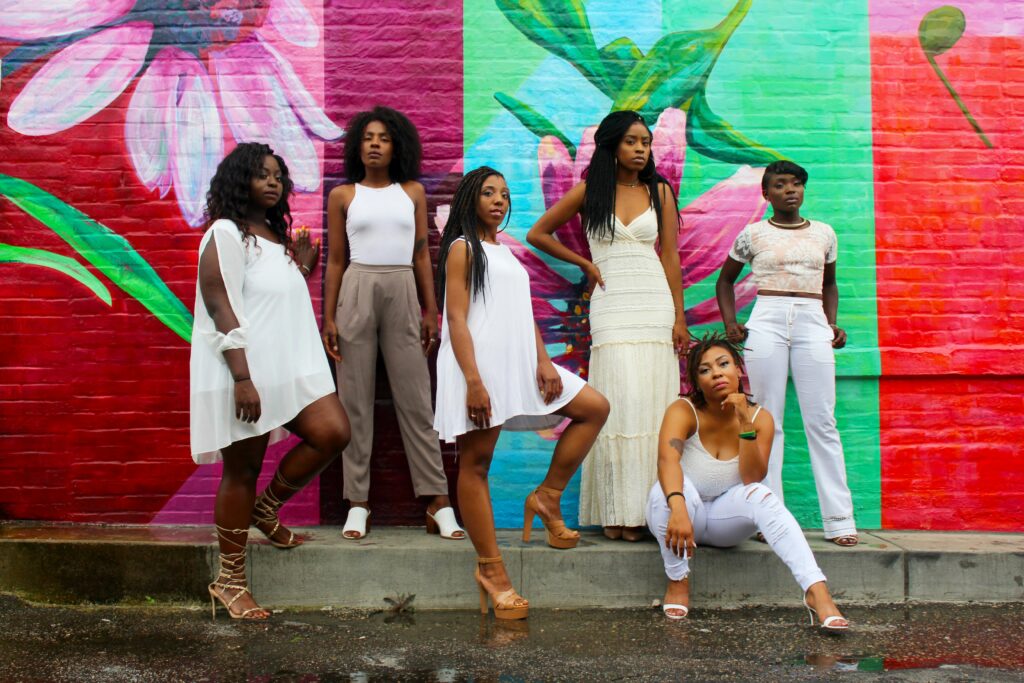
Hello Lovely, I’ve lived within a rich cultural tapestry that holds its own distinct view of beauty. In my community, the preferred female form diverges significantly from the svelte figures lauded on Western fashion runways. This divergence is rooted in a deep cultural narrative that values heritage and aesthetics in a way that distinctly shapes the female identity. Here’s my personal reflection on the insights into the preferred female form in Black culture, and the journey that comes with it. 1. Celebration of Curves In my community, curves are not just preferred; they are celebrated. This is a preference etched deep in our cultural history and aesthetics, intertwining femininity, fertility, and health with a fuller body type. We turn away from the slender silhouettes of Western fashion, finding beauty instead in the ampleness of form. Our music, art, and media uplift these curvaceous figures, creating a cultural echo chamber where fullness is glorified. 2. Challenges for Naturally Slim Women In Black culture, people often celebrate curvier figures, which can challenge naturally slim women. The preferred female form emphasizes fuller hips, thighs, and a defined waist, putting pressure on slim women to conform to these ideals and potentially leading to body image struggles. Although body diversity is gaining recognition, the cultural preference for curvier shapes can make it hard for slim women to feel accepted. To overcome these challenges and celebrate all body types, embracing body positivity is essential. 3. Cultural Pressure to Conform Tradition, media, and societal norms have long influenced the preferred female form in Black culture. People often admire fuller, curvier figures, seeing them as symbols of strength and fertility. However, the cultural pressure to fit these beauty standards can be overwhelming. Many women feel the need to conform to a particular body shape, driven by societal expectations and media portrayals. Yet, it’s important to recognize self-worth beyond physical appearance. Navigating between personal choice and cultural ideals is a challenge, but women should define their own beauty and identity without feeling confined by external pressures. 4. The Specificity of Curves In Black culture, people highly celebrate the curvy female form, viewing it as a symbol of beauty, strength, and femininity. This preference for fuller figures traces back to historical roots, often linking them to prosperity, health, and abundance. Music, fashion, and media consistently elevate curvier body types, reinforcing their cultural importance. Unlike mainstream standards, Black communities see curves as a unique expression of pride and resilience. This enduring appreciation highlights how cultural beauty ideals focus on curves, which remain central to representing femininity and empowerment. 5. Navigating Body Image and Cultural Identity For women like me, our navigation of body image and cultural identity is a complex dance. It’s about reconciling the love for one’s natural body with external pressures and ideals. It’s also about recognizing these ideals as part of a cultural narrative that honours certain attributes as symbols of beauty and strength. The challenge lies in fostering self-love in an environment that doesn’t always celebrate our natural form. My path to self-acceptance has required me to see the beauty in diversity and affirm the worth of my own unique form. It has demanded a critical look at ingrained beauty standards and an understanding that these should not dictate my value. Advocating for body positivity and inclusivity within my culture is key in reshaping perceptions and broadening the scope of beauty to be more encompassing. Media and representation have immense power in defining and challenging beauty standards. By promoting visibility for all body types in media and entertainment, we chip away at the monolithic standards of beauty and celebrate a wider spectrum of forms. This representation is a powerful tool that encourages women to embrace their natural bodies and advocates for a more inclusive and accepting standard of beauty. In a culture where we deeply interweave the celebration of curves with our heritage and aesthetic values, the movement toward inclusivity and body positivity becomes more important than ever. Women like me, navigating the complex waters of preferred beauty standards, face a journey filled with both challenges and opportunities for growth. By embracing diversity and fostering a deeper, more comprehensive appreciation of beauty, we honour our culture while cherishing the unique beauty of every woman, regardless of her shape. Wishing you peace of mind Samanthia
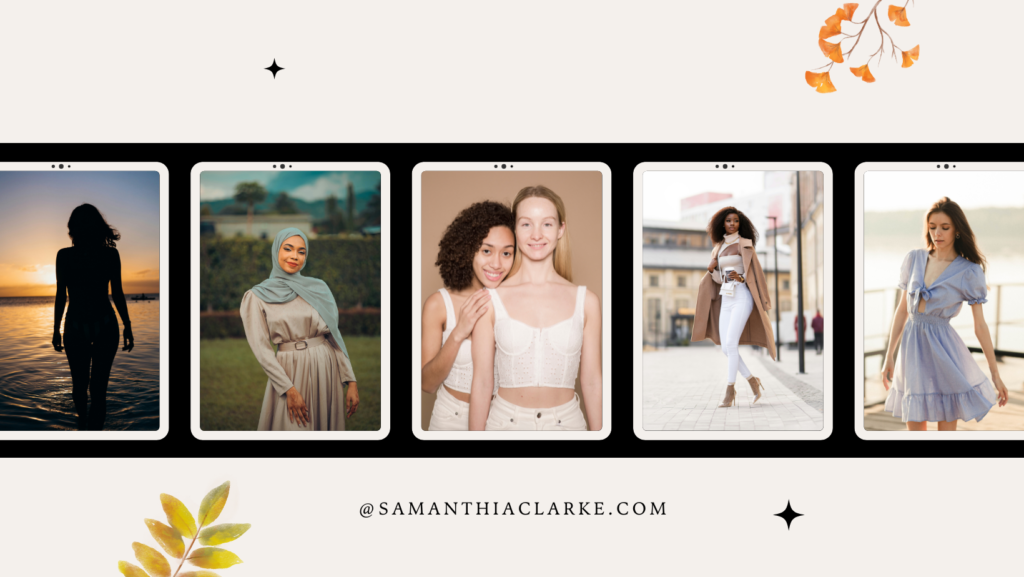
Hello Lovely It’s me, and I’m here to peel back the layers on a subject that’s been tugging at the corners of my mind: the intricate, often unspoken realities of being slim women in the Western world. Here, where the narrative of beauty is spun with threads of contradictions and the journey toward self-acceptance is a winding road flanked by society’s ever-shifting beauty standards. Explore the complex realities of being a slim woman in the Western world, navigating beauty standards, stereotypes, and self-acceptance. In this world, my slimness has often been placed on a pedestal, a gold standard in the gallery of beauty. From the gloss of magazine covers to the glamor of fashion runways, being slender is more than just celebrated; it’s heralded as the hallmark of attractiveness. This pervasive message weaves itself into the fabric of society, hinting that to be thin is to be healthy, desirable, and successful. But let me tell you, those like me experience a reality textured with complexities and challenges that extend far beyond what the eye can see. 1. The Idealization and Isolation While the world idealizes slim women figures, it also wraps me in a tapestry of stereotypes and misconceptions. People often make assumptions about my eating habits, my lifestyle, and my strength. Phrases like “real women have curves” echo in the air, leaving me and others who share my body type feeling like outsiders in our skin, as though we’re existing in a state of paradox—desired yet not wholly embraced. 2. The Pressure to Conform to a ‘Perfect’ Standard This Western adoration of slimness doesn’t stop at thinness; it obsesses over an elusive, perfect version of thin—defined abs, toned arms, and other exacting physical traits. The pressure of this pursuit of perfection is like chasing the horizon, forever out of reach, with goalposts that dance just beyond my grasp. It’s an unattainable standard that breeds inadequacy and self-doubt within me. 3. Empathy for the Body Positivity Struggle Curiously enough, there’s a silver lining of shared experiences in this struggle—regardless of whether you’re a slim women, curvy, or anywhere in between. We understand the sharp bite of body shaming and the ludicrous demand to contort ourselves into society’s narrow molds of beauty. This common thread binds us. It underscores the vitality of a body positivity movement that sings the gospel of accepting every body type. 4. Navigating the ‘Slim Thick’ Phenomenon Enter the “slim thick” trend—a body ideal that merges being slender with being curvy. While it waves the flag of inclusivity, it carves out yet another elusive ideal. It’s a testament to the fickle nature of beauty standards. It reflects the relentless pressure to sculpt our bodies to fit the flavor of the day. For someone naturally slim like me, it’s yet another reminder that societal approval often arrives with a list of conditions. The antidote, I believe, is to cultivate a culture steeped in acceptance and self-love. It’s about broadening the lens through which we view beauty and challenging the monolithic portrayal of attractiveness. For me, it means holding my natural physique close and understanding my value extends beyond the confines of my appearance. I firmly reject the idea that I need to transform to meet an arbitrary ideal. Self-care has become my anthem on this journey. It’s a commitment to nurturing my mental, emotional, and physical well-being and seeking support when the shadows grow long. I rejoice in the singular traits that make me, me. It’s about reauthoring the narrative of beauty to celebrate health and happiness above the pursuit of societal acceptance. So, here’s to lifting each other, recognizing beauty in its boundless forms, and tearing down the walls of societal standards. Let’s champion a world that celebrates everyone, recognizes, cherishes, and frees the many shades of beauty.
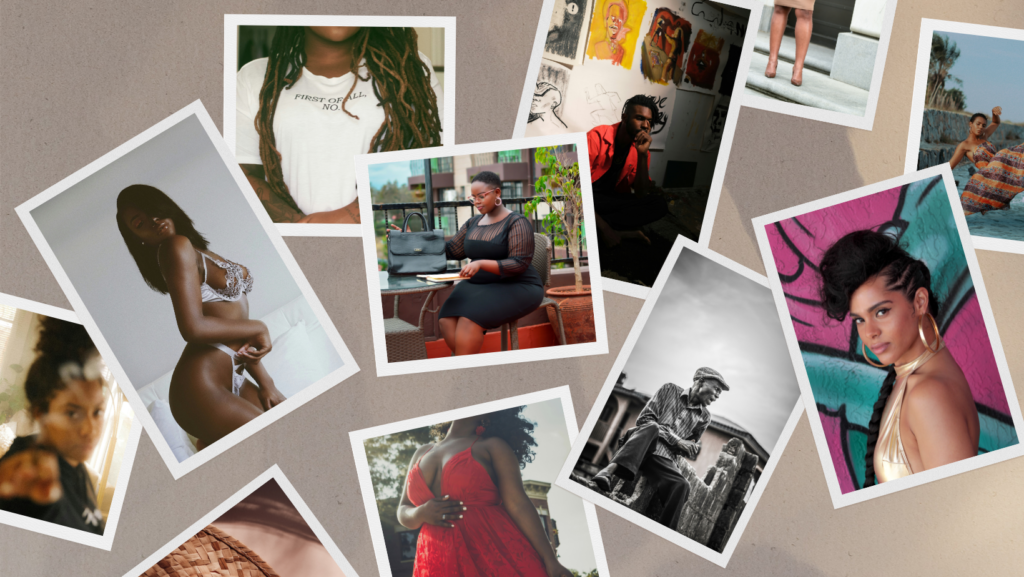
Hello Lovely! Here I am, at the heart of a narrative woven from the resilience and diversity of Black culture, exploring the concept of the “ideal body,” which is both a cultural beacon and a touchstone for personal and communal identity. Let’s delve into the nuances of beauty standards in my culture and how they reflect our history, societal pressures, and a move towards inclusivity and self-acceptance. Historical Context and Evolution I can’t reflect on beauty standards without acknowledging the painful past of colonialism and slavery. These atrocities sought not just to uproot millions of Africans but also to suppress and erase African beauty standards. In traditional African societies, diversity in body types, skin tones, and hair textures was celebrated—a stark contrast to the beauty ideals that were later imposed upon us. As we emerged from the shadows of slavery and colonialism, the Western ideals of beauty further complicated our perceptions. Darker skin tones, fuller lips, and curvaceous bodies were often marginalised. This birthed a complex dance with beauty—a push and pull between acceptance and resistance. The Influence of Media and Popular Culture Black bodies in media and popular culture have been portrayed with a complexity that both challenges and reinforces beauty ideals. Icons like Naomi Campbell, Beyoncé, and Lupita Nyong’o have broken barriers, celebrating the diversity of Black beauty. Yet, this representation is not without its flaws. Stereotypes and hyper-sexualization continue to enforce narrow ideals and expectations. Certain body types have become a fixed presence in music videos and films, often leading many in my community to grapple with body image and self-esteem. The Natural Hair Movement and Body Positivity The natural hair movement has been a significant chapter in my culture’s narrative. It rejects the notion that straight hair is the sole beacon of beauty, fostering a broader conversation about self-acceptance and reclaiming beauty standards. Alongside this, the body positivity movement has taken root, advocating for the acceptance of all body types and challenging the stigmatisation of larger sizes. It’s a modern echo of traditional African values, an affirmation that diversity in bodies is to be celebrated, not concealed. Social Media as a Catalyst for Change Social media has become a canvas for redefining beauty standards. Black influencers and content creators use it to showcase diversity and share experiences with body image, building supportive communities. Hashtags like #BlackGirlMagic and #MelaninPoppin celebrate the beauty of Black skin, while #NaturalHair and #BodyPositivity bolster the acceptance of natural hair and body diversity. Through social media, a broader range of voices can now contest monolithic beauty standards, revealing the true richness of Black diversity and fostering a more inclusive beauty narrative. Challenges and Critiques Even with progress, the struggle against restrictive beauty standards persists. The commercialization of body positivity and natural hair movements has led to valid critiques about their diluted messages. Colourism and featureism still loom, favouring lighter skin tones and Eurocentric features. The current beauty dialogue in Black culture is being challenged to not only promote surface-level acceptance but also to confront the root causes of oppression. An intersectional approach is crucial, one that understands the interplay of race, gender, class, and other identities in shaping our beauty experiences. Looking Forward: Embracing Diversity and Inclusivity The ideal body in Black culture is unfolding into a celebration of individuality, honouring historical and cultural beauty norms, and championing the inherent diversity of the Black experience. This vision embraces liberation and inclusivity, deeply rooted in the understanding that beauty is multifaceted and unlimited. My journey through the beauty standards of Black culture is one marked by resilience and creativity, standing against a backdrop of a struggle for self-definition. The ideal body, within this cultural narrative, is not fixed but fluid, expansive, and reflective of the rich tapestry of Blackness. It’s about embracing our own definitions of beauty, which continue to evolve, defying the legacies of racism and colonialism. In this quest for dignity and self-acceptance, we come to understand that the truest standard of beauty is one that can change, adapt, and celebrate the myriad forms in which we, as Black individuals, see ourselves and choose to be seen. Wishing you peace of mind Samanthia
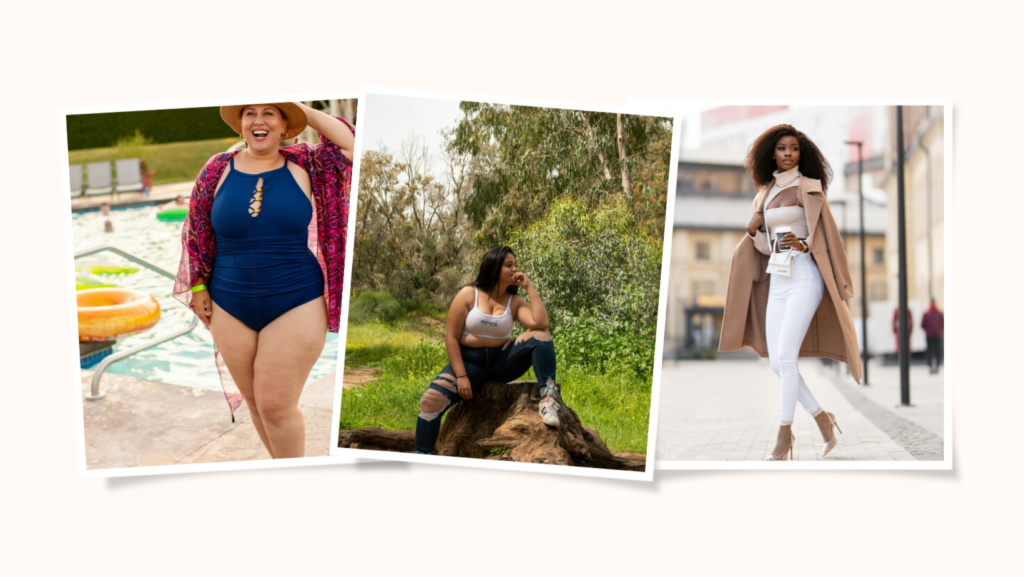
Hello Lovely! Let’s delve into a topic that’s been on my mind lately: the diverse ways in which women navigate beauty standards across different cultures, particularly focusing on the contrast between being slim versus being curvy. It’s a journey filled with complexities, contradictions, and a myriad of societal pressures. Conforming to Ideals: In Western cultures, the prevailing beauty standard leans heavily towards slimness. From fashion runways to magazine covers, thinness is glorified and admired. Women often feel compelled to adhere to this ideal, resorting to extreme measures like strict dieting and excessive exercise. Conversely, in many non-Western cultures, curviness is celebrated as a sign of fertility and abundance. Women may face pressure to gain weight in order to conform to this curvy ideal, sometimes resorting to unhealthy practises like force-feeding. Impact on Self-Esteem: The pressure to conform to societal beauty standards can take a toll on women’s self-esteem. In Western cultures, women who don’t fit the thin ideal may struggle with feelings of inadequacy and low self-worth, internalising societal messages about beauty. Similarly, in non-Western cultures, women who don’t conform to the curvy ideal may also grapple with self-esteem issues, feeling like they don’t measure up to societal expectations. Representation in Media: The portrayal of diverse body types in media plays a significant role in shaping beauty standards. In Western media, thinness is often glorified, with very little representation of diverse body types. This lack of representation can leave many women feeling invisible or marginalised. Conversely, in non-Western media, curvier bodies are often celebrated and admired, with little representation of slender or thin bodies. This lack of representation can also contribute to feelings of inadequacy and invisibility among women who don’t conform to the prevailing beauty ideal. Cultural Norms and Expectations: Cultural norms and expectations regarding beauty vary widely across different societies. In Western cultures, beauty is often equated with youthfulness and slimness, while in many non-Western cultures, curvier bodies are prized as a symbol of health and fertility. These differing beauty standards can create conflicting messages for women, leading to feelings of confusion and insecurity about their bodies. Embracing Self-Acceptance: Despite the myriad of societal pressures, the most important aspect of navigating beauty standards across cultures is self-acceptance. Regardless of what society dictates as beautiful, it’s essential for women to learn to love and accept themselves just as they are. Whether slim or curvy, tall or short, light-skinned or dark-skinned – every woman’s beauty is valid and worthy of celebration. So, here’s to embracing our differences, celebrating our uniqueness, and challenging societal norms that seek to dictate our worth based on our appearance. Because at the end of the day, beauty comes in all shapes and sizes – and it’s up to each and every one of us to define what it means to be beautiful. Wishing you peace of mind, Samanthia