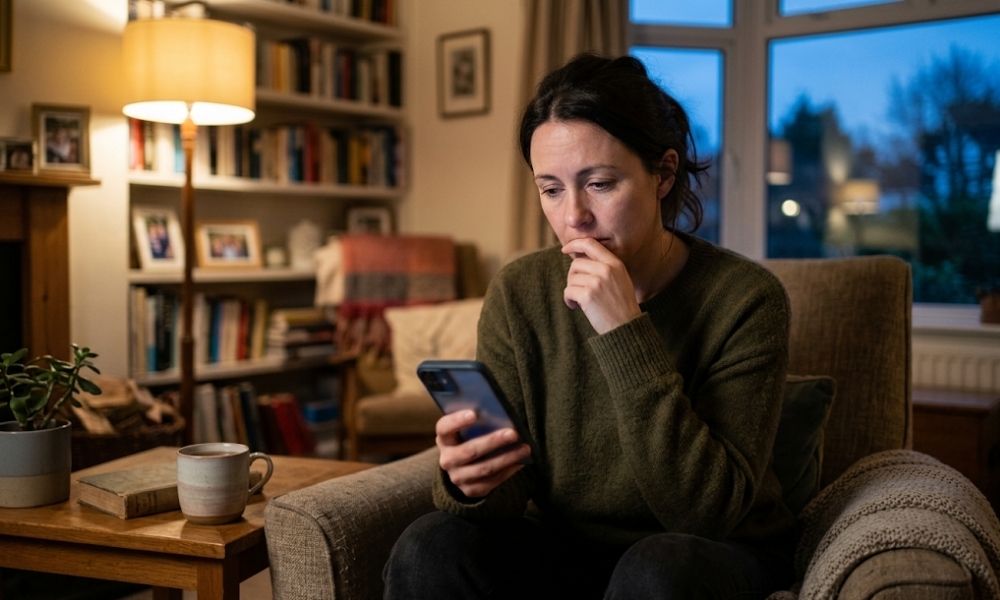
There’s a particular kind of tired that doesn’t come from your own life. You didn’t lose anyone. You weren’t there. And yet you scroll through the news, and something in your chest tightens anyway. You close the app, then open it again ten minutes later because some part of you can’t stop checking. Prefer to listen? Hit play below. You tell yourself: “I’m fine. I’ve got my own things going on. This isn’t even my tragedy. I have enough of my own to carry. So why can’t I put the phone down?” There is a name for what you’re feeling. It’s called collective trauma. What Is Collective Trauma? Collective trauma is a wound that doesn’t stay limited to the people who directly experienced an event. It spreads through communities, generations, and sometimes across the entire world. It doesn’t ask permission before it reaches you. It doesn’t require you to have been physically present. We often think of trauma as something private — something that happens to an individual, something they carry and process in isolation. That understanding isn’t wrong. But it was never designed to hold everything. When The World Experiences The Same Wound 9/11. Covid. Gaza. Grenfell. The list continues to grow. Each event leaves behind something that extends beyond the people who were directly there. After 9/11, an entire generation changed how it moved through airports and cities. During COVID, the whole world learned to feel uneasy at the sound of a cough. And today, millions of people are watching suffering unfold in real time through the same phones they use for everyday life. That collision — horror existing beside ordinary routines — creates its own kind of emotional burden. This is collective trauma doing what it does. It settles into people who were never physically near the event. The Guilt Of Feeling Too Much “I should be able to compartmentalise this better than I am. Everyone else seems to be getting on with their day.” This is usually when guilt appears. It disguises itself as logic. It tells us there is a correct amount of emotion we should have. That continuing with normal life means something is wrong with us. But feeling affected does not mean your nervous system is failing. It means it is responding. Why We Feel The Pain Of People We Have Never Met Humans were never built to witness suffering from a safe distance and feel nothing. We are wired for connection. When you see a child pulled from rubble or watch a hospital line stretch around a block, some deep part of your nervous system reacts. Because throughout most of human history, there was no clear separation between “us” and “them.” The suffering of people nearby affected the entire community. That wiring has not disappeared. We have simply created a world where we are exposed to suffering constantly, while being expected to process it alone. Individual Healing For Collective Wounds This is what quietly wears people down. Not only the events themselves. But the loneliness of trying to process something enormous with tools designed for individual problems. A breathing exercise can help. But it was never designed to carry the weight of a pandemic, genocide, or years of repeated public tragedy. When the wound is collective — shared, historical, and structural — but the healing process is entirely individual, something feels incomplete. We end up managing our own nervous systems alone for a pain that was never meant to be carried alone. Why Community Matters In Healing Many people who work in trauma and healing have argued that some wounds cannot be repaired behind closed doors. Throughout history, humans did not process grief privately. They did it together. Through community. Through rituals. Through shared experiences. Through the presence of people who could hold what one person alone could not. Community was not simply comforting. It was part of the healing process itself. What Happens When The Wound Is Bigger Than The Room? This raises an uncomfortable question in cultures built around individual responsibility: What happens when the pain is larger than the space where we are expected to heal? There is no simple answer. There is no single exercise that can make collective grief disappear. Some things remain unresolved — within individuals, communities, and entire societies. We are still learning how to hold grief that belongs to no single person but somehow belongs to everyone. Your Reaction Is Not A Malfunction The tightness in your chest when you close the app is not a sign that something is wrong with you. It is not oversensitivity. It is your nervous system responding exactly as it was built to respond. The challenge is that we now live in a world that gives us more suffering to witness than humans were ever designed to absorb. Writing Down What Feels Too Heavy For feelings that do not have a single clear origin, writing can become a place to begin. Not to solve everything. Not to force an answer. Just to move the feeling from inside your body onto a page, where it can become easier to understand. A few sentences to begin: I made the How Did I Get Here? journal for the kind of anxiety that doesn’t have a single, tidy origin; the kind with roots that stretch further back than your own life, into things you witnessed and absorbed and never quite put down. It isn’t asking you to explain the feeling or resolve it in one sitting. It’s just somewhere to start putting it into words. You can find it at Samanthia Clarke’s Shop. Sometimes The First Step Is Simply Being Witnessed Sometimes the most honest thing you can do with a feeling that feels too large is acknowledge it. Write it down. Share it. Allow it to exist. Not because you need to fix it immediately. But because some things become lighter when they are no longer carried alone.

There’s a version of anxiety triggers and emotional reactions that gets talked about a lot: crowded rooms, loud noises, certain smells that pull you straight back to somewhere you didn’t want to go. Those are real, and they matter. But they’re also the easier ones to identify because they often come with an obvious label. You feel the reaction, you can usually point to the source, and at least you understand what happened. This one’s available as audio too. Press play below. But there’s another kind of anxiety trigger that often goes unnoticed. The ones that look like nothing from the outside. A phone call.A form letter.Someone saying “no” in a certain tone. And yet, something inside you suddenly becomes very quiet or very overwhelming, and you cannot immediately explain why. These moments are worth paying attention to because anxiety triggers and emotional reactions are often connected to deeper experiences, memories, and patterns beneath the surface. They are not necessarily more dangerous than obvious triggers, but they can reveal something important about how your mind and body respond to certain situations. When a Small Moment Doesn’t Feel Small “Why did that upset me so much? It was such a small thing.” Sometimes, it wasn’t actually a small thing. It just wasn’t the thing it appeared to be. A present-day moment can carry the emotional weight of something much older. The reaction may not be about what is happening right now, but about what the situation represents based on past experiences. The trigger is often not the event itself. It is the meaning your mind and body attach to it. The Trigger Behind Being Told “No”: Powerlessness Being told no by someone who has control over something you need can create a reaction that feels much bigger than the situation itself. A landlord.A doctor’s receptionist.A case worker.Someone behind a desk with a form in front of them. On paper, “no” is just a response. But if you have experienced situations where you needed help and were refused—not because you were wrong, but because helping you was inconvenient—that rejection can connect with something deeper. The pain is not always the word “no.” The deeper trigger is the feeling underneath it: The trigger is the specific kind of powerlessness that feels familiar. The Trigger Behind Being Disbelieved: Losing Trust in Your Own Reality There is a difference between someone disagreeing with you and someone refusing to believe you. Being disbelieved can affect people deeply because it challenges something fundamental: trust in your own experience. The painful question underneath may be: “I know what I saw. Why do I feel like I’m the one being questioned?” When someone with authority dismisses your experience, it can bring back memories of other moments where your perspective was ignored or invalidated. The anxiety is not always about the current disagreement. It can be about whether you are allowed to trust yourself. When Good Things Become Anxiety Triggers Not every trigger comes from something negative. Sometimes anxiety appears when life starts going well. Progress.Stability.A period of unexpected calm. For some people, peace feels unfamiliar. Their body has learned to associate calm with waiting for something to go wrong. Instead of relaxing, their nervous system stays alert, almost checking: “Is it safe to feel comfortable yet?” The anxiety does not appear because they do not want happiness. It appears because safety itself feels unfamiliar. Anxiety Triggers Are Often About History, Not the Present Moment Many triggers do not appear on typical lists. They are not always about the environment around you. They are about: A trigger is rarely only about what happened. It is often about what that moment represents. You Don’t Have to Solve Every Trigger Immediately It can be tempting to analyze every reaction and search for the exact reason behind it. But not every trigger needs to be immediately identified or explained. Some patterns reveal themselves slowly. Some experiences take time to understand. And some things may never become completely clear—and that is okay. The goal is not to solve yourself like a puzzle. The goal is to become more aware of your reactions with kindness. Replace Self-Criticism With Curiosity When something small affects you strongly, it is common to respond with thoughts like: But those thoughts usually create more shame instead of understanding. A more helpful question is: “What did this remind my body of, even if my mind hasn’t figured it out yet?” You do not need an immediate explanation. You do not need to justify your feelings. Understanding begins with noticing. Using Journaling to Understand Your Patterns Journaling can help you observe your reactions without judging them. When anxiety appears, focus on what happened immediately before the feeling started. Not the explanation you would give someone else. Just the facts: The goal is not to find a lesson instantly. The goal is to recognize patterns over time. Reflection Prompts If you want to explore your reactions further, consider these questions: 1. The Moment That Affected Me The moment that unsettled me more than it seemed like it should have was… 2. The Feeling Underneath What made me feel powerless in that moment was… 3. The Story I Created The story I told myself about what happened was… 4. Anxiety During Good Moments A time I felt anxious even though things were going well was… 5. A Kinder Response One kinder way I can respond to myself next time is… Conclusion: Your Reactions Are Information, Not Evidence Against You Your anxiety does not mean something is wrong with you. Your reactions are signals. They may be showing you where something mattered, where something hurt, or where your body learned to protect you. Instead of asking: “Why am I like this?” Try asking: “What is this reaction trying to tell me?” Compassion does not require you to have everything figured out. Sometimes, it simply means learning to listen to yourself with more patience.

Most articles about anxiety are written for the version that feels manageable: the pre-exam nerves, the mild flutter before a big meeting, or the moment of uncertainty before something important. The usual advice is familiar: breathe deeply, go for a walk, light a candle. But when we talk about how to overcome anxiety, we need to recognise that not every experience of anxiety looks the same. The kind I want to discuss is not the occasional worry or everyday stress. I mean the kind that has a countdown attached to it. The kind where you can feel the seconds moving toward the moment when anxiety stops feeling like anxiety and becomes something else: panic. A full system shutdown. If you know that feeling, you already know a candle is not going to touch it. Rather listen? Press play below. The Moment Anxiety Becomes a Crisis There is rarely a clear thought in that moment. Everything happens too quickly. It begins as a feeling that drops through you — cold, immediate, and overwhelming — before your mind has caught up enough to explain what is happening. If you could freeze that moment and examine it, the thought underneath might sound something like: Is this it? Is this the moment I lose control? But during the experience itself, you do not get to analyse it. You simply feel it arrive. That feeling is the real crisis. Not the trigger. Not even the fear itself. It is your body deciding, faster than thought, whether you can trust yourself to survive the next few minutes. And once your body has made that decision, much of the usual advice falls away because it was written for a calmer version of you. My Experience With Anxiety and Panic I learned this properly in 2006. I was still recovering from Myoclonus, a muscle and nerve condition my body had developed after years of intense anxiety. I had reached a point where the worst of the anxiety had mostly stopped. Then, within the same few months, I was arrested for something I did not do, charged with racially aggravated criminal damage, and told my case was being escalated to Crown Court. There is no greater test for someone who has spent years learning not to panic than being locked in a police cell alone, waiting to discover whether all the work you had done to recover was real. I want to be honest about what actually helped me through that moment. It was not a candle. Four Strategies That Helped Me Regain Control 1. Using Grounding Language Instead of Positive Affirmations The first thing was changing the language I used with myself. Not traditional affirmations. Not: “I am safe and loved.” Something much simpler. Something closer to an instruction. Short. Flat. Almost boring. And that was the point. Panic feeds on drama and frightening thoughts. A calm, repetitive sentence gives panic nothing to hold onto. 2. Slowing My Breathing Before Panic Took Over The second strategy was learning to slow my breathing before I actually needed to. There is a difference between: By the time I was sitting in that police cell, I was not waiting to see whether panic would arrive. I was already slowing everything down because I knew I might need to. 3. Separating Facts From Fear-Based Stories The third strategy came from Cognitive Behavioural Techniques I had practised years earlier. The skill was learning to separate what happened from the story my mind created about what happened. For example: Fact:My neighbour smashed her own window and blamed me. Story:This will destroy my life and prove I never really recovered. The first statement is information. The second statement is a fear-driven prediction. The ability to separate the two is not something you suddenly learn during panic. It needs to be practised beforehand, so it is available when pressure arrives. 4. Training My Body to Remember Calm The fourth strategy was quieter. It was the physical work I had already done. Regular Alexander Technique sessions were not a cure, but they were training. They taught my body what it felt like to be: So when everything around me became chaotic, my body already had a memory of calm to return to. Fear Does Not Have to Mean Losing Control None of these strategies made fear disappear. I still felt fear. The difference was that fear no longer automatically meant losing control. Those became two separate things. And separating them was the real skill. The Unique Pressure Black Women Often Carry There is another layer to anxiety that is rarely discussed. Black women are often expected to be: So when panic arrives, another fear can appear: “I am not supposed to be like this.” “I am not allowed to fall apart.” That expectation does not make anxiety smaller. It simply makes it harder to admit. Building real strategies begins with accepting that needing support is not a failure of character. Finding Your Own Anxiety Tools I am not going to tell you these four things will stop anxiety from ever becoming overwhelming again. I do not believe that is true for anyone. What I do believe is that you can discover what works for you on ordinary days, before you are facing an overwhelming moment. Being prepared does not mean never feeling afraid. It means already knowing what you can reach for when fear arrives. For me, it was: Your tools may look completely different. The goal is not to find a universal solution. The goal is to discover your own. The Difference Between Who I Was and Who I Became The version of me who once could not choose a sandwich at lunchtime without anxiety spiralling is the same woman who later sat in a police cell facing a criminal record for something she did not do — and did not panic. That difference is real. It is not magic. It is practice. Practice done long before you need it, so it is already there

Relational Trauma Recovery begins with understanding the exhaustion that comes from being close to someone while still feeling the need to protect yourself. It is a particular kind of tired that comes from bracing for something to go wrong, not because anything is wrong right now, but because your body hasn’t caught up with the fact that it is finally allowed to relax. You know the feeling. Someone goes quiet on a text and your stomach drops before your mind has even worked out why. Someone raises their voice, just a little, and you’re already rehearsing an apology for something you haven’t done yet. You may call it being sensitive, being difficult, or being too much. But what you’re actually describing may be a nervous system that learned, a long time ago, that closeness wasn’t always safe. You can also listen to this one. Press play below. Understanding Relational Trauma Relational trauma doesn’t always look the way people imagine trauma should look. Sometimes it comes from a single painful event. More often, it develops through repeated patterns in a home or relationship where love felt conditional, unpredictable, or difficult to navigate. It can leave you questioning yourself: These questions often appear because we were taught to view our reactions as the problem rather than recognising the experiences that shaped them. Relational trauma is real. It is not a personality flaw, a weakness, or something you should have simply outgrown. It has a pattern, and with patience and intentional work, it can change. The Hidden Pattern: Enmeshment One pattern that often goes unnoticed in relational trauma is enmeshment. Unlike obvious forms of harm, enmeshment can look like love. It may appear as deep care, constant involvement, or wanting to be close. But underneath, there is often a lack of emotional boundaries. Enmeshment can look like: When this happens, you may grow up unsure where you end and someone else begins. How Enmeshment Shapes Relationships Imagine a teenager who comes home with a school report showing two Bs. By most standards, these are good results. But instead of feeling proud, she walks home preparing how to explain herself. She already knows her mother may focus on why the grades were not higher, what she could have done differently, or what the results say about her future. The teenager learns to manage her mother’s feelings before she even processes her own. Years later, that pattern may continue. She becomes an adult with her own career, home, and relationships, yet she still feels responsible for keeping her mother’s emotions stable. A missed phone call becomes a problem. A different opinion becomes a betrayal. A personal choice becomes something that threatens the relationship. This is enmeshment: a boundary problem disguised as closeness. When Love and Control Become Confused In an enmeshed relationship, one person’s feelings can become another person’s responsibility. Love and control become tangled together, making it difficult to recognise the difference. You may notice this pattern in: Enmeshment does not stay in one relationship. It teaches you what closeness feels like, and you may unknowingly recreate the same patterns elsewhere, even when they take away your sense of identity. Healing Does Not Follow a Perfect Formula Although this article is called “5 Tips for Moving Past Relational Trauma,” healing does not happen through a simple checklist. Recovery is rarely a straight line. There may be times when you feel stronger and more secure, followed by moments when an old conversation, phone call, or situation brings back familiar reactions. That does not mean you have failed. It means your nervous system is learning a new way of experiencing safety. Change often happens gradually, through small moments of awareness and practice. Rebuilding Trust Slowly Rebuilding trust—whether trust in another person or trust in yourself—takes time. It requires learning to: Healing is not about reaching a point where nothing affects you. It is about developing more space between what happens and how you respond. Reflection Questions for Understanding Your Patterns Take some time to reflect on these questions: Where Did My Understanding of Wisdom Come From? My earliest sense of where wisdom came from in my family was… Who Made Me Feel Safe? The people I have felt safest with were the ones who… Which Feelings Were Labelled as “Too Much”? The reactions I was taught to see as “too much” were… Where Do I Notice Enmeshment? Where I notice enmeshment showing up in my own life is… What Does Healthy Trust Look Like? Trusting someone slowly, instead of all at once or not at all, would look like… Continue Your Reflection Journey If these questions brought something up for you, the How Did I Get Here? journal explores these ideas further. It includes exercises and information about different types of trauma, organised into sections that gradually build on each other, so you are not left trying to understand everything alone. If this reflection has been meaningful, having a dedicated journal may help you continue exploring your story. Find it here: Samanthia Clarke Shop
There’s a version of getting better from anxiety that gets talked about a lot. The one where you do the work, find the right therapist, take the right steps, and then one day you wake up and you’re better. Lighter. Free. That’s not quite how it goes. What actually happens is quieter than that. And messier. And honestly, more interesting. Prefer to listen?Listen to the full article below. The thing about anxiety is it doesn’t announce itself as anxiety For a lot of women, it arrives as something else entirely. Exhaustion. Irritability. A sense that you’re always just about to drop something. A constant low-level hum of what if that you’ve lived with for so long, you stopped noticing it was even there. Is this just who I am? Or is this something I could actually change? Research consistently shows that women are diagnosed with anxiety disorders at roughly twice the rate of men. But that statistic doesn’t tell the whole story. It doesn’t capture how differently anxiety tends to show up, and how differently it tends to get dismissed. Men’s anxiety often gets read as stress or anger. Women’s anxiety gets read as oversensitivity, hormones, or just personality. We internalise it. We manage around it. We become very, very good at functioning while quietly falling apart. That competence is a kind of armour. It’s also part of why getting better takes longer than it should. Getting better from anxiety doesn’t look like a before and after One of the things nobody tells you is that recovery isn’t a straight line. It’s not even really a line. It’s more like weather. Some days are clear. Some days the fog rolls back in and you think: have I actually changed at all? Or have I just been waiting for the next thing to knock me sideways? I spent years managing anxiety that had taken a real physical toll on my body. Muscle tension, nerve symptoms, and eventually a full panic attack. At my worst, I couldn’t choose a sandwich at lunch without the decision sending me into a spiral. That’s not hyperbole. That was my reality. The work I did, journaling, mantras, cognitive behavioural techniques, Alexander Technique, attending a spiritual movement, none of it produced a dramatic turning point. What it produced was something more like a shift in the floor beneath me. Small. Gradual. Barely perceptible, until one day I looked back and realised I was standing somewhere different. The test of how far I’d come didn’t arrive quietly. It arrived as a police arrest, a Crown Court charge for racially aggravated criminal damage for something I hadn’t done, and nine hours in a cell with nothing but my own thoughts for company. And I didn’t panic. Not because I’d become someone who didn’t feel things. But because I’d done enough work that my feelings no longer had to run the show. I knew how to breathe. I knew how to slow my thoughts down. I had practised, enough times, the difference between fear and danger. This is frightening. And I will get through it. That’s what getting better actually looks like. Not the absence of hard things. The ability to meet them without dissolving. The layer that doesn’t get talked about enough For women, and particularly for Black women, there’s another dimension to this that sits underneath all the clinical language about anxiety. We are often raised to be capable in the face of everything. To hold it together. To not burden others with what we’re carrying. Asking for help can feel like admitting weakness, especially in communities where strength has been both a survival strategy and a source of pride for generations. If I fall apart, who holds everyone else together? That question has real weight. It’s not irrational. It comes from somewhere. But it’s also one of the quieter ways anxiety keeps its grip, by convincing you that your distress matters less than your function. Getting better, for a lot of women, starts with the uncomfortable act of believing that your inner life matters. That you are not just a vehicle for getting things done. What the work actually involves There isn’t one path. What worked for me won’t be the same as what works for you. But some things tend to be true across the board. The work is usually slow and usually unglamorous. It’s a journal entry at 6am when you haven’t slept well. It’s a mantra you’ve said so many times it’s started to sound like your own voice. It’s choosing, on an ordinary Tuesday, not to let your thoughts run unsupervised. It’s also about building something to lean on before you need it. The women I’ve seen move through anxiety most meaningfully aren’t the ones who found a single solution. They’re the ones who built a quiet infrastructure of techniques, practices, and people that held them when life did what life does. Because life will do what life does. The test of your progress won’t come in a controlled environment. It’ll come at 5am, or in a courtroom, or in the middle of an ordinary conversation that suddenly isn’t ordinary anymore. And when it does, you’ll find out what you’re made of. Not in the dramatic sense. In the quiet sense. In the sense of: I’ve been here before. I know what to do. If any of this resonates, if you’re somewhere in the middle of the work and wondering whether it’s adding up to anything, the How Did I Get Here? journal was written for exactly that place. It’s for anyone sitting with anxiety that has roots, that has history, that needs more than a breathing exercise. You can find it at Samantha Clarke’s shop. If you want to sit with this a little longer Writing isn’t a fix. But it is a way of slowing your thoughts down enough to see them clearly. If something in this piece stirred something in you, you might try putting it somewhere. When I

Think about that for a moment. Childhood trauma and adult anxiety are often deeply connected. The anxiety you carry, the hypervigilance, the overthinking, and the way your body tenses before anything has even gone wrong didn’t arrive from nowhere. It was built carefully, over time, by a younger version of you who needed a way to get through something that felt impossible to survive. That’s not weakness. That’s extraordinary resourcefulness. The problem is that the system she built doesn’t know the danger has passed. It’s still running. Still scanning. Still doing the job it was made to do, even when you’re sitting in a perfectly safe room on a perfectly ordinary Tuesday with nothing to be afraid of. Why am I like this? Why can’t I just relax? That question, and the shame underneath it, is where a lot of women live. But it’s the wrong question. The right one, the one that actually leads somewhere, is gentler. What was I responding to? And what did I need that I didn’t get? Prefer to listen?Listen to the full article below. The connection that doesn’t get made often enough There’s a significant body of evidence linking childhood experience to adult anxiety. Not the dramatic, obvious kind of childhood trauma, though that matters too, but the quieter, more common kind. The home where feelings were never talked about. The parent who was physically there but emotionally somewhere else. The child who learned that her needs were inconvenient, that love came with conditions, or that the world was fundamentally unpredictable. These experiences don’t have to be extreme to leave a mark. What matters is whether they were too much for you to process at the time. Whether they left you with a nervous system that learned: the world is not reliably safe. I need to stay alert. That lesson, absorbed young enough, becomes the way you move through the world as an adult. It can look like a constant low hum of what if that never quite goes quiet. It can look like people-pleasing so automatic you barely notice you’re doing it. It can look like difficulty trusting that good things will last, or a persistent sense that you are too much, or not enough, or somehow different from everyone else who seems to be managing just fine. Maybe I’m just a worrier. Maybe this is just who I am. It isn’t. It’s who you learned to be. And that distinction matters more than it might seem. The shame that lives inside anxiety One of the cruelest things about anxiety rooted in childhood experience is the shame it carries. Because you grew up. You became a functioning adult. You have a job, relationships, responsibilities, maybe even children of your own. And yet underneath all of it, there is this thing that won’t leave. This persistent fragility that you hide, manage, work around, and quietly despise yourself for. I should be over this by now. Other people had it worse and they’re fine. What is wrong with me? Nothing is wrong with you. Whatever happened, whatever form it took, shaped a nervous system that is still, all these years later, doing exactly what it was trained to do. The shame belongs to the experience, not to you. And one of the most significant shifts that can happen in healing is the moment those two things come apart. When you stop asking what is wrong with me and start asking what happened to me, something changes. The ground shifts. Not dramatically. But enough. What it means to have grown up too carefully on Childhood Trauma and Adult Anxiety For many women, the childhood that produced their anxiety wasn’t chaotic or obviously harmful. It was simply one where they had to be very, very careful. Careful not to upset anyone. Careful not to take up too much space. Careful not to need things that made other people uncomfortable. Careful to read the room, manage the mood, smooth things over before they escalated. That carefulness was a skill. It kept the peace. It may well have kept you safe. But it came at a cost that tends to show up in adulthood, as anxiety, exhaustion, difficulty knowing what you actually want, and a deep-seated belief that your needs are somehow less valid than everyone else’s. If I just keep everything together, nothing will fall apart. That belief is still running. Still costing you. And it started long before you were old enough to question it. The work of becoming safe in yourself Healing from childhood-rooted anxiety isn’t about going back and fixing the past. It’s about updating the system. Teaching your nervous system, slowly, with patience and repetition, that the old dangers are no longer here. That you are no longer a child who needs to brace for impact. That you are allowed to exist without earning it. This kind of work often benefits from professional support, a therapist who understands trauma, who can help you connect then to now, and who won’t rush you toward resolution before you’re ready. In the UK, trauma-informed therapy is available through both the NHS and private practitioners, and approaches like EMDR and somatic therapy can be especially helpful when anxiety lives in the body as well as the mind. But some of the work is quieter than that. It’s noticing, day to day, when the child takes over, when you’re reacting to now as though it’s then. It’s learning to offer yourself the reassurance that nobody offered you at the time. It’s the slow, unglamorous work of becoming a safe place for yourself. That work is not linear. It is not quick. But it is possible. And it is worth it, not just for you, but for every relationship you’re in, and every version of yourself that’s still waiting for permission to exist. If you’re beginning to make sense of where your anxiety comes from, tracing it back, asking harder questions, sitting with things you’ve kept at a distance,
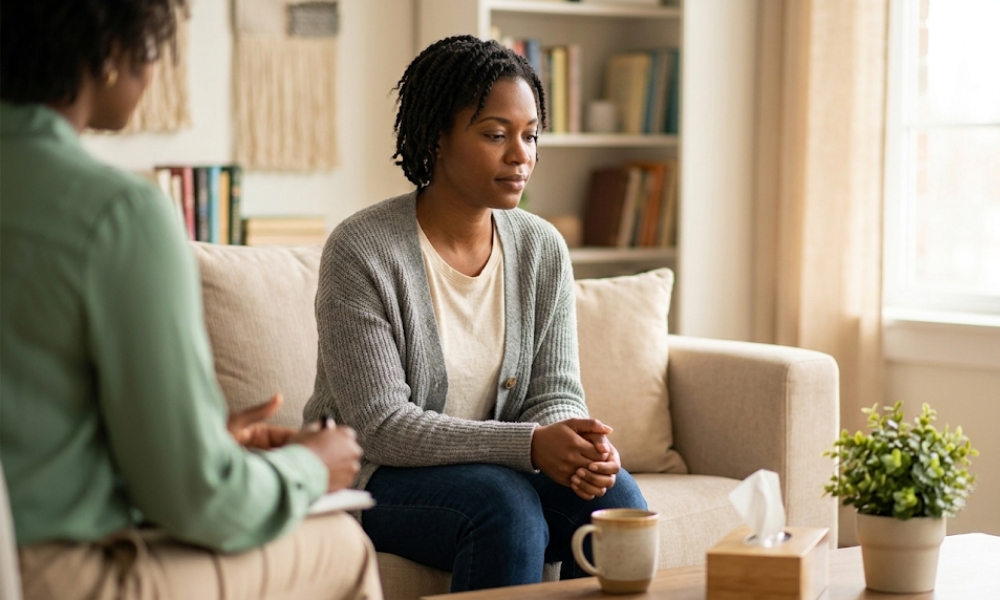
Some people spend years, even decades, trying to fix themselves. They work on their anxiety, their relationships, their self-esteem. They try therapy, journaling, meditation. They make progress, lose ground, make progress again. And underneath all of it, there’s a quiet question that never quite goes away. For some, the answer may lie in the lasting effects of Big T Trauma, experiences that continue to shape thoughts, emotions, and behaviours long after the event itself has passed. Why is this so hard for me when it doesn’t seem this hard for everyone else? If that question is familiar, it might be worth pausing on something that doesn’t get talked about nearly enough. Not because the answer changes everything overnight. But because sometimes, understanding where something comes from is the first real step toward not being ruled by it. Prefer to listen?Listen to the full article below. There’s more than one kind of trauma The word trauma gets used a lot these days, and that’s not a bad thing. Awareness matters. But one of the side effects of a word becoming more common is that it can start to feel like it only applies to extreme situations. Like it’s a word for other people. People who’ve been through things you haven’t. What’s less discussed is that trauma exists on a spectrum. The end of the spectrum we’re talking about today, what some psychologists call Big T Trauma, is far more common than most people realise. Big T Trauma refers to events that are deeply threatening to your life, your safety, or your sense of the world as a place where you are protected. These are experiences that overwhelm your capacity to cope at the time they happen. Not because you’re weak. But because what happened was genuinely overwhelming. For more information on trauma and its effects on mental health, see NIMH: Trauma and PTSD The kinds of events that tend to fall into this category include serious accidents or injuries, physical or sexual assault, witnessing violence, the sudden or traumatic loss of someone close to you, natural disasters, war or conflict, childhood abuse or neglect, or experiences of racial violence and discrimination. Childhood abuse or neglect can have long-lasting effects that continue into adulthood, making healing from childhood trauma an important part of recovery for many people. This is different from what’s sometimes called small t trauma, the more chronic, cumulative wounds that come from things like emotional unavailability in childhood, persistent criticism, or ongoing instability. Both matter. Both leave marks. But Big T Trauma tends to produce a particular set of responses that are worth understanding on their own terms. What it can look like from the inside Here’s the thing about Big T Trauma: it doesn’t always announce itself as trauma. Often it announces itself as anxiety. Or depression. Or anger that feels out of proportion. Or a numbness you can’t quite explain. If you’ve ever wondered about the connection between anxiety and past experiences, understanding the relationship between anxiety and trauma can offer valuable insight. I’ve always been like this. It’s just my personality. That thought is more common than you’d think. And it makes sense. If the nervous system has been in a heightened state for long enough, it starts to feel like baseline. Like just the way you are. Some of the signs that unprocessed trauma might be at the root of what you’re experiencing include: Sleep problems, difficulty concentrating, or a sense of disconnection from yourself or from what’s happening around you, almost as though you’re watching your own life from a slight distance. None of these signs in isolation confirms trauma. But if several of them feel familiar and you know there are things in your past that were genuinely frightening or destabilising, it may be worth sitting with that connection. What if this isn’t a character flaw? What if it’s a response? The cultural context that makes this harder For a lot of women, particularly Black women, there are layers on top of all of this that make recognising trauma even more complicated. Many of us were raised in communities where endurance is a virtue and talking about pain is coded as weakness. Where the instruction, spoken or unspoken, is to keep going. To not dwell. To be strong. And there’s a specific kind of experience, racial trauma, that can sit in the Big T category and yet rarely gets named as such. Being on the receiving end of racial violence, discrimination, or the chronic stress of navigating spaces where you are othered: these experiences can produce the same neurological and psychological responses as any other form of trauma. But they often go unacknowledged, even in therapeutic settings. The result is that a lot of women arrive at midlife carrying something they’ve never had the language for. Something they’ve managed around, worked through, built their lives in spite of, but never actually addressed. Maybe I’ve been coping. But have I ever actually healed? That’s not a question designed to alarm you. It’s an invitation. Because recognising something is not the same as being undone by it. In fact, it’s usually the opposite. What seeking help can look like There is no single path through trauma. What matters is finding something, and importantly someone, that takes your experience seriously. Trauma-informed therapy is worth seeking out specifically. Not all therapeutic approaches are equally equipped to work with trauma, and it’s reasonable to ask a therapist directly whether they work in a trauma-informed way. Approaches like EMDR (Eye Movement Desensitisation and Reprocessing), somatic therapy, and trauma-focused CBT have strong evidence behind them and are available in the UK through both NHS and private routes. Community matters too, more than clinical language often acknowledges. The experience of being witnessed, of telling your story to someone who doesn’t flinch, is itself part of healing. Community support can play a vital role in recovery, particularly when people are working through collective trauma and learning how to rebuild a sense
It has a plan for you. A carefully managed, smallish life. Not unhappy necessarily. Just contained. Safe. Familiar. A life where you don’t reach too far, ask for too much, or put yourself anywhere you might be judged, rejected, or found out. This is often how anxiety holding you back begins: quietly, reasonably, and in ways that can feel like protection. Anxiety is very committed to this plan. And the insidious thing is that it doesn’t announce itself as a limitation. It announces itself as logic. As caution. As the reasonable voice in the room. I’m just being realistic. Now isn’t the right time. What if it goes wrong? That’s not wisdom. That’s anxiety in a sensible coat. Prefer to listen?Listen to the full article below. The ways anxiety holding you back aren’t always obvious When most people think about anxiety holding them back, they picture the dramatic version. Panic attacks. Inability to leave the house. The kind of anxiety that is clearly, visibly a problem. But the more common version is quieter. It’s the email you drafted and never sent. The conversation you rehearsed but didn’t have. The opportunity you talked yourself out of before anyone else had the chance to say no. It’s the persistent sense that you need to feel ready before you begin. And the readiness never quite arrives. When things calm down, I’ll focus on that. Once the children are older. When I’m more confident. The goalposts move. They always move. Because anxiety isn’t waiting for conditions to improve. It’s generating the conditions that keep you waiting. For women specifically, this pattern tends to run deep. Research consistently shows that women experience anxiety at higher rates than men, and that the way it shows up in women often looks like over-responsibility, perfectionism, and people-pleasing rather than the more visible presentations that tend to get taken seriously. We internalise it. We manage it quietly. We become expert at functioning while simultaneously holding ourselves back. And we often don’t recognise it as anxiety at all. We call it being sensible. Knowing our limits. Being realistic about what’s possible. What it looks like for mothers If you’re a mother, anxiety has additional material to work with. There’s the anxiety about your children, which is so normalised it barely registers as anxiety anymore. The constant low-level monitoring. The vigilance. The mental load that never fully switches off. But underneath that, there’s often something else. A woman who existed before the children. Who had ambitions, desires, a sense of her own direction. And anxiety, which was perhaps already present before becoming a mother, has quietly used the demands of parenting as a very reasonable-sounding reason to keep her in place. I can’t think about that now. The children need me. It feels selfish to want something just for myself. What kind of mother puts herself first? The guilt and the anxiety become so intertwined that it’s difficult to tell where one ends and the other begins. What’s clear is that both have the same effect: keeping you small. Keeping you waiting. Keeping you available to everyone except yourself. This isn’t about choosing between being a good mother and living fully. It’s about recognising that anxiety will use whatever story is available, including the ones about being devoted and selfless, to keep its grip. The cost of the contained life There’s a particular kind of grief that doesn’t get talked about much. The grief for the things you didn’t do. The version of yourself you never quite got to be. It’s not dramatic grief. It doesn’t arrive all at once. It shows up in small moments: watching someone else do the thing you always wanted to do, or finding an old notebook full of plans you quietly abandoned, or lying awake at 3am with a thought you don’t examine too closely. Is this it? Is this who I am now? That question isn’t despair. It’s important information. It’s the part of you that hasn’t agreed to the contained life. The part that is still, quietly, paying attention to what you gave up. Anxiety wants you to dismiss it. To tell yourself you’re being ungrateful, or unrealistic, or that it’s too late. But the fact that the question keeps arriving is worth paying attention to. What moving through it actually involves There’s no version of this where anxiety disappears before you begin. One of the more unhelpful myths about overcoming it is that you wait until you feel brave, and then you act. It’s usually the other way around. You act, imperfectly, uncertainly, with the anxiety still present. The bravery is something you discover you had afterwards. What tends to help isn’t eliminating anxiety but changing your relationship with it. Learning to recognise it for what it is: a very loud, very insistent voice that is not the same as the truth. Learning to act in spite of it. Learning, over time, that the catastrophe it was predicting didn’t arrive. This takes practice. It takes support. Sometimes it takes professional help from someone who understands how anxiety works, not just the surface symptoms but the deeper patterns beneath them. Trauma-informed therapists, CBT practitioners, somatic workers. There are different routes. What matters is finding one that takes your particular experience seriously. It also takes honesty. With yourself, about the life you actually want. Not the life that feels manageable. Not the life that anxiety has decided is appropriate for someone like you. The life that, if you’re very quiet and very honest, you already know you want. If you’re somewhere in the middle of this, trying to understand the shape of your own anxiety and where it came from, the If you’re somewhere in the middle of this, trying to understand the shape of your own anxiety and where it came from, the How Did I Get Here? journal was made for exactly that process. It’s for anyone sitting with anxiety that has roots and a history, and who wants to start

Imani entered today’s session exuding the same effortless elegance she always did. Her satin, deep blue blouse draped perfectly over her frame, paired with high-waisted black trousers that accentuated her poise. Her sleek bun, subtle gold hoop earrings, and polished nude manicure were impeccable. Yet beyond her refined appearance, it was clear she was on a journey toward building healthy relationships—not just with others, but with herself. But this time, something was noticeably different. There was a lightness to her presence, a quiet confidence that had nothing to do with perfection. As she settled into her seat, she smiled—not the practiced, polite kind I had grown accustomed to, but one that seemed to come from a place of ease. “I think I’m starting to get it,” she said, crossing one leg over the other. “Self-acceptance. It’s not just about saying I’m enough—it’s about believing it.” I returned her smile. “Tell me what’s shifted.” She exhaled, her gaze thoughtful. “I’ve been paying attention to how I show up in my relationships. With Jaden. With my sisters. Even at work. And I realised something: I’ve spent years trying to earn my place in people’s lives—like I had to prove I was worth keeping around. But the truth is, real connexion isn’t about proving anything. It’s about being.” The Cost of Performance in Relationships Imani paused, her fingers tracing the edge of her bracelet. “For so long, I thought being perfect would make me more lovable. That if I could be the best at everything—successful, beautiful, composed—no one would leave me. But what I didn’t see was that my perfectionism was keeping people at arm’s length.” I nodded. “Because perfection isn’t intimacy. It creates admiration, maybe, but not closeness.” She tilted her head, considering. “Exactly. When I was performing perfection, I wasn’t giving people the chance to really know me. They were connecting with an image, not a person.” This realisation was crucial. For so many women—especially Black women—perfectionism isn’t just a personal trait; it’s a survival mechanism. Raised in cultures where strength is revered and vulnerability is often misunderstood as weakness, many of us learn early that being ‘flawless’ is the safest way to navigate the world. But at what cost? Rebuilding from a Place of Wholeness “So, what does self-acceptance look like for you now?” I asked. Imani leaned back slightly; her posture still graceful but more at ease. “It looks like choosing relationships where I can be real. Where I don’t have to shrink or over-perform to be accepted. It looks like giving myself the same grace I give other people. And it looks like saying no to spaces that only value me when I’m at my best.” I could see the conviction in her words. This was a woman who had spent her whole life trying to fit an impossible mold, and now, she was stepping out of it. “And Jaden?” I prompted. “How has this shift affected your relationship with him?” She smiled softly. “He’s been patient with me. The more I let myself relax around him, the more I see that he’s not with me because I’m perfect—he’s with me because he enjoys me. The real me.” She hesitated before continuing. “I even told him about my dad.” I raised an eyebrow, surprised but pleased. “That’s a big step.” She nodded. “I’d never really talked about it before—not in a way that was real. But I told him how it shaped me. How I spent years trying to make sure no one else would abandon me like that.” I studied her face. “And how did it feel?” “Like taking off a pair of heels after wearing them all day,” she said with a small laugh. “Uncomfortable at first, but then… freeing.” The Role of Self-Acceptance in Healthy Relationships “So,” I asked, “what do you think is the key to building healthy relationships now?” She thought for a moment before answering. “Honesty. With myself and with the people around me. Not just saying what I think people want to hear, but actually being open about what I feel, what I need. I think I spent so much time fearing that my imperfections would push people away, but now I see that hiding them is what kept me isolated.” I nodded. “When you accept yourself fully, you give others the permission to do the same. Healthy relationships aren’t built on perfection; they’re built on authenticity, mutual care, and the freedom to be imperfect together.” She smiled, this time with no hesitation. “That’s exactly it.” Closing Thoughts: A New Chapter Imani’s journey was never about fixing herself—because she was never broken. It was about uncovering the parts of herself she had hidden away, learning to embrace them, and realising that she was worthy of love, just as she was. For years, she believed her worth was something she had to prove. But now, she was learning that real love—the kind that lasts—is not transactional. It doesn’t require perfection as a prerequisite. It requires presence. Truth. Vulnerability. If you’ve ever found yourself performing perfection, fearing that your flaws make you unlovable, ask yourself: What would happen if you stopped trying to earn love and started believing you already deserve it? How might your relationships change if you showed up as your whole, unfiltered self? As Imani steps forward into this new chapter, she is not just building healthy relationships—she is building a healthy relationship with herself. And that, more than anything, is where true freedom begins.

Imani arrived today looking as poised as ever yet something felt different. This session focused on Strength Through Vulnerability, which was about letting go of perfection and embracing authenticity. She wore a satin emerald-green blouse that caught the light with every movement, paired with tailored forest-green trousers that fit her like they had been made just for her. Her signature elegance was as polished as always—gold hoops subtly accentuated her cheekbones, a sleek, low bun, and her usual muted nude manicure. She looked effortlessly composed, every detail intentional. But today, there was something different. When she sat down, her hands weren’t perfectly still. She didn’t adjust her blouse, smooth the fabric of her trousers, or glance at her reflection in her phone screen, small habits she normally used to ground herself. Instead, she exhaled deeply, her shoulders shifting slightly as if she had set something down. “I did what you asked,” she said, glancing up at me. “I let the mask slip… just a little.” I leaned in slightly, intrigued. “Tell me about it.” The Fear of Being Seen Imani hesitated before speaking as though the words themselves felt foreign on her tongue. She was stepping into Strength Through Vulnerability, unsure of what it meant to be seen without the shield of perfection. “It was with Jaden,” she admitted. “I was having a long day at work—one of those days where I felt like I couldn’t catch my breath. Normally, I would have just pushed through and acted like everything was fine. But instead, I told him the truth.” She paused, then sighed. “I told him I was exhausted. I felt like I was dropping the ball on everything. I was so sure he’d see me differently than I thought it would put him off.” I waited, sensing there was more. “For a second, I regretted saying anything. I thought—maybe I should’ve just kept it to myself. But then Jaden looked at me and said, ‘You know you don’t have to do everything yourself, right?’” She let out a small, breathy laugh, shaking her head. “And I just sat there, completely thrown off. It wasn’t some grand declaration; it wasn’t ‘I love you no matter what.’ It was just… simple. Like it was obvious to him.” She leaned forward slightly. “And for a moment, I didn’t know how to respond. Because I’ve never thought that way before, that maybe I don’t have to hold everything together all the time.” The Strength in Letting Go Imani shook her head, still absorbing what had happened. “I didn’t know how much I needed to hear that. I think, deep down, I was always afraid that if I let someone see the cracks, they’d run. But Jaden didn’t. He just… listened. And for the first time in a long time, I didn’t feel like I had to hold it all together.” Her confession struck a deep chord. For so many Black women, vulnerability is not something we are taught to embrace. Strength is often defined by how much we can endure, how seamlessly we can carry the weight of expectations, and how little we ask for in return. But what if real strength was something different? Breaking Generational Patterns “You know,” I said, “for a long time, many of us have believed that strength means handling everything on our own. Generations have passed it down—our mothers, our grandmothers, and the ancestors before them. They survived through resilience, through pushing forward no matter what.” Imani nodded. “My mother never let us see her struggle. Even when my father left, she acted like she had everything under control. I never saw her break down, never saw her ask for help. I think I learned that from her—that you just keep going, no matter how much it hurts.” “That kind of strength helped her survive,” I acknowledged. “And it got you far, too. But survival isn’t the same as living. At some point, carrying everything alone stops being a sign of strength and starts becoming a weight that holds you back.” Imani let those words settle in. “So, what now?” she asked. “How do I start trusting that I don’t have to be perfect to be worthy of love?” The Practise of Vulnerability “Vulnerability is a practice,” I said. “You don’t go from hiding everything to suddenly opening up overnight. But you’ve already taken a step. You let Jaden see a side of you that wasn’t perfectly curated, and the world didn’t fall apart.” She exhaled, a small smile tugging at her lips. “No, it didn’t.” “Now, the work is to keep leaning into that. Notice the moments when you feel the urge to retreat behind the mask and ask yourself—what might happen if I let others see me instead?” Imani nodded. “That still feels scary.” “Of course it does,” I reassured her. “You’re unlearning years of conditioning. But the more you do it, the more you’ll realize that the people who truly matter—the ones who deserve a place in your life—will embrace you, not for your perfection, but for your truth.” A New Definition of Strength Imani glanced down at her hands, then back at me. “I don’t think I’ve ever thought of vulnerability as strength before. But… maybe it is. Maybe being strong isn’t about how much I can carry, but about knowing when to put something down.” “That,” I said, “is exactly it.” She smiled, and for the first time since she walked in, her shoulders relaxed. Closing Thoughts Imani’s journey is one that many of us can relate to—the fear of being seen, the instinct to prove our worth through perfection, and the hesitation to show cracks in our armor. But true strength doesn’t come from pretending to have it all together. It comes from allowing ourselves to be human. As Imani continues her journey, she is discovering that Strength Through Vulnerability is not just about relationships—it’s about self-acceptance and true emotional freedom. Learning that she doesn’t have to be perfect for